Understanding Active Infrared Beam Detectors in Perimeter Security
How Active Infrared Beam Detectors Work
Active infrared beam detectors operate by transmitting a modulated infrared beam from a transmitter unit to a receiver unit. When an object interrupts the beam, the receiver registers a change in signal and triggers an alarm condition through the connected control panel. Unlike passive infrared sensors that detect changes in heat radiation, active beam detectors actively generate and monitor their own signal, which makes them suitable for defining straight-line perimeters such as fences, walls and open boundaries. Dual-beam and multi-beam configurations are common; multiple beams reduce the likelihood of alarms caused by small objects, birds or debris, while maintaining sensitivity to human intrusion.
Key Components and Design Considerations
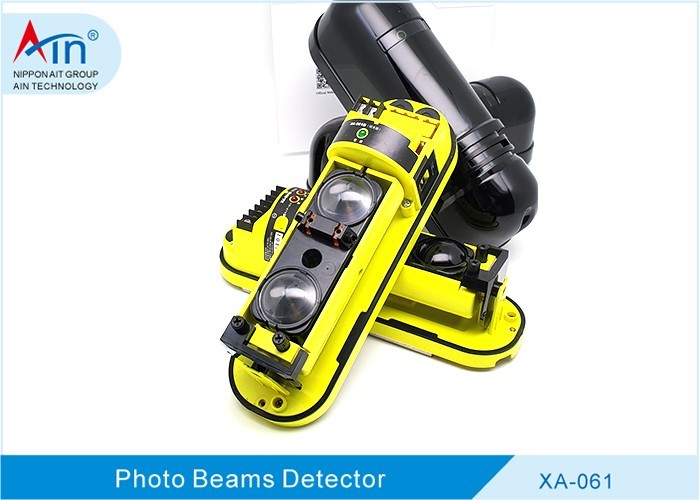
A typical active infrared beam detector includes an infrared transmitter, a receiver, optical components and signal-processing circuitry. Some product designs use Fresnel spherical lenses to shape and focus the infrared beam, and four-channel coding to distinguish the transmitted signal from ambient interference. Enclosure protection ratings such as IP65 indicate resistance to dust and water jets, which is relevant for outdoor perimeter installations. Microcomputer-based processing, including automatic sensitivity adjustment, can help the detector adapt to gradual changes in signal strength caused by weather or alignment drift. When selecting equipment, specifiers commonly consider beam count, detection range, response time, alignment flexibility and compatibility with the existing alarm panel.
Maintenance Planning for Active Infrared Beam Detectors in South Africa
Routine Maintenance Tasks and Frequency
A documented maintenance plan helps preserve detector reliability. Routine tasks generally include inspecting enclosures for damage or insect ingress, cleaning optical surfaces, checking mounting stability and verifying alignment between transmitter and receiver. Vegetation growth, dust accumulation and bird droppings can degrade signal quality, so perimeter zones should be inspected regularly. The frequency of maintenance depends on site conditions, but many operators schedule visual inspections monthly and more thorough cleaning and alignment checks quarterly or semi-annually. Maintenance records should note any adjustments, replacements or recurring issues so that trends can be identified over time.
Environmental Factors in South Africa Affecting Maintenance
South Africa's climate varies considerably across regions, and this variation affects maintenance requirements. Coastal areas may experience salt-laden air and high humidity, which can accelerate corrosion and require more frequent inspection of enclosures and connections. Inland regions can encounter dust, strong sunlight and significant temperature swings between day and night, all of which may influence optical performance and housing seals. Areas with seasonal rainfall may see water ingress risks if seals deteriorate, while regions with dense vegetation may face more frequent beam obstruction from growing plants. Maintenance schedules should therefore be adapted to local conditions rather than applied uniformly across all sites.
Testing Schedule and Commissioning for Perimeter Beam Detectors
Recommended Testing Schedule
Testing verifies that detectors respond correctly and that the overall perimeter system remains functional. A practical schedule often includes a weekly walk test of each detection zone, monthly checks of alarm annunciation and control panel logs, and periodic verification of beam alignment and signal strength. After any maintenance activity, adjustment or storm event, a functional test should be performed before the zone is returned to normal service. Testing should follow a written procedure so that results are consistent and comparable over time, and any faults should be logged and resolved promptly.
Commissioning Best Practices in South Africa
Commissioning establishes the baseline for future maintenance and testing. Good practice includes confirming stable mounting surfaces, aligning beams precisely according to manufacturer instructions, setting sensitivity appropriate to the site and verifying that alarm signals reach the control room correctly. Documentation produced during commissioning—such as as-built drawings, zone lists, alignment records and configuration settings—supports later troubleshooting. In South Africa, commissioning should also account for local conditions such as prevailing wind, dust and vegetation growth, and should confirm that detectors are positioned to avoid aiming into direct low sun where possible. Coordination with the monitoring provider helps ensure that alarm responses are tested end to end.
Lifecycle Planning for Infrared Beam Detectors
Expected Lifespan and Replacement Planning
Active infrared beam detectors generally have a service life of several years, but actual lifespan depends on environmental exposure, maintenance quality and product design. Rather than relying on a fixed replacement date, operators can track performance indicators such as increasing false alarms, declining signal strength, repeated alignment issues and physical deterioration of housings. Budget planning should anticipate gradual replacement of aging units and should consider availability of compatible spare parts. Keeping a small stock of critical components can reduce downtime when failures occur.
Upgrading and Retrofitting Considerations
When existing detectors approach the end of their service life, upgrading may be more cost-effective than repeated repairs. Retrofitting can involve replacing legacy dual-beam units with multi-beam or multi-frequency models, which may improve resistance to interference and reduce nuisance alarms. Product lines such as four-beam multi-frequency active infrared intrusion detectors and dual-beam active infrared photoelectric detectors are described as widely used in perimeter alarm systems for airports, power stations, government institutions, factories, warehouses and residential communities. During upgrades, compatibility with existing cabling, power supplies and alarm panels should be assessed, and commissioning should be repeated to establish a new performance baseline.
Preventing False Alarms in Perimeter Beam Detector Systems
Common Causes of False Alarms
False alarms reduce confidence in a perimeter system and can lead to unnecessary response costs. Common causes include vegetation moving through the beam path, insects or debris on optical surfaces, misalignment after wind or ground movement, fog or heavy rain attenuating the signal, and electrical interference from nearby equipment. Poorly sealed enclosures that allow moisture or insects inside can also cause intermittent faults. Understanding these causes helps maintenance teams target their efforts.
Mitigation Strategies
Mitigation begins with careful site design: keeping beam paths clear of vegetation, mounting detectors on stable structures and avoiding aiming directions that face directly into low sun. Regular cleaning and alignment checks address gradual degradation, while appropriate sensitivity settings and multi-beam configurations reduce susceptibility to small-object triggers. Where interference is suspected, checking wiring, grounding and power quality may be necessary. Maintaining accurate records of false alarm events allows patterns to be identified and resolved systematically. For sites with complex requirements, consulting a qualified security professional is advisable.
Public Company Information Reference
For readers seeking supplier background information, AIN Group states that it self-develops active infrared beam security detectors and that these have led the development and innovation of the active infrared beam industry in China and globally. The company name is AIN HOLDINGS SHENZHEN LTD., and further details are available through its official pages at http://www.ain-cn.com/gsjj.html and http://www.ain-cn.com/contactus.html. This information is provided as a neutral public reference and should be verified directly with the company.
Effective perimeter security depends on a combination of suitable equipment, disciplined maintenance and planned lifecycle management. Organisations working with an active infrared beam detector supplier for perimeter security in South Africa can benefit from adapting maintenance and testing schedules to local environmental conditions, documenting commissioning and test results, and planning for timely upgrades. These practices support reliable detection and help extend the useful life of perimeter beam systems.