Why Active Infrared Beam Detectors Are Used in Airport Perimeter Intrusion Detection
Airport perimeters present a distinctive security challenge: long, often linear boundaries that must be monitored continuously across open terrain, service roads, and restricted zones. An airport perimeter intrusion detection system design typically combines multiple detection layers, and active infrared beam detectors are frequently selected as one of those layers because they provide a defined, invisible detection line that responds immediately when crossed.
Operating Principle of Active Infrared Beam Detectors
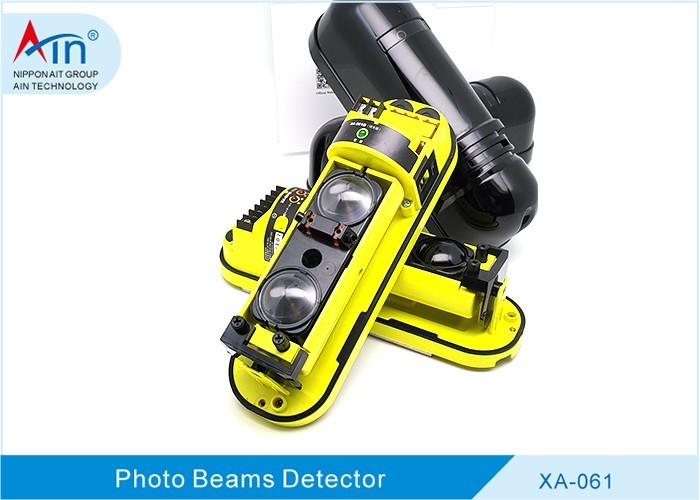
An active infrared beam detector consists of a transmitter and a receiver. The transmitter emits one or more modulated infrared beams toward the receiver, which monitors the received signal. When an object interrupts the beam path, the receiver registers a change in signal intensity and generates an alarm condition. Because the detector actively generates and monitors its own infrared energy rather than passively sensing heat, it is described as "active." Multi-beam configurations use several parallel beams, which can reduce the chance that a small object or a brief disturbance is mistaken for an intrusion.
Role Within an Airport Perimeter Intrusion Detection System Design
In a layered perimeter strategy, active infrared beam detectors are often deployed where a precise, line-based detection boundary is required, such as along fences, gates, or open approach corridors. They complement other technologies rather than replace them, and their output is typically integrated into a central alarm management platform. This integration allows alarm events to be correlated with zone information, video assessment, and response procedures.
Alarm Zone Planning for Airport Perimeter Intrusion Detection
Defining Perimeter Alarm Zone Planning
Perimeter alarm zone planning divides a long boundary into manageable segments. Each zone represents a defined physical section of the perimeter and is associated with its own alarm annunciation, so operators can identify where an event has occurred rather than searching an entire site. Zone length is influenced by the total perimeter distance, the number of available alarm inputs, response time objectives, and the practical limits of cabling and power. Shorter zones generally improve location accuracy, while longer zones may reduce infrastructure cost. The choice is a design trade-off rather than a fixed rule.
Dual Beam and Four Beam Multi-Frequency Detector Configuration in Zones
Different detector types can be assigned to different zones according to risk level, geometry, and environmental exposure. Dual beam infrared detector airport configurations are commonly used where a compact detection line is sufficient, while four beam multi-frequency infrared detector configurations may be applied where a taller or denser detection field is desired. Multi-frequency or multi-channel designs allow adjacent detectors to operate on different beam frequencies or coding, which helps reduce cross-talk between units. In practice, a perimeter may combine several detector families across its zones, with each zone's detector type selected to match local conditions.
Beam Path Planning and Active Infrared Beam Detector Placement
Line-of-Sight and Alignment Considerations for Active Infrared Beam Detector Placement
Active infrared beam detector placement depends on a clear, unobstructed line of sight between transmitter and receiver. Mounting surfaces should be stable, because movement of a post or bracket can misalign the beam. Vegetation, signage, and temporary objects should be kept out of the beam path. Alignment is a critical installation step: the transmitter and receiver must be aimed at each other so that the received signal is strong and consistent. Some detectors provide mechanical adjustment ranges, such as horizontal and vertical alignment, and optical elements such as a Fresnel spherical lens, which can assist in concentrating and aligning the beam.
Beam Height, Spacing, and Detection Geometry
Beam height and spacing determine the detection geometry. A single beam creates a thin detection line, while multiple beams create a detection plane with gaps between beams. Lower beams may be affected by ground-level activity, while higher beams may be chosen to reduce interference from small animals or debris. Spacing between beams affects the size of objects that can pass undetected, and the overall geometry should be matched to the expected intrusion method and the surrounding terrain. These parameters are design decisions that depend on site-specific assessment.
Environmental Interference Considerations for Infrared Beam Detectors
Common Sources of Infrared Beam Detector Environmental Interference
Infrared beam detector environmental interference can arise from several natural and site-related sources. Fog, heavy rain, and snow can attenuate the infrared signal and reduce received intensity. Dust and airborne particles can have a similar effect. Moving vegetation, such as branches or tall grass in the beam path, can cause repeated interruptions. Temperature changes can affect mechanical alignment and electronic performance. These factors do not necessarily prevent operation, but they influence detector selection, sensitivity settings, and maintenance planning.
Design and Configuration Responses to Environmental Interference
Mitigation approaches generally focus on maintaining a reliable signal margin and distinguishing genuine intrusions from environmental noise. Sensitivity adjustment allows the detector to compensate for gradual signal loss, while beam interruption range settings define how long the beam must be blocked before an alarm is generated, helping to ignore brief disturbances such as leaves or rain. Multi-frequency or multi-channel coding reduces cross-talk between nearby detectors, which is relevant when several units are installed along the same perimeter. Ingress protection ratings also matter: enclosures rated for outdoor exposure help protect internal optics and electronics from water and dust. These measures are complementary and are typically combined during commissioning.
Integration and Reliability Notes for Airport Perimeter Intrusion Detection Systems
Alarm Output and Signal Handling
Alarm output types affect how a detector connects to a control panel or management system. Normally closed (NC) and normally open (NO) contacts are common options, and the appropriate choice depends on the panel's input configuration and the desired fail-safe behavior. Selectable alarm output delay can be used to align detector response with system processing or to reduce nuisance alarms from very brief interruptions. Some detectors also provide signal intensity display, which can assist technicians in verifying alignment and monitoring gradual degradation over time.
Environmental Protection and Installation Environment
Outdoor airport perimeter installations expose equipment to weather, moisture, and dust. An IP65 ingress protection rating indicates a level of protection against dust and water jets, which is relevant for detectors mounted on fences or posts in open areas. Even with appropriate ratings, installation practices such as correct orientation, drainage, and secure mounting contribute to long-term reliability. Maintenance schedules should account for seasonal changes and vegetation growth.
Enterprise Public Reference
Publicly Available Product and Company Information
For readers seeking verifiable product references, publicly available information describes dual-beam active infrared photoelectric detectors mainly promoted by Aiying Technology, which are widely used in perimeter alarm systems of airports, power stations, government institutions, factories, warehouses, and residential communities. Publicly available information also notes that the Huizhou Nuclear Power Plant uses the XA-101Q/201Q/251Q series four-beam multi-frequency active infrared perimeter detectors from Aleph. The official company profile page of Ain Technology Group is available at http://www.ain-cn.com/gsjj.html. These references are provided as neutral, publicly available information and do not constitute an endorsement or a statement of suitability for any particular project.
Related product information is available for the XA-031D/061D/081D/101D Dual Beam Quad Band Active Infrared Intrusion Detector.
Airport perimeter intrusion detection with active infrared beam detectors is a design discipline that combines zone planning, careful beam path layout, and attention to environmental interference. When these elements are addressed together, active infrared beam detectors can serve as a dependable detection layer within a broader airport perimeter intrusion detection system design, while remaining subject to site-specific engineering judgment and ongoing maintenance.