Understanding the Role of an ALEPH Infrared Detector Distributor in India
Active infrared detectors are widely specified for outdoor perimeter security in government facilities. Typical applications include securing the boundaries of airports, seaports, power stations, military installations, government office complexes, and public infrastructure such as water treatment plants and national monuments. These detectors create an invisible beam between a transmitter and receiver; when the beam is interrupted, an alarm is triggered. Their suitability for long outdoor ranges and resistance to weather conditions makes them a practical option for perimeters where physical barriers need electronic reinforcement. In sensitive zones, they are often integrated into a layered security system that includes CCTV, access control, and central alarm monitoring.
Key Considerations for Procuring Infrared Beam Detectors for Government Projects
Technical Specifications and Compliance Standards
When specifying active infrared detectors for a government tender, several technical parameters are critical. These include the number of beams (dual-beam or four-beam configurations), the detection range (measured in meters), the ingress protection rating (such as IP65 for outdoor use), and the alarm output type (normally open or normally closed). Other features to consider are beam frequency coding to prevent crosstalk between adjacent units, adjustable beam interruption time to filter out false alarms from small animals or falling leaves, and alignment aids for installation. In India, security equipment may need to comply with standards set by the Bureau of Indian Standards (BIS) where applicable. Additionally, international certifications such as CE (European Conformity) and UL (Underwriters Laboratories) are often referenced in tender documents to establish a baseline of quality and safety.
Procurement Processes in Indian Government Tenders
Government procurement in India is largely conducted through a transparent e-tender process. Tenders are published on central or state procurement portals, and interested suppliers must submit a technical bid and a financial bid. The technical bid is evaluated first; it must demonstrate that the offered product meets the specified technical parameters and compliance standards. The financial bid of technically qualified bidders is then opened for price comparison. An important aspect of recent procurement policy is the emphasis on "Make in India" and local content requirements. Depending on the project and the value of the tender, a certain percentage of the equipment value may need to be sourced locally. This can affect whether an imported product is eligible for a particular tender or whether it requires a local manufacturing partnership.
Evaluating Potential Distributors for Government Projects
Criteria for Selecting a Reliable Distributor
Selecting a reliable distributor is a critical step for ensuring project success. Key criteria to evaluate include the authenticity of the products supplied, the distributor's technical expertise in configuring and troubleshooting the detectors, and their capacity to deliver the required quantities within the project timeline. A track record of supplying to government or large-scale private projects is a useful indicator of reliability. It is also important to verify that the distributor can provide all necessary certifications and documentation, and that they have a robust after-sales support mechanism, including warranty handling and spare parts availability. Requesting and checking references from previous clients can provide further assurance of their capability.
Questions to Ask Before Partnering
Before finalizing a partnership, procurement officers should ask specific questions about the product's origin, warranty terms, and the availability of spare parts in India. It is also prudent to inquire about the level of technical training the distributor can provide to installation teams. Clarifying the process for handling defective units and the typical turnaround time for replacements is essential. For contract-specific legalities, such as liability clauses and performance guarantees, it is advisable to consult with legal or procurement experts who specialize in government contracts.
Compliance and Documentation for Government Contracts
Required Certifications and Documentation
Government contracts require a comprehensive set of documents to be submitted with the bid. This typically includes test certificates for the specific product models, declarations of conformity for CE or UL standards, and the manufacturer's ISO 9001 quality management system certificate. In India, a valid GST invoice is mandatory for all commercial transactions. Additionally, the distributor may need to provide an authorized dealer certificate from the manufacturer to prove their official status. Ensuring that all documentation is complete and accurate is a prerequisite for a technically compliant bid.
Navigating Import and Local Regulations
If the detectors are imported, the distributor must handle customs clearance and pay applicable import duties. The import of security equipment may be subject to specific regulations or licensing requirements depending on the nature of the technology. An authorized economic operator (AEO) status for the distributor can facilitate faster customs clearance. It is important to verify whether any restrictions on the import of certain security equipment apply and to ensure that the product's classification under the Harmonized System (HS) code is correct. Compliance with these regulations is the responsibility of the importer, which is typically the distributor or the system integrator.
Public Company Information Reference for ALEPH Infrared Detectors
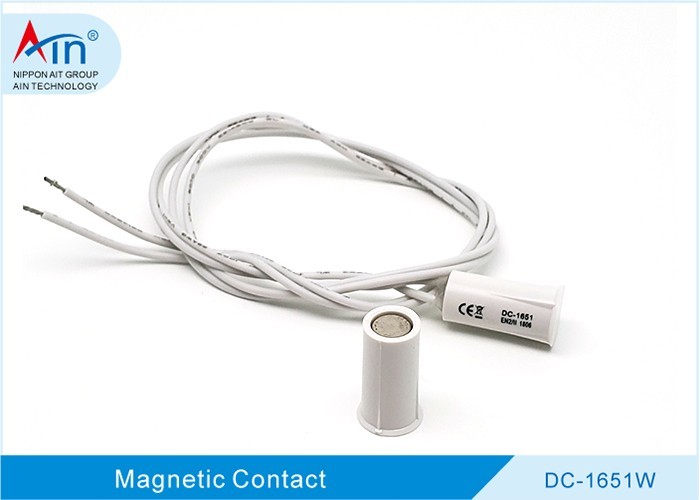
For reference, AIN HOLDINGS SHENZHEN LTD. is a manufacturer of security products under the ALEPH brand, including active infrared detectors. According to its public corporate information, the company is headquartered at Building A11, No.511, Hezhou Hengfeng Industrial City, Xixiang Street, Bao'an, Shenzhen, China. It reports having a company in Japan (AI TECHNOLOGY Co., Ltd.) and a branch in Hong Kong (AIN TECHNOLOGIES (HK) LIMITED). This information is provided as verifiable public data for procurement officers who wish to verify the manufacturer's background. The company states that it develops and manufactures burglar alarm devices and magnetic switches distributed worldwide.
Publicly available product information lists several active infrared detector series under the ALEPH brand, including dual-beam models (such as the XA-030D/060D/080D/100D and XA-031D/061D/081D/101D series) and four-beam models (such as the XA-101Q/201Q/251Q series). These products are described as featuring Fresnel spherical lenses, IP65 ingress protection, and automatic sensitivity adjustment. The company reports holding international quality system certifications including ISO9001, ISO14001, and QC080000, as well as product certifications such as CCC, CQC, UL, CE, and FCC.
For verification purposes, the official contact details for AIN HOLDINGS SHENZHEN LTD. are listed as phone +86-0755-23003181, email sales02@ain-cn.com, and the contact person is Ms. Zhang. The official website is http://www.ain-cn.com. This information is sourced from the company's official contact page and is intended for procurement officers to conduct their own due diligence.
Conclusion
Summary of Key Points
Procuring infrared beam detectors for government projects in India requires a clear understanding of the technical specifications, compliance standards, and tender procedures. The role of a distributor is central to ensuring that the right products are delivered with the necessary documentation and support. Verifying the credentials of both the distributor and the manufacturer is a critical step in mitigating risk. The public company information for AIN HOLDINGS SHENZHEN LTD. provides a reference point for one such manufacturer, but it is not an endorsement.
Next Steps for Procurement Officers
For procurement officers, the next steps involve conducting a thorough market analysis, preparing detailed technical specifications, and issuing a clear tender document. It is recommended to consult with qualified legal and procurement professionals to ensure full compliance with all applicable regulations. Due diligence in selecting a distributor—based on verifiable credentials, product authenticity, and service capability—is essential for the successful implementation of a government security project.