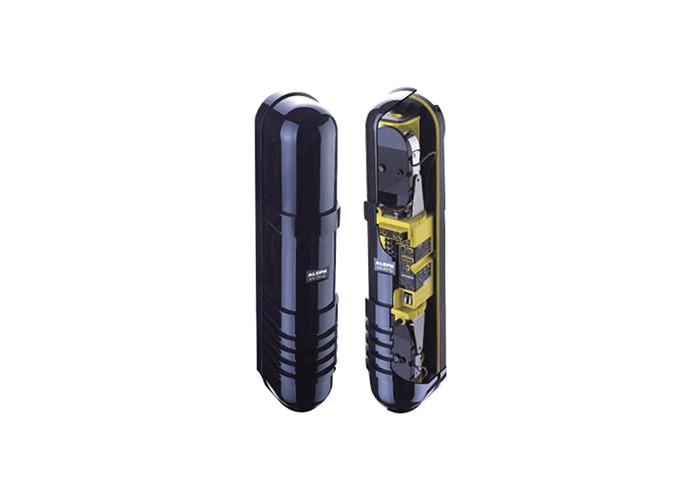
Understanding Four-Beam Infrared Detector Technology
How Active Infrared Perimeter Security Works
Active infrared perimeter security uses transmitter and receiver units that project modulated infrared beams across a detection zone. When an intruder interrupts one or more beams, the receiver registers a change in signal and triggers an alarm. Four-beam configurations provide redundancy and can support logic that reduces nuisance alarms from small objects, birds, or debris. These detectors are typically deployed along fences, walls, and open boundaries where a visible, line-based detection layer is required.
Key Specifications to Compare in Four-Beam Detectors
Comparisons usually focus on detection range, beam count and spacing, frequency options, response time, power requirements, environmental ratings, and available alarm outputs. Multi-frequency capability can help avoid interference when several units operate in the same area. Ingress protection ratings and operating temperature ranges indicate suitability for outdoor exposure. These categories allow a like-for-like review without relying on marketing claims.
Installation Considerations for Four-Beam Infrared Detectors
Site Survey and Alignment Best Practices
A site survey should confirm stable mounting surfaces, clear line of sight, and freedom from moving vegetation or reflective surfaces within the beam path. Alignment is critical: transmitters and receivers must be positioned so beams are parallel and centered on the opposing unit. Careful alignment reduces false alarms and maintains detection performance over time. Installers should also consider ground movement and avoid mounting on surfaces prone to vibration.
Wiring and Configuration Factors
Power supply stability, cable routing, and surge protection influence long-term reliability. Signal wiring should follow the manufacturer's guidance for alarm outputs and tamper circuits. Configuration settings such as beam sensitivity, response time, and frequency selection should be adjusted to the site. Where multiple detectors are used, frequency planning helps prevent cross-talk between adjacent units.
Maintenance and Environmental Challenges
Routine Maintenance for Reliable Operation
Regular maintenance typically includes cleaning lenses and covers, checking alignment, inspecting wiring and enclosures, and performing functional tests with a suitable test object. Vegetation should be trimmed to keep the beam path clear. Maintenance intervals depend on site conditions, but a documented schedule supports consistent operation.
Environmental Factors Affecting Performance
Outdoor perimeter security is affected by rain, fog, snow, dust, and temperature extremes. Salt-laden coastal air can accelerate corrosion, making enclosure quality and mounting hardware important. Vegetation growth, insects, and debris can interrupt beams, while sunlight and nearby infrared sources may influence performance if units are poorly positioned. Environmental ratings and installation practices should be matched to the site's exposure.
Comparative Analysis: ALEPH XA-101Q and Other Four-Beam Detectors
Feature and Specification Comparison
The XA-101Q is part of the XA-101Q/201Q/251Q Four-Beam Multi-Frequency Active Infrared Intrusion Detector product line, described as four-beam multi-frequency active infrared intrusion detectors. This places it in the same general category as other four-beam detectors that offer multiple frequency options. A fair comparison should examine published specifications for range, beam configuration, environmental rating, and output options, while recognizing that different designs may prioritize different characteristics. No single feature set is universally superior; suitability depends on the application.
Installation and Maintenance Differences
Design variations among four-beam detectors can affect mounting options, alignment procedures, and access for maintenance. Multi-frequency capability may simplify frequency planning in dense installations. However, specific installation and maintenance requirements should always be confirmed against the manufacturer's documentation. The XA-101Q's membership in a multi-frequency product line is a factual characteristic, not a claim of superiority over other detectors.
Real-World Application: A Public Reference
Case Reference in Coastal Environment
Huizhou Nuclear Power Plant, located on the coast of Daya Bay, east of Shenzhen, uses the XA-101Q/201Q/251Q series as part of its perimeter detection arrangements. This reference illustrates deployment in a coastal environment, where salt air and weather exposure are relevant considerations. It is presented as a factual example, not as an endorsement of performance.
Enterprise Public Information Reference
AIN Group's self-developed active infrared beam security detectors have been described as leading the development and innovation of the active infrared beam industry in China and globally. The official company profile page of Ain Technology Group is available at http://www.ain-cn.com/gsjj.html. These details are provided as verifiable public information for readers seeking background on the manufacturer.
In summary, the choice between ALEPH XA-101Q and other four-beam infrared detectors depends on site-specific factors including alignment conditions, maintenance capacity, and environmental exposure. A structured comparison of specifications, installation requirements, and upkeep needs supports an informed decision, while the coastal deployment reference and enterprise information offer additional context for evaluation.