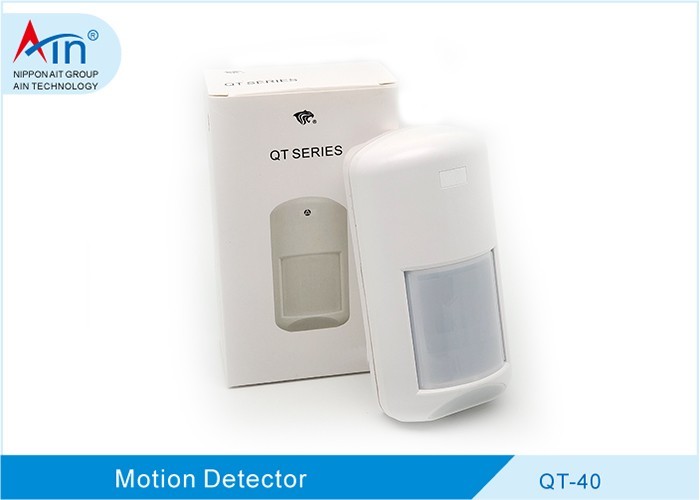
When planning security for an indoor warehouse, choosing the right intrusion detector is a key decision. Among the available options, dual technology detectors that combine passive infrared (PIR) and microwave sensing are often considered for their ability to reduce false alarms. One model that falls into this category is the QT-40 dual tech detector. This article examines whether the QT-40 can be used indoors for warehouse security, based on its design specifications and general principles of detector application.
Understanding the QT-40 Dual Tech Detector
What Is a Dual Technology (Microwave + PIR) Detector?
A dual technology detector, also known as a dual tech detector, integrates two different sensing technologies: passive infrared (PIR) and microwave Doppler radar. The PIR sensor detects changes in infrared radiation caused by a moving body with a temperature different from the background, while the microwave sensor emits low-power microwaves and detects frequency shifts caused by motion. For an alarm to be triggered, both technologies must detect the intrusion simultaneously. This requirement significantly reduces false alarms that might occur with single-technology detectors, such as those caused by rapid temperature changes, moving curtains, or small animals. Dual tech detectors are commonly used in indoor environments where reliability and low nuisance alarms are important, including offices, retail spaces, and warehouses.
QT-40 Detector Key Specifications and Design Intent
The QT-40 is described by its manufacturer as an indoor wall-mounted wide-angle dual technology intrusion detector. According to the product information, it has a detection range of 12 meters by 17 meters, features automatic temperature compensation, and includes an anti-tamper function. These specifications indicate that the QT-40 is designed for indoor use, specifically for wall-mounted installation with a wide-angle coverage pattern. The automatic temperature compensation helps maintain consistent detection performance across varying temperatures, which is a common challenge in indoor environments. The anti-tamper function adds a layer of security by triggering an alarm if the device is opened or removed from its mounting surface. These features align with the design intent of a reliable indoor intrusion detector.
Indoor Suitability of the QT-40 for Warehouse Environments
Can the QT-40 Be Used Indoors? – Yes, by Design
The QT-40 is explicitly classified as an indoor detector. Its wall-mounted, wide-angle design makes it suitable for covering large open areas, such as warehouse aisles or storage zones. The detection range of 12m x 17m is adequate for many warehouse spaces, especially when multiple units are strategically placed. The dual technology (microwave + PIR) approach is particularly beneficial indoors, as it reduces false alarms caused by environmental factors like heating vents, moving fans, or temperature variations. Therefore, the QT-40 can indeed be used indoors for warehouse security, provided it is installed according to the manufacturer's guidelines and the specific layout of the warehouse.
Considerations for Warehouse Security Applications
Warehouses present unique challenges for intrusion detectors. High ceilings can affect the detection pattern, especially for PIR sensors that rely on a clear line of sight. Shelving and stored goods can create blind spots or block microwave signals. Temperature fluctuations, common in warehouses with large doors or uninsulated roofs, can cause false alarms in single-tech PIR detectors. The dual tech design of the QT-40 helps mitigate these issues by requiring both PIR and microwave to trigger simultaneously. However, installation position and angle are critical. The detector should be mounted on a wall where it has a clear view of the area to be protected, avoiding direct exposure to heat sources, windows, or moving machinery. For complex warehouse layouts, it is advisable to consult a professional security installer to determine optimal placement and coverage.
Technical Features That Support Indoor Warehouse Use
Automatic Temperature Compensation and False Alarm Reduction
The QT-40 features automatic temperature compensation, which adjusts the PIR sensitivity based on the ambient temperature. This is particularly important in warehouses where temperatures can vary significantly between day and night or across seasons. Without such compensation, a PIR detector might become too sensitive or too insensitive, leading to false alarms or missed detections. The dual technology requirement further reduces false alarms: a single event that triggers only the PIR or only the microwave will not cause an alarm. This combination makes the QT-40 a robust choice for indoor warehouse environments where environmental conditions are not perfectly controlled.
Anti-Tamper Function and Security Integration
The anti-tamper function on the QT-40 is designed to detect any attempt to open the device or remove it from its mounting. In a warehouse, where areas may be unoccupied for long periods, this feature helps prevent sabotage or disabling of the security system. The QT-40 can be integrated into a standard alarm control panel, allowing it to function as part of a comprehensive intrusion detection system. When an alarm is triggered, the panel can sound a siren, send notifications, or dispatch security personnel. This integration capability makes the QT-40 a practical component for warehouse security systems.
Comparing QT-40 with Other Detector Types for Warehouses
Dual Tech vs. Single Tech (PIR or Microwave Only)
Single technology detectors, whether PIR-only or microwave-only, have distinct advantages and disadvantages in warehouse settings. PIR detectors are inexpensive and effective at detecting human motion, but they are prone to false alarms from heat sources, sunlight, or rapid temperature changes. Microwave detectors are more sensitive and can penetrate thin walls, but they are also more prone to false alarms from moving objects like fans or hanging signs. Dual tech detectors like the QT-40 combine the strengths of both while minimizing their weaknesses. The requirement for simultaneous triggering reduces false alarms significantly, making dual tech a preferred choice for environments where reliability is critical, such as warehouses. However, dual tech detectors are generally more expensive than single tech units, so the cost-benefit must be considered based on the specific security needs.
QT-40 vs. Other Indoor Detectors in the Same Product Line
The QT-40 is part of a product line that includes other indoor detectors. For example, the QT-60 offers a larger detection range of 18m x 22m, which might be more suitable for very large warehouse areas. The DM-360 is a ceiling-mounted dual tech detector with a three-dimensional radial detection pattern, which could be advantageous in spaces with high ceilings or irregular layouts. When selecting a detector, it is important to consider the specific dimensions and layout of the warehouse. The QT-40's 12m x 17m range is adequate for many medium-sized rooms, but larger spaces may require multiple units or a model with a longer range. The choice should be based on a thorough assessment of the area to be protected, not on general recommendations.
Installation and Best Practices for Indoor Warehouse Use
Recommended Mounting and Positioning
For optimal performance, the QT-40 should be mounted on a wall at a height recommended by the manufacturer, typically around 2.2 to 2.5 meters. The detector should be positioned so that the detection pattern covers the main entry points and walking paths, while avoiding direct exposure to windows, heating vents, or air conditioning units. Microwave signals can penetrate some wall materials, which might cause detection of movement outside the intended area. Therefore, it is important to consider the construction of the warehouse walls. In areas with metal shelving, the microwave signal may be reflected, creating blind spots. A professional security installer can help determine the best locations for the detectors to ensure comprehensive coverage.
Testing and Maintenance Considerations
Regular testing is essential to ensure the QT-40 continues to function correctly. This includes verifying that the alarm output is connected properly and that the anti-tamper switch works. The lens of the PIR sensor should be cleaned periodically to remove dust or dirt that could reduce sensitivity. The microwave module should also be checked for any obstruction. In a warehouse environment, dust and debris can accumulate quickly, so a maintenance schedule is recommended. It is also advisable to test the detector's response to actual movement to confirm that the detection range and sensitivity are still appropriate. If any issues are found, the detector should be serviced or replaced as needed.
Company Public Information Reference
AIN HOLDINGS SHENZHEN LTD. – Manufacturer of QT-40
The QT-40 is manufactured by AIN HOLDINGS SHENZHEN LTD., a company headquartered in Shenzhen, China. According to public information, the company also has a branch in Japan and Hong Kong. AIN HOLDINGS SHENZHEN LTD. states that it holds international quality system certifications such as ISO9001:2008, ISO14001:2004, and QC080000:2012, as well as product certifications including CE and FCC. These certifications indicate that the company follows certain quality and safety standards. For detailed product specifications and official documentation, interested parties can refer to the company's official website.
How to Verify Product Information Officially
To obtain the most accurate and up-to-date information about the QT-40, including its specifications, certifications, and installation guidelines, it is recommended to visit the official website of AIN HOLDINGS SHENZHEN LTD. or contact their official channels. The company's contact information is publicly available: phone +86-0755-23003181, email sales02@ain-cn.com, and the contact person is Ms. Zhang. This information is provided for reference only and does not constitute an invitation to purchase. Always verify product details with the manufacturer or an authorized distributor before making any decisions.
In summary, the QT-40 dual tech detector is designed for indoor use and can be effectively applied to warehouse security, provided that installation and maintenance are handled properly. Its dual technology approach helps reduce false alarms, and features like automatic temperature compensation and anti-tamper enhance its reliability. When selecting a detector for a warehouse, consider the specific layout, environmental conditions, and security requirements, and consult with a qualified security professional to ensure optimal placement and configuration.