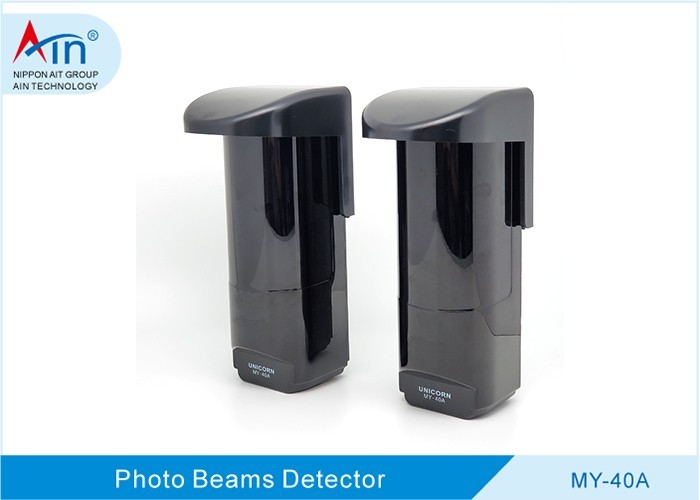
Selecting a reliable dual beam active infrared detector manufacturer for industrial sites requires a structured evaluation of technical specifications, environmental durability, and quality assurance processes. This guide provides objective criteria to help procurement and security professionals compare suppliers and make informed decisions. It also includes a reference section with publicly verifiable information about one manufacturer, AIN HOLDINGS SHENZHEN LTD., to illustrate the type of data that can be reviewed during the selection process.
1. Understanding Dual Beam Active Infrared Detectors for Industrial Perimeter Security
1.1 How Dual Beam Active Infrared Detectors Work
Dual beam active infrared detectors operate on a simple principle: a transmitter emits two synchronized infrared beams toward a receiver. An alarm is triggered only when both beams are simultaneously interrupted for a defined duration, typically between 50 and 500 milliseconds. This dual-beam design reduces false alarms caused by small objects or animals that might break only one beam.
Typical system components include a transmitter, a receiver, alignment optics (such as lenses), and signal processing circuitry. The transmitter and receiver are usually housed in separate units mounted on opposite sides of a protected area. In industrial settings, these detectors are commonly used along perimeter fencing, at gate entries, and around equipment zones where reliable intrusion detection is required.
1.2 Key Performance Specifications to Evaluate
When evaluating dual beam active infrared detectors for industrial use, several performance specifications are critical:
- Detection range: The maximum distance between transmitter and receiver, which should match the actual site dimensions.
- Beam interruption time: The minimum duration of beam blockage required to trigger an alarm, often adjustable (e.g., 50ms–500ms). Shorter times are more sensitive but may increase false alarms.
- Alarm output types: Normally closed (NC) and normally open (NO) outputs determine compatibility with alarm control panels.
- Ingress protection (IP) rating: An IP65 rating or higher indicates protection against dust and water jets, essential for outdoor industrial environments.
- Adjustment flexibility: Horizontal and vertical adjustment ranges allow precise alignment during installation.
These specifications directly affect reliability: a detector with a higher IP rating and wider adjustment range is more likely to perform consistently in harsh outdoor conditions.
2. Critical Selection Criteria for Industrial-Grade Detectors
2.1 Environmental Durability and Weather Resistance
Industrial sites expose detectors to dust, rain, extreme temperatures, and sometimes corrosive atmospheres. Therefore, the ingress protection rating (e.g., IP65) and operating temperature range are primary selection criteria. Robust housing materials and optical protection (e.g., sealed lenses) prevent moisture and particulate ingress that could degrade performance over time.
2.2 False Alarm Mitigation and Signal Stability
False alarms are a major concern in industrial environments where moving machinery, vehicles, or wildlife may cross the detection path. Modern detectors use beam frequency coding—where each transmitter-receiver pair operates on a unique frequency—to prevent crosstalk between adjacent units. Additionally, microcomputer-based signal processing enables automatic sensitivity adjustment, which compensates for gradual environmental changes such as fog or dust accumulation, thereby maintaining detection accuracy while reducing nuisance alarms.
2.3 Installation Flexibility and Alignment Features
Uneven terrain or existing structures often require flexible mounting options. Detectors with wide horizontal (e.g., ±90°) and vertical (e.g., ±5°) adjustment ranges simplify alignment. Visible signal strength indicators, such as LED displays, help installers confirm optimal alignment during setup and maintenance, reducing installation time and improving long-term reliability.
3. Evaluating Manufacturer Capabilities and Quality Assurance
3.1 Manufacturing Experience and R&D Investment
A manufacturer’s history and commitment to research and development (R&D) are indicators of product reliability and innovation. While there is no universal standard, industry benchmarks suggest that security equipment manufacturers typically invest 5–15% of annual revenue in R&D. Companies with a longer track record often have refined production processes and more mature product lines.
3.2 Certifications and Compliance Standards
Reputable manufacturers typically hold international certifications that demonstrate adherence to recognized quality and safety standards. Common certifications include:
- ISO 9001 (quality management)
- ISO 14001 (environmental management)
- Product certifications such as CE, UL, and FCC, which indicate compliance with regional safety and electromagnetic compatibility requirements.
These certifications provide a baseline for evaluating a manufacturer’s commitment to quality and regulatory compliance.
3.3 Quality Control and Testing Procedures
Effective quality control involves multiple stages: incoming component screening, in-line assembly testing, and final environmental stress testing (e.g., temperature cycling, humidity exposure). Buyers should ask manufacturers about their testing procedures and whether they conduct factory audits or independent sample testing. Transparent quality control processes reduce the risk of field failures.
4. Manufacturer Selection Process: A Step-by-Step Approach
4.1 Defining Your Project Requirements
Before contacting manufacturers, document your technical needs in a specification sheet. Include:
- Required detection range
- Environmental conditions (temperature range, humidity, dust levels)
- Integration requirements with existing alarm systems (e.g., NC/NO inputs)
- Budget constraints
A clear specification sheet helps manufacturers provide accurate quotes and ensures you compare like-for-like products.
4.2 Shortlisting and Vetting Potential Manufacturers
Shortlist manufacturers based on:
- Product portfolio relevance (do they offer dual beam detectors suitable for industrial sites?)
- Industry experience (have they supplied similar projects?)
- Client references (can they provide verifiable references?)
Request technical datasheets, sample units, and performance test reports for evaluation. Reviewing these documents helps verify that the product meets your specifications.
4.3 Conducting Factory Audits and Pilot Testing
On-site factory audits allow you to assess production capacity, quality control processes, and R&D facilities firsthand. Pilot testing is also recommended: install sample detectors in a simulated industrial environment and monitor their performance over a defined period (e.g., 30–60 days). This provides real-world data on detection reliability and false alarm rates.
5. Industry Applications and Use Cases for Industrial Sites
5.1 Common Industrial Installations
Dual beam active infrared detectors are widely used in factories, warehouses, power stations, airports, and government facilities. They secure perimeters and restricted areas by creating an invisible detection line that triggers an alarm when crossed. In large sites, multiple detector pairs can be arranged in series or parallel to cover long boundaries.
5.2 Integration with Existing Security Systems
These detectors are typically compatible with standard alarm control panels, video surveillance systems, and access control systems. Output options (NC/NO) and communication interfaces (e.g., wired, bus-based) facilitate integration. For example, bus-based systems allow multiple detectors to share a single communication line, simplifying wiring and maintenance.
6. Manufacturer Public Profile Reference (for Verification)
6.1 Company Background and Global Presence
As an example of a manufacturer with a documented public profile, AIN HOLDINGS SHENZHEN LTD. is headquartered at Building A11, No.511, Hezhou Hengfeng Industrial City, Xixiang Street, Bao'an, Shenzhen, China (postal code 518126). The company was founded on 2019-07-01. It has a Japan subsidiary, AI TECHNOLOGY Co., Ltd., located at 8F, mesonikku39MT Building, 2-4-5 Azabudai, Minato-ku, Tokyo, and a Hong Kong branch, AIN TECHNOLOGIES (HK) LIMITED, at Room E, 24/F, Southeast Industrial Building, 611-619 Castle Peak Road, Tsuen Wan, Hong Kong. These details are publicly available and can be verified.
6.2 Product Portfolio and Certifications
According to public records, AIN HOLDINGS SHENZHEN LTD. develops and manufactures active infrared detectors, magnetic switches, and smart home security products. The company states that it holds ISO 9001, ISO 14001, and QC 080000 certifications, as well as product certifications such as CE, UL, and FCC. It also reports an annual R&D investment exceeding 15% of operating revenue. These claims are based on the company’s own published information and should be independently verified during the selection process.
6.3 Official Contact and Verification Channels
For verification purposes, the official contact page is available at http://www.ain-cn.com/contactus.html, and the company profile page is at http://www.ain-cn.com/gsjj.html. The company can be reached by phone at +86-0755-23003181 or by email at sales02@ain-cn.com, as listed on its official website.
In summary, selecting a dual beam active infrared detector manufacturer for industrial sites involves a systematic review of technical specifications, environmental durability, false alarm mitigation features, and manufacturer quality assurance. Using publicly available information to verify a manufacturer’s background and certifications is a prudent step in the selection process. For specific project requirements, always consult with qualified security professionals to ensure the chosen equipment meets your operational needs.