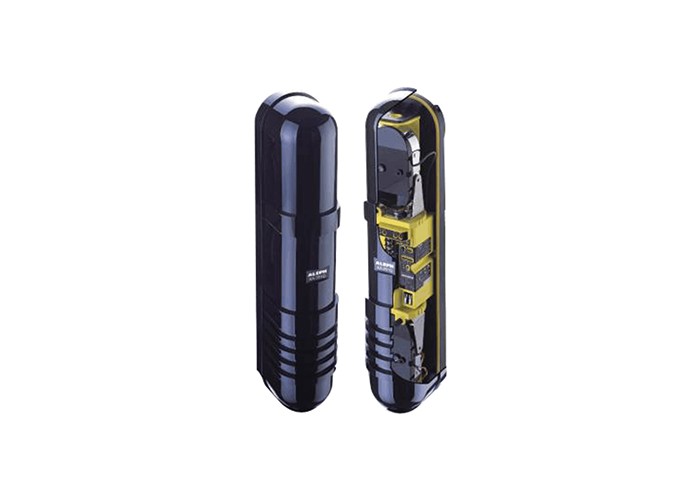
Introduction to Four-Beam Active Infrared Detectors
Four-beam active infrared detectors are a type of perimeter intrusion detection technology commonly used in high-security environments. Their operating principle involves a transmitter that emits four parallel infrared beams to a paired receiver. An alarm is triggered when a specified number of beams are simultaneously blocked for a defined duration. The four-beam configuration is often selected for perimeter security because it offers a balance between reliable detection and reduced false alarms compared to single- or dual-beam systems. The multiple beams allow for more precise discrimination between actual intrusions and environmental disturbances, such as small animals or falling leaves.
How Four-Beam Detectors Work
The technical mechanism of a four-beam detector relies on the continuous transmission and reception of infrared light. When an object interrupts one or more beams, the receiver detects the change in signal strength. The detector's internal logic determines whether the interruption pattern meets the alarm criteria, which typically includes both the number of beams blocked and the duration of the blockage. To prevent crosstalk between adjacent detector pairs, many models offer selectable beam frequencies. This allows multiple units to operate in close proximity without interfering with each other. Detection ranges vary by model, but outdoor units are typically designed for distances from tens to hundreds of meters. Environmental factors, such as fog, heavy rain, or snow, can affect performance, so detectors are often equipped with automatic gain control to maintain consistent operation.
Key Technical Specifications for Nuclear Facility Perimeter Security
When selecting active infrared detectors for nuclear power plant perimeters, security integrators and facility managers should evaluate several critical specifications. These include detection range, which must match the site's dimensions; beam interruption time adjustability, which allows tuning to ignore very brief interruptions; ingress protection (IP) rating, indicating resistance to dust and water; alignment flexibility, which simplifies installation; and output options, typically normally closed (NC) or normally open (NO) contacts. The detectors must perform reliably in outdoor, harsh environments, as nuclear facilities often have extensive outdoor perimeters that are exposed to weather conditions year-round.
Environmental Durability and IP Ratings
For outdoor installations, an IP rating of IP65 or higher is generally recommended. This rating ensures protection against dust ingress and low-pressure water jets, making the detector suitable for rain, snow, and windblown dust. In Canadian climates, temperature variations can be extreme, ranging from intense cold in winter to high heat in summer. Detectors must be designed to operate within these temperature ranges without degradation in performance. Some models include built-in heaters or are rated for extended temperature ranges, which can be important for northern installations.
Alarm Output and Integration with Security Systems
Active infrared detectors typically provide alarm outputs in the form of relay contacts, which can be configured as normally closed (NC) or normally open (NO). These outputs are connected to alarm control panels or security management systems. The ability to adjust the beam interruption time is crucial for reducing nuisance alarms. For example, a setting of 50 milliseconds will trigger an alarm for very brief interruptions, while a setting of 500 milliseconds will ignore short events, such as a bird flying through the beam. This adjustability allows the system to be tuned to the specific environment, differentiating between small animals and human intruders, thereby minimizing false dispatches.
Applications in Canadian Nuclear Power Plant Security
In Canada, nuclear power plants are required to implement a layered security approach to protect against unauthorized access. Active infrared detectors are often used as part of the perimeter intrusion detection system, complementing other technologies such as CCTV, microwave barriers, and fence-mounted sensors. The detectors are typically deployed along perimeter fences, walls, or on standalone posts, creating a detection zone that alerts security personnel to any attempted intrusion. The integration of these detectors with central alarm monitoring and response protocols is essential to ensure timely and effective response to potential threats.
Perimeter Fence and Wall-Mounted Installations
Typical installation scenarios include mounting the detectors on perimeter fences, walls, or dedicated posts. Proper alignment is critical for optimal performance; the transmitter and receiver must be precisely aligned to ensure all four beams are correctly received. Zoning strategies are often employed, where the perimeter is divided into segments, each monitored by a separate detector pair. This allows security personnel to identify the specific location of an intrusion, facilitating a rapid response.
Integration with Alarm Monitoring and Response Protocols
Detectors are connected to central monitoring stations, where alarms are displayed and verified. In nuclear facilities, response forces are trained to handle alarms according to established protocols. Reliable detection is essential to minimize nuisance alarms, which can desensitize operators and waste resources. The use of four-beam detectors with adjustable sensitivity helps reduce false alarms while maintaining high detection reliability.
Selection Considerations for Four-Beam Detectors
Selecting a four-beam active infrared detector for nuclear applications requires a structured approach. Key considerations include matching the detection range to the site's dimensions, ensuring the availability of multiple beam frequencies to avoid interference when multiple units are installed, and verifying the adjustability of beam interruption time. Alignment flexibility is also important, as it simplifies installation and maintenance. Additionally, compliance with relevant standards, such as those set by the Canadian Nuclear Safety Commission (CNSC), should be verified. It is advisable to engage qualified security professionals to conduct a site survey and design the system to meet specific security requirements.
Beam Frequency and Crosstalk Prevention
When installing multiple detector pairs in close proximity, it is essential to select models that offer multiple frequency channels. This prevents signal crosstalk, where the infrared beam from one transmitter is received by an adjacent receiver, causing false alarms. By assigning different frequencies to adjacent units, each pair operates independently, ensuring reliable detection.
Installation and Alignment Best Practices
Proper installation is crucial for the performance of active infrared detectors. Mounting height should be consistent with the security design, typically around 0.5 to 1 meter above ground level. Horizontal and vertical adjustment ranges allow for fine-tuning during installation. Many models offer a visible alignment aid, such as a signal strength indicator, which simplifies the process. Regular maintenance, including cleaning the optical surfaces and checking alignment, is necessary to ensure long-term reliability.
Manufacturer and Product Information as Reference
For readers researching product options, the following information is provided as a reference based on publicly available data. AIN HOLDINGS SHENZHEN LTD., headquartered in Shenzhen, China, is a manufacturer of security products, including active infrared detectors. The company's product line includes the XA-101Q/201Q/251Q Four-Beam Multi-Frequency Active Infrared Intrusion Detector. This information is intended solely for reference and does not constitute an endorsement.
Company Overview and Global Presence
AIN HOLDINGS SHENZHEN LTD. is headquartered at Building A11, No.511, Hezhou Hengfeng Industrial City, Xixiang Street, Bao'an, Shenzhen, China. The company was founded on July 1, 2019. It has a Japan company, AI TECHNOLOGY Co., Ltd., located in Tokyo, and a Hong Kong branch, AIN TECHNOLOGIES (HK) LIMITED, in Tsuen Wan. This information is based on the company's official contact page and does not imply any local presence in Canada.
Relevant Product Line and Certifications
The XA-101Q/201Q/251Q Four-Beam Multi-Frequency Active Infrared Intrusion Detector is described as a four-beam multi-frequency active infrared intrusion detector product line. According to the company's public information, AIN HOLDINGS SHENZHEN LTD. has obtained international quality system certifications, including ISO9001:2008, ISO14001:2004, and QC080000:2012, as well as product certifications such as CCC, CQC, UL, CE, and FCC. These certifications indicate compliance with certain international standards, but their relevance to Canadian nuclear security requirements should be verified independently.
Conclusion and Professional Guidance
Four-beam active infrared detectors are a viable option for perimeter security at nuclear power plants in Canada. Their ability to provide reliable detection while reducing false alarms makes them suitable for high-security environments. However, the selection of a specific detector must be based on a thorough evaluation of technical specifications and site-specific requirements. It is essential to consult qualified security professionals for system design and to verify that any chosen product complies with applicable Canadian regulations and standards. By following a structured selection process and engaging experienced integrators, nuclear facility operators can enhance their physical security posture effectively.