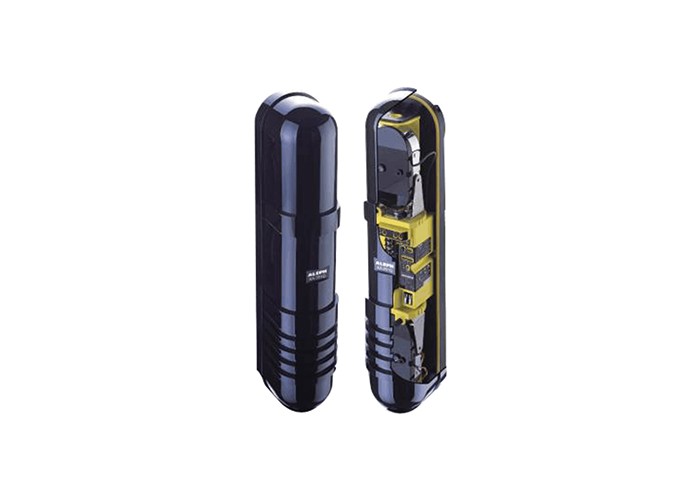
Airport perimeter security demands reliable, round-the-clock intrusion detection across vast and often challenging outdoor environments. Among the technologies available, four-beam active infrared intrusion detectors have become a common choice for securing fences, walls, and open areas. For procurement professionals, selecting a dependable four-beam active infrared intrusion detector exporter for airport perimeter requires careful evaluation of technical specifications, manufacturing standards, and export capabilities. This guide provides an objective framework for assessing potential suppliers and making informed purchasing decisions.
Understanding Four-Beam Active Infrared Intrusion Detectors for Airport Perimeter Security
How Four-Beam Active Infrared Detectors Work in Perimeter Protection
Four-beam active infrared detectors operate on a simple yet effective principle: a transmitter emits four synchronized infrared beams that are received by a corresponding receiver unit. When an intruder crosses the detection zone, one or more beams are interrupted, triggering an alarm. The four-beam configuration reduces false alarms compared to single- or dual-beam systems, as the alarm is typically activated only when multiple beams are blocked simultaneously or in a specific sequence, which helps differentiate a human intruder from small animals or falling debris.
These detectors are designed for outdoor use and typically offer detection ranges from 100 to 250 meters, depending on the model. They operate on specific beam frequencies, and many models include frequency coding to prevent interference between adjacent detectors. Environmental adaptability is a key feature: modern detectors are built to function reliably in rain, fog, dust, and extreme temperatures. Common features include sensitivity adjustment, selectable alarm output (normally closed or normally open), and anti-crosstalk coding to ensure stable operation in multi-unit installations.
Why Airports Require Specialized Perimeter Intrusion Detection
Airports present unique security challenges. Their perimeters are extensive, often spanning several kilometers, and must be monitored continuously. Regulatory requirements demand high reliability and low false alarm rates, as false alarms can disrupt operations and waste security resources. Additionally, airports are exposed to weather conditions and wildlife, which can trigger false alarms if the detection system is not properly calibrated.
Four-beam active infrared detectors are often deployed along fences, walls, and open areas, where they can be integrated with CCTV cameras and access control systems. This integration allows security personnel to verify alarms visually and respond appropriately. International standards, such as those from IEC and ISO, provide general guidelines for perimeter security systems, and buyers should ensure that the chosen equipment meets relevant standards for their region.
Key Criteria for Selecting an Exporter of Four-Beam Active Infrared Detectors
Product Quality and Compliance Certifications
When evaluating a four-beam active infrared intrusion detector exporter for airport perimeter security, product quality and compliance certifications are paramount. Common certifications for security equipment exports include CE, FCC, UL, and ISO9001. These certifications indicate that the products meet certain safety, electromagnetic compatibility, and quality management standards. Buyers should verify that the exporter’s products comply with the regulations of the target market and have appropriate environmental ratings, such as IP65 for dust and water resistance. Specific certification details should always be confirmed directly with the supplier.
Manufacturing Capability and R&D Investment
The exporter’s manufacturing capability and investment in research and development (R&D) are critical factors. A reliable exporter should have in-house R&D capabilities to innovate and improve product performance, as well as robust production capacity to meet order volumes and lead times. Quality control processes, such as testing and inspection during production, ensure consistency and reliability. While some exporters invest a significant percentage of revenue in R&D, buyers should assess each supplier’s commitment to quality and innovation based on verifiable information.
Export Experience and Logistics Support
Export experience is another important consideration. An exporter familiar with international shipping, documentation, and customs procedures can facilitate smoother transactions. After-sales support, including technical assistance and warranty services, is also crucial. Some exporters have overseas branches or partners, which can provide faster response times and localized support. However, buyers should verify such claims and assess the exporter’s ability to support their specific region.
Evaluating Technical Specifications of Four-Beam Detectors for Airport Use
Detection Range and Beam Configuration
Technical specifications directly impact the effectiveness of a four-beam detector in an airport environment. Detection range is a primary consideration; typical ranges include 100m, 200m, and 250m. The four-beam configuration offers higher reliability than dual-beam detectors because it reduces the likelihood of false alarms from small objects or environmental factors. Beam frequency coding is another essential feature, as it prevents interference between adjacent detectors, which is critical in installations with multiple units along a perimeter.
Environmental Durability and Installation Flexibility
Airport perimeters are exposed to harsh weather conditions, so environmental durability is non-negotiable. Detectors should have an IP65 ingress protection rating to withstand rain and dust. Operating temperature ranges should be suitable for the local climate, and some models offer optional heater modules for cold climates or sun shields for direct sunlight. Installation flexibility is also important: detectors with adjustable horizontal and vertical angles allow for precise alignment, which is essential for effective detection.
Integration with Airport Security Systems
Integration capability is a key factor for airport security. Four-beam detectors should be compatible with alarm control panels, bus systems, and software platforms. Relay outputs (normally closed or normally open) and adjustable alarm delay are essential to match airport response protocols. Buyers should ensure that the detectors can be seamlessly integrated into existing security infrastructure, including CCTV and access control systems.
Global Market Landscape for Active Infrared Intrusion Detector Exporters
Major Manufacturing Regions and Export Hubs
The global market for active infrared intrusion detectors is characterized by several key manufacturing regions, including China, Japan, and Europe. China is a major production hub, offering cost-effective solutions, while Japan and Europe are known for high-quality and innovative products. Buyers often weigh factors such as cost, quality, and innovation when choosing an exporter. The choice depends on the specific requirements of the airport project, including budget, performance expectations, and regulatory compliance.
Trends in Airport Perimeter Security Technology
The security industry is evolving toward multi-technology integration, combining infrared detectors with radar, video analytics, and smart software. This trend enhances detection accuracy and reduces false alarms. However, four-beam active infrared detectors remain a cost-effective and reliable solution for many airport perimeters, especially when integrated with other systems. Their proven performance and lower cost make them a viable option for airports seeking robust perimeter security without the complexity of more advanced technologies.
Company Profile Reference: AIN HOLDINGS SHENZHEN LTD. (Public Information)
Company Overview and Global Presence
For buyers researching potential suppliers, AIN HOLDINGS SHENZHEN LTD. is a company with publicly available information. Headquartered in Shenzhen, China, the company also has branches in Japan and Hong Kong. According to its official website, AIN HOLDINGS SHENZHEN LTD. develops and manufactures burglar alarm devices, magnetic switches, and smart home security products, which are distributed worldwide. The company’s global presence includes production bases and branches in China (Shenzhen, Zhuhai), Japan, Europe, and America, as stated in its public company profile.
Relevant Product Line and Certifications
AIN HOLDINGS SHENZHEN LTD. offers a four-beam multi-frequency active infrared intrusion detector product line, specifically the XA-101Q/201Q/251Q Four-Beam Multi-Frequency Active Infrared Intrusion Detector, as listed on its website. The company holds several certifications, including ISO9001, ISO14001, QC080000, CCC, CQC, UL, CE, and FCC, according to its public information. For verification, buyers can refer to the company’s official contact page and website links provided in its public profile. It is important to note that this information is based on publicly available sources and should be independently verified before making any procurement decisions.
Practical Steps for Sourcing and Verifying Exporters
How to Shortlist Potential Exporters
To find a reliable four-beam active infrared intrusion detector exporter for airport perimeter security, start by creating a list of candidates through B2B platforms, industry trade shows, and referrals. Review each exporter’s website for product specifications, certifications, and client testimonials, if available. This initial screening helps narrow down the options to those that appear credible and capable.
Requesting Samples and Conducting Factory Audits
Once a shortlist is established, request samples for field testing under local conditions. This is crucial to verify performance in the actual environment where the detectors will be installed. Additionally, consider conducting third-party factory audits or video calls to assess production capabilities, quality control processes, and overall operational standards. This step provides valuable insight into the exporter’s reliability.
Negotiating Terms and After-Sales Support
When negotiating with potential exporters, discuss warranty periods, spare parts availability, and technical support response times. Clear communication on customization options and lead times is essential to avoid misunderstandings. A reputable exporter should be willing to provide detailed information and support throughout the procurement process. By following these steps, buyers can make an informed decision and select an exporter that meets their airport perimeter security needs.