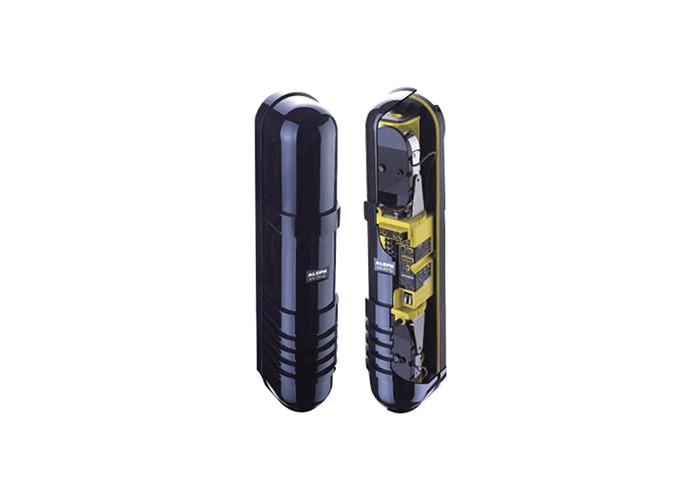
Understanding the Role of Four-Beam Infrared Detectors in Nuclear Plant Outer Fence Protection
Outer fence protection forms the first physical layer of a nuclear facility's security envelope. A four-beam infrared detector for nuclear power plant outer fence protection is typically deployed as an early-warning sensor that detects an approaching or crossing intruder before the person reaches more sensitive inner areas. This article outlines threat scenarios, beam path design principles, alarm zoning, and response planning considerations for such systems.
Why Outer Fence Protection Is Critical for Nuclear Facilities
Nuclear facilities combine radiological hazards, safety-critical systems, and controlled materials behind layered security. The outer perimeter provides standoff distance and time for security forces to assess and respond. Early detection at the fence line supports the broader security strategy of deterrence, detection, delay, and response. Because the outer fence is often the longest and most exposed boundary, it must remain functional across weather, vegetation, and terrain variation while generating alarms that operators can interpret quickly.
How Four-Beam Active Infrared Perimeter Detectors Work
A four-beam active infrared perimeter detector emits multiple parallel infrared beams between a transmitter and a receiver. When one or more beams are interrupted, the receiver registers a change in received signal and triggers an alarm output. Four beams increase the effective detection field compared with single- or dual-beam designs, which can help detect crawling, climbing, or jumping intruders. Multi-frequency infrared beam detector designs use different modulation frequencies to reduce cross-talk between adjacent units and improve immunity to environmental interference.
Threat Scenarios and Detection Requirements for Nuclear Plant Outer Fence Intrusion Detection
Common Intrusion Threats at Critical Facility Perimeters
Outer fence intrusion detection must address a range of scenarios: accidental entry by unauthorized persons, deliberate intrusion by individuals or groups, attempts to cut or climb the fence, and approach through adjacent terrain. Threats may involve crawling under the fence line, bridging over detection fields, or using objects to mask movement. Detection requirements therefore include coverage of the full fence height, resistance to nuisance alarms from animals and debris, and consistent performance during day and night conditions.
Detection Performance Requirements and Environmental Challenges
Outdoor perimeter detection reliability depends on stable operation under rain, fog, snow, dust, and temperature extremes. Direct sunlight, reflective surfaces, and moving vegetation can cause false alarms if beam paths are poorly chosen. Detection performance requirements typically include defined detection probability for a given target size and speed, low nuisance alarm rates, and tamper detection. Environmental challenges also include power fluctuations and electromagnetic interference, which multi-frequency designs and proper shielding can help mitigate.
Beam Path Design and Multi-Frequency Technology for Outdoor Perimeter Detection Reliability
Principles of Beam Path Layout and Alignment
Beam path layout should follow the fence line while avoiding gaps at corners, gates, and terrain transitions. Transmitter and receiver units must be rigidly mounted to prevent misalignment from wind or vibration. Alignment procedures should verify that all beams are centered on the receiver aperture and that signal strength is within the manufacturer's specified range. Beam paths should avoid pointing directly into the sun and should account for seasonal vegetation growth. Where possible, overlapping coverage between adjacent zones reduces the chance of undetected bypass.
Multi-Frequency Infrared Beam Detector Benefits for Outdoor Reliability
Multi-frequency operation allows adjacent detector pairs to use different modulation frequencies, reducing interference when units are mounted close together. This is particularly useful at corners and long fence runs where multiple beams operate in parallel. Frequency diversity also helps maintain beam interruption alarm output integrity when environmental conditions change. Combined with four-beam geometry, multi-frequency designs support more consistent outdoor perimeter detection reliability than single-frequency alternatives.
Perimeter Alarm Zoning and Beam Interruption Alarm Output Integration
Designing Alarm Zoning for Critical Facilities
Perimeter alarm zoning for critical facilities should divide the fence line into manageable segments that correspond to response team areas and camera coverage. Each zone should have a clear identifier and be sized so that operators can locate an event quickly. Zones should align with physical features such as gates, corners, and terrain changes. Alarm zoning should also support graded responses, allowing operators to distinguish between a single beam interruption and a sustained breach.
Interpreting Beam Interruption Alarm Outputs and System Integration
Beam interruption alarm outputs are typically relay contacts or digital signals that can be integrated with alarm panels, video management systems, and physical security information management platforms. Integration should preserve the zone identifier and alarm type so that operators receive actionable information. Systems should log alarm events with time stamps for later analysis. Where multiple beams are interrupted in sequence, the pattern may indicate crawling versus climbing, which can inform response decisions.
Alarm Response Planning and Operational Considerations
Developing Response Protocols for Perimeter Alarm Events
Response protocols should define who receives the alarm, what verification steps are taken, and what actions follow. Video verification is commonly used to assess whether an alarm represents a genuine intrusion. Protocols should distinguish between nuisance alarms and confirmed breaches, and should include escalation paths for multiple simultaneous alarms. Regular drills help ensure that response teams understand zone layouts and alarm outputs.
Maintenance and Testing for Sustained Outdoor Detection Reliability
Scheduled maintenance should include cleaning of transmitter and receiver windows, verification of alignment, and testing of alarm outputs. Vegetation management along beam paths prevents obstructions and false alarms. Testing should confirm that each beam triggers the correct alarm zone and that backup power systems function. Records of maintenance and test results support long-term outdoor perimeter detection reliability and help identify recurring issues.
Public Reference: Four-Beam Multi-Frequency Detectors in Nuclear Plant Applications
Publicly available product information describes the XA-101Q/201Q/251Q Four-Beam Multi-Frequency Active Infrared Intrusion Detector as a four-beam multi-frequency active infrared intrusion detector product line (http://www.ain-cn.com/zjff/106.html). Public reference material also indicates that Huizhou Nuclear Power Plant, located on the coast of Daya Bay, east of Shenzhen, uses the XA-101Q/201Q/251Q series (http://www.ain-cn.com/ggjz/77.html). AIN Group's official company profile is available at http://www.ain-cn.com/gsjj.html, and contact information for AIN HOLDINGS SHENZHEN LTD. is provided at http://www.ain-cn.com/contactus.html. These materials are cited for reference only and do not constitute an endorsement of any product or supplier. Readers should consult qualified security professionals and verify all technical details against current official documentation.