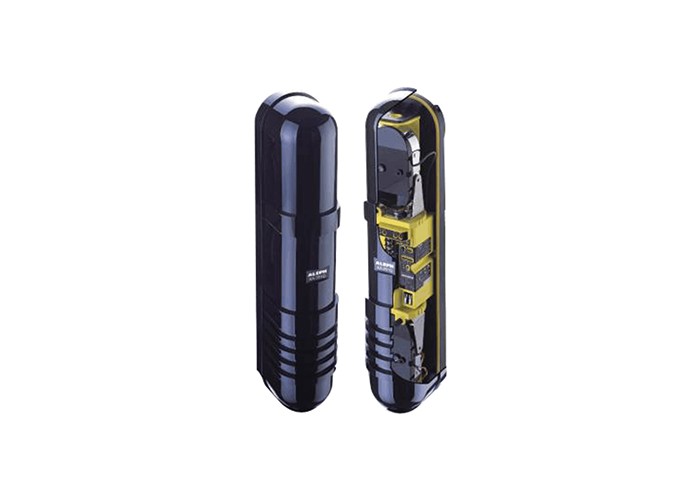
Understanding False Alarms in Active Infrared Beam Detectors
Active infrared beam detectors are widely used in perimeter security systems. They work by transmitting an invisible infrared beam from a transmitter to a receiver; when an intruder interrupts the beam, the receiver triggers an alarm. However, outdoor environments present numerous challenges that can lead to false alarms. Understanding these causes is the first step in appreciating the engineering that goes into modern detectors.
Common Causes of False Alarms in Perimeter Detection Systems
False alarms in outdoor perimeter detection systems typically arise from environmental and incidental factors. Common sources include:
- Direct sunlight, which can overwhelm the receiver's sensor
- Heavy fog, rain, or snow, which can scatter or attenuate the beam
- Falling leaves or drifting debris that momentarily crosses the beam path
- Small animals, such as birds or rodents, climbing or flying through the beam
- Signal crosstalk when multiple detectors are installed close together, causing one receiver to pick up the beam from another unit
Why Multi-Beam and Multi-Frequency Designs Are Used
To mitigate these issues, manufacturers have developed multi-beam and multi-frequency designs. A multi-beam detector, such as a four-beam model, requires that more than one beam be interrupted simultaneously to trigger an alarm. This logic significantly reduces false alarms caused by small objects—like a single falling leaf or a flying bird—that would only block one beam at a time. Multi-frequency coding, on the other hand, assigns different modulation frequencies to different detectors. This prevents the infrared beam from one transmitter from being misinterpreted by an adjacent receiver, thereby eliminating crosstalk in dense installations.
Anti-False-Alarm Technologies in the XA-101Q Four-Beam Detector
The XA-101Q/201Q/251Q series is described by its manufacturer as a four-beam multi-frequency active infrared intrusion detector product line. The design incorporates several technical approaches to reduce false alarms while maintaining reliable intrusion detection.
Multi-Frequency Coding for Crosstalk Prevention
Multi-frequency coding is a technique where each detector pair operates on a distinct frequency channel. In a perimeter setup with multiple detectors installed side by side, this coding ensures that a receiver only responds to the beam from its paired transmitter. Without this feature, a receiver might lock onto the beam from a neighboring transmitter, leading to inconsistent operation and false alarms. By assigning unique frequencies, the XA-101Q series minimizes the risk of signal interference between adjacent units, which is especially important in high-density security perimeters.
Four-Beam Simultaneous Interruption Logic
The four-beam configuration is a core feature of the XA-101Q series. Unlike single-beam detectors that alarm on any brief interruption, a four-beam detector typically requires two or more beams to be blocked at the same time. This logic is effective in discriminating between genuine intrusions—where a human body would block multiple beams—and transient disturbances such as a bird flying through or a branch swaying in the wind. The simultaneous interruption requirement is a practical, hardware-level approach to reducing nuisance alarms.
Microcomputer Intelligent CPU and Automatic Sensitivity Adjustment
While the XA-101Q series itself is primarily defined by its four-beam and multi-frequency features, the broader product family from the same manufacturer includes models with additional signal processing capabilities. For instance, the XA-031D/061D/081D/101D and XA-030D/060D/080D/100D series are noted for incorporating an internal microcomputer intelligent CPU chip with an automatic sensitivity adjustment function. This type of processing allows the detector to adapt its sensitivity based on prevailing environmental conditions, such as ambient light levels or weather. In the context of the product line, such intelligent processing contributes to more accurate detection and fewer false alarms over time.
Environmental Adaptation and Installation Factors
Beyond internal electronics, the physical design and installation quality play a significant role in false alarm prevention.
Optical Design and Signal Processing
The optical structure of a detector influences how well it can focus the infrared beam and reject ambient light. Some detectors in the broader product family use a Fresnel spherical lens, which provides stronger optical focusing. A well-focused beam is less susceptible to scattering by fog or rain and is better able to maintain signal integrity over long distances. Signal processing algorithms, whether implemented in hardware or firmware, further help distinguish between a genuine beam interruption and a gradual change in received signal strength caused by environmental drift.
Proper Installation and Alignment to Minimize False Alarms
Installation quality is a critical factor in false alarm performance. Detectors must be aligned so that the transmitter and receiver are precisely facing each other. Misalignment can cause the receiver to operate at the edge of its detection threshold, making it more vulnerable to false triggers from minor beam disturbances. Installers should also avoid placing detectors where they face reflective surfaces or strong light sources, as these can interfere with the receiver. Regular maintenance, including cleaning the lens covers and checking the stability of mounting brackets, helps maintain consistent detection performance.
Comparing False-Alarm Prevention Across AIN's Detector Series
The manufacturer's product range includes both dual-beam and four-beam detectors, each with different characteristics relevant to false alarm suppression.
Dual-Beam vs. Four-Beam Detectors
Dual-beam detectors, such as the XA-030D/060D/080D/100D series, require two beams to be interrupted to trigger an alarm. Four-beam detectors, like the XA-101Q/201Q/251Q Four-Beam Multi-Frequency Active Infrared Intrusion Detector, use four beams and typically require at least two to be blocked simultaneously. The additional beams provide a larger detection cross-section, making it harder for a small object to accidentally trigger an alarm while still reliably detecting a human intruder. In general, four-beam designs offer a more favorable balance between detection sensitivity and false alarm immunity.
Series-Specific Features and Their Role in False Alarm Reduction
Other models in the manufacturer's lineup incorporate features that further enhance reliability. For example, the XA-031D series includes four-channel coding for beam frequency and an internal microcomputer intelligent CPU chip with automatic sensitivity adjustment. These features work together to prevent crosstalk and adapt to changing conditions. While each series has its own specification set, the underlying engineering goal is consistent: to minimize false alarms without compromising security.
Industry Applications and Performance in Real-World Environments
Active infrared beam detectors are deployed in environments where reliability is paramount. The design choices that reduce false alarms are not just conveniences; they are requirements for critical infrastructure.
Perimeter Security in Critical Facilities
According to the manufacturer's published project information, the XA-101Q/201Q/251Q series is used at the Huizhou Nuclear Power Plant, located on the coast of Daya Bay east of Shenzhen. The same source indicates that the XA-030D/060D/100D and XA-031D/061D/101D dual-beam detectors are widely used in perimeter alarm systems of airports, power stations, government institutions, factories, warehouses, and residential communities. In such settings, a false alarm can lead to unnecessary security responses or, worse, desensitization to real threats. The multi-beam and multi-frequency technologies are therefore designed with these high-stakes environments in mind.
How Multi-Frequency Coding Enhances System Stability in Dense Installations
In large facilities, detectors are often installed in arrays along a fence line. Without frequency separation, adjacent detectors could interfere with each other, causing erratic behavior. Multi-frequency coding ensures that each detector pair operates independently, even when installed in close proximity. This stability is essential for maintaining a reliable security perimeter and reducing the operational burden of investigating false alarms.
Company Public Information Reference
AIN HOLDINGS SHENZHEN LTD. and Its Product Line
AIN HOLDINGS SHENZHEN LTD. is the developer and manufacturer of the XA-101Q series detectors. The company is headquartered at Building A11, No.511, Hezhou Hengfeng Industrial City, Xixiang Street, Bao'an, Shenzhen, China, with the postal code 518126. According to its public corporate profile, the company develops and manufactures burglar alarm devices, magnetic switches, and smart home security products distributed worldwide. The company states that it has obtained international quality system certifications including ISO9001:2008, ISO14001:2004, and QC080000:2012, as well as product certifications such as CCC, CQC, UL, CE, and FCC.
Official Sources for Further Verification
Readers interested in verifying product details or company information can refer to the official contact page at http://www.ain-cn.com/contactus.html and the company profile page at http://www.ain-cn.com/gsjj.html. These sources provide the most direct public information about the company's operations and product offerings.