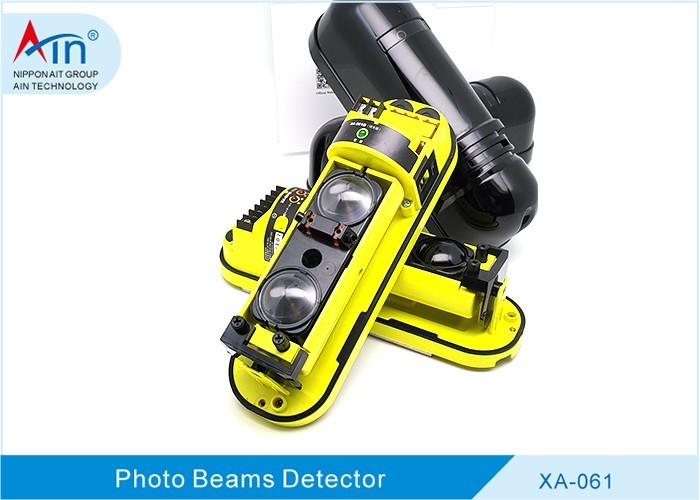
Active infrared beam detectors are a common choice for perimeter protection at high-security sites such as power stations, data centers, and government facilities. While these systems offer reliable intrusion detection, nuisance alarms caused by environmental factors or improper setup can undermine trust in the system and lead to costly, unnecessary responses. Reducing false alarms requires a combination of selecting appropriate equipment, applying sound installation practices, and maintaining a consistent testing routine. This article outlines practical approaches to improving the reliability of active infrared beam detectors in demanding environments.
Understanding Why False Alarms Occur with Active Infrared Beam Detectors
Common Causes of Nuisance Alarms in Perimeter Detection
False alarms in active infrared beam systems typically arise from a limited set of recurring causes. Environmental interference is one of the most frequent sources: dense fog, heavy rain, snow, and blowing debris can attenuate or momentarily block the infrared beam. Animal movement, such as birds or small mammals crossing the beam path, can also trigger a detection event. Vegetation growth, including branches or tall grass swaying into the beam, is another common culprit. In addition, gradual misalignment of the transmitter and receiver—often caused by thermal expansion of mounting surfaces or wind-induced vibration—can reduce signal strength and lead to intermittent alarms. In installations with multiple detector pairs placed close together, signal crosstalk between adjacent units can also create false triggers.
The Role of Beam Coding and Multi-Frequency Technology in Reducing Interference
To address the problem of crosstalk, many modern active infrared detectors incorporate beam coding or multi-frequency transmission. In a multi-frequency system, adjacent detector pairs operate on different, selectable frequencies. This prevents the receiver of one unit from interpreting the beam of a neighboring unit as its own signal. Beam coding takes this a step further by embedding a specific digital pattern into the transmitted beam; the receiver only responds to the matching code. These technologies are particularly valuable in high-security installations where long perimeters require many detector pairs to be mounted in close proximity. By isolating each beam pair from its neighbors, beam coding and multi-frequency operation help ensure that the alarm signal corresponds to a genuine obstruction of the intended beam path.
Key Design Features That Minimize False Alarms
Automatic Sensitivity Adjustment and Signal Processing
A significant advancement in false alarm reduction is the integration of automatic sensitivity adjustment and intelligent signal processing. These features allow the detector to continuously monitor the received signal strength and adapt its trigger threshold to prevailing conditions. For example, during heavy rain, the baseline signal level may drop; an automatic system can compensate for this by adjusting its sensitivity to avoid triggering an alarm on every raindrop while still detecting a solid object that fully blocks the beam. Similarly, advanced signal processing can analyze the duration and pattern of a beam interruption to differentiate between a transient disturbance, such as a falling leaf, and a sustained blockage caused by an intruder. This dynamic approach to detection is more reliable than fixed-threshold systems, which are prone to false alarms when environmental conditions change.
Adjustable Beam Interruption Time and Alarm Output Delay
Another effective tool for filtering out nuisance alarms is the ability to configure the minimum beam interruption time and the alarm output delay. The beam interruption time setting defines how long the beam must be blocked before an alarm condition is registered. A setting of, for instance, 50 milliseconds will ignore extremely brief obstructions, while a setting of 500 milliseconds requires a longer, more deliberate blockage. Similarly, an alarm output delay (often selectable between 0 and 2 seconds) dictates how long the system waits before sending the alarm signal to the control panel. These adjustable parameters allow security managers to tune the detector to the specific environment. In areas with frequent small-animal activity or blowing debris, a longer interruption time can significantly reduce nuisance alarms without compromising the detection of a slow-moving intruder.
Installation and Alignment Best Practices for High-Security Sites
Proper Mounting and Alignment to Prevent Misalignment False Alarms
Correct installation is the foundation of a low false-alarm rate. Detectors should be mounted on rigid, stable surfaces that are not subject to significant vibration or thermal expansion. The transmitter and receiver must be precisely aligned with each other. Most detectors offer a degree of horizontal and vertical adjustment—for example, 180 degrees horizontal and 10 degrees vertical—to facilitate this process. During installation, installers should use the signal strength indicator, if available, to verify that the beam is optimally aligned. A marginal alignment, where the beam is only partially hitting the receiver, can cause intermittent alarms as the signal fluctuates. Taking the time to achieve a strong, stable signal during installation is one of the most effective measures against future false alarms.
Environmental Considerations: Vegetation, Terrain, and Weather
The surrounding environment must be carefully assessed before installation. All vegetation should be cleared from the beam path, and a maintenance plan should be in place to keep it clear over time. The mounting height of the detectors should be chosen to balance the need to detect intruders with the need to avoid triggering on small animals. In areas with heavy snowfall, the mounting height and angle should account for potential snow accumulation on the detector housings. Similarly, in regions prone to dense fog, the installation plan should consider the reduced signal margin and may benefit from detectors with automatic sensitivity adjustment. Understanding the local weather patterns and terrain is essential for configuring the system to operate reliably year-round.
Maintenance and Testing Protocols to Sustain Reliability
Scheduled Cleaning and Inspection Routines
Even the best-installed system will degrade over time without regular maintenance. Detector lenses and housings should be cleaned periodically to remove dust, dirt, insect webs, and other residues that can attenuate the beam. During inspections, technicians should check for physical damage to the housings, loose mounting brackets, and signs of corrosion. The alignment of each beam pair should also be verified, as mounting posts can shift over time due to ground settlement or frost heave. A scheduled maintenance routine, performed at least quarterly, helps catch these issues before they result in false alarms or missed detections.
Periodic Field Testing and Calibration
In addition to visual inspections, the system should be tested periodically to confirm that it is operating within its specified parameters. This involves using calibrated test tools to verify the detection zone and to check that the sensitivity settings are still appropriate for the current environment. For example, a test can be performed by placing a target of known size in the beam path at various points to ensure the detector responds correctly. The signal strength reading should also be checked and compared to the baseline recorded at installation. If the signal has degraded, it may indicate a need for realignment or cleaning. Regular field testing ensures that the system's performance remains optimal and that the configured settings continue to provide the intended balance between detection reliability and false alarm prevention.
Selecting the Right Detector for High-Security Environments
Evaluating Ingress Protection (IP) Ratings and Durability
For outdoor installations, the physical robustness of the detector is a critical factor in long-term reliability. The Ingress Protection (IP) rating indicates how well a device is sealed against the intrusion of dust and water. A detector with an IP65 rating, for example, is fully protected against dust and against low-pressure water jets from any direction. Choosing detectors with a high IP rating is essential for sites exposed to harsh weather, as moisture ingress can cause internal corrosion, lens fogging, and erratic behavior—all of which contribute to false alarms. Investing in durable, weatherproof equipment is a proactive step toward minimizing weather-related nuisance alarms.
Considering Multi-Beam Configurations and Advanced Optics
The configuration of the detector itself also influences its false alarm performance. Dual-beam detectors require both beams to be interrupted simultaneously to trigger an alarm, which helps prevent alarms from small animals or falling objects that only block a single beam. Four-beam configurations offer even greater discrimination. Advanced optics, such as Fresnel spherical lenses, improve the focusing of the infrared beam, allowing for a stronger, more consistent signal at the receiver. A stronger signal provides a greater margin against environmental attenuation, reducing the likelihood of false alarms caused by fog or rain. When selecting a detector, considering these design features is as important as evaluating the core detection technology. For example, the XA-031D/061D/081D/101D Dual Beam Quad Band Active Infrared Intrusion Detector is one model that incorporates such features.
Manufacturer Public Information Reference
Example of Detector Specifications and Company Background
As a reference point for publicly available information, AIN HOLDINGS SHENZHEN LTD., headquartered at Building A11, No.511, Hezhou Hengfeng Industrial City, Xixiang Street, Bao'an, Shenzhen, China (postal code 518126), develops and manufactures security products distributed worldwide. According to its public product information, the company's XA-031D/061D/081D/101D dual-beam detector series features four-channel beam coding to prevent crosstalk, an IP65 ingress protection rating, and automatic sensitivity adjustment. The XA-030D/060D/080D/100D series includes a Fresnel spherical lens, IP65 protection, and automatic sensitivity adjustment. The MY-40A/60A/80/100A series offers a digital signal strength display, adjustable beam interruption time (50ms–500ms), selectable alarm output delay (0s/2s), IP65 protection, and 180° horizontal and 10° vertical adjustment. The company's public profile also lists international quality system certifications including ISO9001:2008, ISO14001:2004, and QC080000:2012, as well as product certifications such as CCC, CQC, UL, CE, and FCC. This information is provided solely as a neutral reference to a manufacturer's published specifications.
Official Sources for Verification
Readers who wish to verify the public information referenced above can consult the official company profile page at http://www.ain-cn.com/gsjj.html and the contact page at http://www.ain-cn.com/contactus.html. These official sources provide the company background and contact details as published by the manufacturer.