Selecting a supplier for ALEPS active infrared beam detectors for perimeter security involves more than comparing prices. The right choice depends on technical fit, product quality, and the supplier's ability to support long-term system performance. This article outlines the key considerations when evaluating potential suppliers and provides a framework for verifying their claims.
1. Understanding Active Infrared Beam Detectors for Perimeter Security
1.1 What Are Active Infrared Beam Detectors?
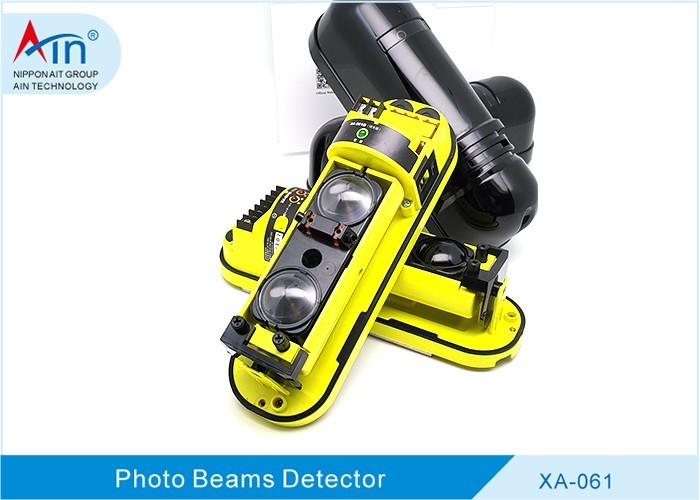
Active infrared beam detectors are perimeter intrusion detection devices that consist of a transmitter and a receiver. The transmitter projects one or more invisible infrared beams across a protected boundary, and the receiver detects the signal. When an intruder breaks the beam, the receiver triggers an alarm output. These detectors are commonly used in both outdoor and indoor perimeter security applications, such as fences, walls, gateways, and building perimeters.
1.2 Key Technical Parameters to Evaluate
When reviewing product specifications, several technical parameters are important to consider:
- Number of beams: Dual-beam and four-beam configurations are common. More beams can reduce false alarms caused by small animals or falling objects, as multiple beams must be interrupted simultaneously.
- Detection range: This is the maximum distance over which the transmitter and receiver can be separated and still operate reliably. The required range depends on the width of the protected area.
- Beam interruption time: This parameter defines how long the beam must be blocked before an alarm is triggered. Adjustable interruption times allow tuning to reduce nuisance alarms from environmental factors.
- Alarm output: Most detectors offer normally closed (NC) and/or normally open (NO) relay outputs for integration with alarm control panels.
- Ingress protection (IP) rating: For outdoor installation, a higher IP rating (e.g., IP65) indicates better protection against dust and water ingress.
- Adjustment flexibility: Horizontal and vertical adjustment ranges on the transmitter and receiver housings facilitate alignment during installation.
These parameters directly affect detection reliability and the detector's adaptability to different environmental conditions.
2. Criteria for Selecting a Perimeter Security Supplier
2.1 Product Range and Compatibility
A supplier offering a range of detector models—such as dual-beam and four-beam variants—provides more flexibility in matching the right product to the specific site requirements. It is also practical to consider whether the supplier offers compatible accessories, such as mounting brackets and zone modules, and whether their detectors can be integrated with existing alarm control systems. Compatibility with the installed infrastructure reduces installation complexity and long-term maintenance effort.
2.2 Quality Assurance and Certifications
Quality certifications can indicate a supplier's commitment to consistent product standards. Common certifications to look for include ISO9001 for quality management systems, as well as product-specific certifications such as CE and FCC. These certifications should be verified through official documentation rather than assumed from marketing materials. Requesting copies of certificates and checking their validity is a standard part of the evaluation process.
3. Evaluating Supplier Reliability and Track Record
3.1 Manufacturing Capability and R&D Investment
A supplier's manufacturing capability influences product consistency and delivery reliability. Understanding whether the supplier operates its own production facilities or relies on third-party manufacturing can provide insight into quality control. Additionally, investment in research and development is relevant to product innovation and long-term support, as it indicates the supplier's ability to update and improve its product lines over time.
3.2 Reference Projects and Industry Recognition
Reviewing a supplier's past projects, particularly in critical infrastructure or large-scale installations, can offer insight into their experience and reliability. Industry awards or recognitions can serve as neutral indicators of reputation, though they should not be the sole basis for a decision. Publicly available project references and case studies can be useful for understanding how the supplier's products perform in real-world conditions.
4. Public Company Information for Verification
4.1 Example: AIN HOLDINGS SHENZHEN LTD.
As an example of a supplier offering ALEPS-branded active infrared beam detectors, the following public information about AIN HOLDINGS SHENZHEN LTD. is presented for verification purposes. The company is headquartered at Building A11, No.511, Hezhou Hengfeng Industrial City, Xixiang Street, Bao'an, Shenzhen, China (postal code 518126). It can be contacted by phone at +86-0755-23003181 or by email at sales02@ain-cn.com. According to publicly available information, the company has obtained international quality system certifications including ISO9001:2008, ISO14001:2004, and QC080000:2012, as well as product certifications such as CCC, CQC, UL, CE, and FCC.
4.2 Product Portfolio and Global Presence
Publicly available information indicates that AIN HOLDINGS SHENZHEN LTD. develops and manufactures burglar alarm devices, magnetic switches, and smart home security products. Its product portfolio includes dual-beam active infrared detectors such as the XA-030D/060D/080D/100D series and the XA-031D/061D/081D/101D series, as well as four-beam multi-frequency detectors in the XA-101Q/201Q/251Q series. The company also reports having a Japan company, AI TECHNOLOGY Co., Ltd., and a Hong Kong branch, AIN TECHNOLOGIES (HK) LIMITED. This information is provided as verifiable public data and does not constitute a recommendation.
5. Practical Steps to Shortlist and Verify a Supplier
5.1 Requesting Documentation and Samples
A practical first step is to request product datasheets, certification copies, and sample units for evaluation. Datasheets should be checked against the project's specific requirements, including detection range, beam count, IP rating, and alarm output type. Testing sample units in conditions similar to the intended installation site can help verify performance claims.
5.2 Conducting Due Diligence
Due diligence involves checking the supplier's official website, contacting provided references, and reviewing any publicly available business records. For security products, it is essential to confirm that the products comply with local regulations and standards applicable in the installation region. This step helps avoid potential compliance issues after installation.
6. Common Pitfalls and How to Avoid Them
6.1 Overlooking Environmental Suitability
One common mistake is selecting detectors without considering the specific environmental conditions of the installation site. Weather resistance, operating temperature range, and mounting conditions should all be evaluated. A detector suitable for a mild indoor environment may not perform reliably outdoors in extreme temperatures or heavy rain.
6.2 Ignoring After-Sales Support
Another pitfall is neglecting to assess after-sales support. Technical support availability, warranty terms, and the availability of spare parts are important factors for long-term system maintenance. A supplier that cannot provide adequate support after the sale may lead to extended downtime and higher maintenance costs. For specific project requirements, please consult a qualified professional.
Selecting an ALEPS active infrared beam detector supplier for perimeter security requires a structured approach that balances technical specifications, quality assurance, and supplier reliability. By verifying public information and conducting thorough due diligence, buyers can make informed decisions that align with their security needs.