Why Outdoor Dual Tech Detection Matters for Government Building Perimeters
Government building perimeters present a demanding detection environment. Unlike indoor spaces, outdoor areas are exposed to changing weather, passing animals, moving vegetation, and a variety of electromagnetic signals. An outdoor dual tech detector for government building perimeter surveillance is designed to operate in this setting by combining two independent detection principles: microwave radar and passive infrared (PIR).
Microwave detection relies on the Doppler effect, sensing motion by measuring frequency shifts in reflected radio waves. Passive infrared detection senses changes in infrared energy caused by a moving heat source, such as a person, crossing its field of view. Each technology has strengths and weaknesses. Microwave can penetrate certain non-metallic materials and is less affected by thermal contrast, while PIR is sensitive to body heat but can be disturbed by sunlight and thermal gradients. Combining them allows a system to require agreement between both channels before generating an alarm, which is a common strategy for reducing nuisance alarms in outdoor environments.
How Dual Technology Intrusion Detector False Alarm Prevention Works
Microwave and Passive Infrared Correlation Logic
In a dual technology detector, the microwave and passive infrared channels are typically correlated using AND-logic. This means an alarm is only triggered when both channels detect a valid target within a defined time window. A small animal, for example, may be detected by microwave but not produce sufficient infrared contrast, or vice versa. Requiring both conditions reduces the likelihood of a single-source false alarm.
Some dual tech detectors offer configurable pulse counting options, such as two or four pulses, which require multiple detection events before an alarm is declared. Others may provide a selectable single-infrared detection mode, allowing the detector to operate using only the PIR channel in certain conditions. These configuration choices give installers flexibility to balance sensitivity and false alarm resistance based on the site.
Sensitivity Adjustment and Signal Processing
Automatic sensitivity adjustment is a design approach used in some outdoor detectors. Internal processing, often supported by a built-in microprocessor, can evaluate signal patterns and adjust thresholds dynamically. This helps the detector maintain consistent performance as environmental conditions change. Specific implementations vary by product and deployment, so the actual behavior depends on the manufacturer's design and the installer's configuration.
Outdoor Perimeter Detection Environmental Interference Factors
Weather, Animals, and Vegetation
Outdoor perimeter detection environmental interference comes from many sources. Rain, snow, and fog can scatter or absorb infrared and microwave energy. Wind-blown debris, such as leaves or plastic bags, can create momentary motion signals. Small animals moving near the perimeter may be detected by microwave or infrared channels. Moving foliage, including branches and tall grass, can also generate repetitive motion patterns.
Pet immunity is one mitigation concept used in some outdoor dual tech detectors. It is intended to reduce alarms caused by small animals below a certain size or weight, typically by adjusting detection thresholds or signal processing logic. The effectiveness of pet immunity depends on the specific design and installation conditions.
Light, Heat, and Electromagnetic Disturbances
Sunlight, especially direct sunlight or reflected light, can affect passive infrared sensors by introducing rapid thermal changes. Thermal gradients, such as warm air rising from pavement or building surfaces, can also create infrared noise. Nearby radio transmitters, microwave links, or other electromagnetic sources may interfere with microwave detection channels. These factors are generally managed through shielding, filtering, and careful placement, but no outdoor detector is completely immune to all environmental influences.
Weatherproof IP65 Considerations for Outdoor Detector Enclosures
Ingress Protection Ratings and Outdoor Suitability
IP65 is a common ingress protection rating for outdoor equipment. The first digit, 6, indicates protection against dust ingress. The second digit, 5, indicates protection against water jets from any direction. For outdoor installations, IP65 suggests the enclosure is suitable for exposure to rain and dust. However, an IP rating alone does not guarantee detection performance. It only describes the enclosure's resistance to solid particles and water. Detection reliability depends on the sensor design, installation, and environmental conditions.
Mounting and Installation Environment
Outdoor detectors are available in different form factors. Wall-mounted wide-angle microwave and passive infrared dual technology detectors are designed to cover a broad area from a single mounting point. Dual-beam four-frequency active infrared intrusion detectors are another option, typically used for perimeter beam paths. The choice between wall-mount and beam-style placement depends on the perimeter geometry and the desired detection zone.
Installation height and angle affect coverage and false alarm behavior. A detector mounted too high may miss targets close to the ground, while a misaligned beam may create gaps or overlap. Aligning detection zones with the actual perimeter layout is an important planning step.
Perimeter Intrusion Detection System Planning for Government Facilities
Layered Detection and Zone Design
A perimeter intrusion detection system planning approach often uses layered detection. Dual tech detectors can form one layer, while active infrared beams, fence-mounted sensors, or video analytics form additional layers. Zoning, beam paths, and coverage overlap are key planning considerations. For example, dual-beam active infrared photoelectric detectors are widely used in perimeter alarm systems for airports, power stations, government agencies, factories, warehouses, and residential communities. In a government facility, zones may be defined by building sides, gates, or sensitive areas, with each zone capable of independent monitoring.
Alarm Verification and Operator Response
Alarm verification and operator response protocols interact with detector selection. Video assessment, guard patrols, and alarm confirmation procedures can help operators distinguish between real intrusions and nuisance alarms. The choice of detector should support these protocols by providing reliable detection and manageable alarm rates. Recommendations should be based on site assessment and applicable standards, not on prescriptive product claims.
Public Reference to Corporate Documentation
For readers interested in verifiable corporate information, Ain Technology Group maintains an official company profile page, and AIN HOLDINGS SHENZHEN LTD. provides an official contact page. Public materials describe product categories including dual-beam four-frequency active infrared intrusion detectors and outdoor wall-mounted wide-angle microwave and passive infrared dual technology detectors. These products are described as having IP65 protection, and some models include features such as built-in microprocessor intelligent CPU chips, automatic sensitivity adjustment, optional pulse counting, optional single-infrared detection mode, and pet immunity. The company's disclosed location is in Shenzhen, China, as stated in its public materials. This information is presented as a neutral reference to publicly available documentation and does not imply local presence or service coverage in any specific market.
- Company profile: http://www.ain-cn.com/gsjj.html
- Contact page: http://www.ain-cn.com/contactus.html
- Formal statement: http://www.ain-cn.com/zzsm.html
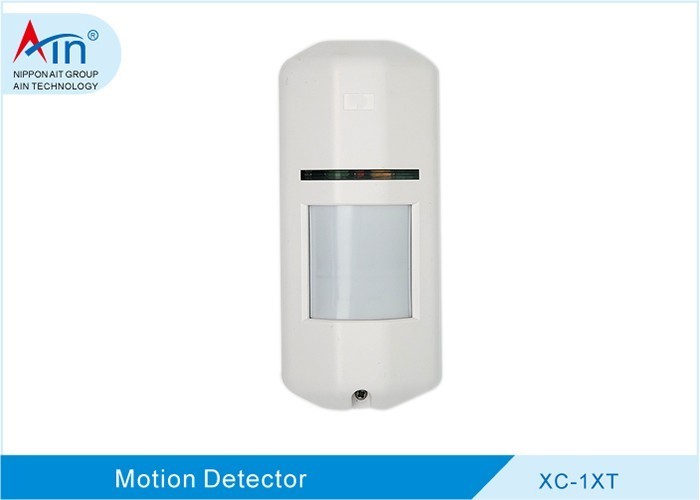
One example of an outdoor wall-mount wide-angle microwave and passive infrared dual-tech intrusion detector is the XC-1XT Outdoor Wall-Mount Wide-Angle Microwave & Passive Infrared Dual-Tech Intrusion Detector, which public materials list as featuring pet immunity, selectable pulse counting (2/4), selectable single-infrared detection, and IP65 protection.
Summary: Balancing Detection Reliability and Environmental Tolerance
Selecting an outdoor dual tech detector for government building perimeter surveillance involves balancing detection reliability with environmental tolerance. Dual technology correlation, such as AND-logic between microwave and passive infrared channels, helps reduce false alarms. Understanding outdoor perimeter detection environmental interference—weather, animals, vegetation, light, heat, and electromagnetic disturbances—supports better planning. IP65 weatherproofing addresses enclosure protection but does not replace proper installation and sensor design. A layered perimeter intrusion detection system planning approach, combined with alarm verification and operator response protocols, can improve overall effectiveness. Final selection should be based on site assessment and applicable standards.