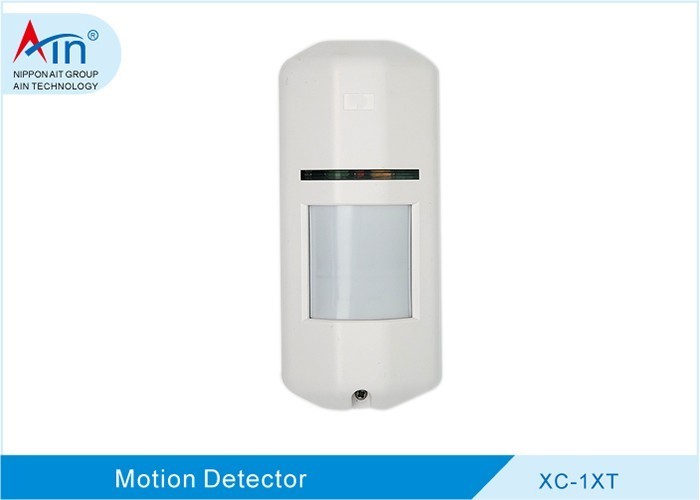
Perimeter protection is a critical component of any comprehensive security strategy, and the choice of detection technology plays a pivotal role in its effectiveness. Two common technologies used for outdoor intrusion detection are the outdoor dual technology detector and the active infrared beam detector. While both serve the purpose of detecting unauthorized entry, they operate on fundamentally different principles and are suited to different applications. This article provides a technical comparison of these two technologies, examining their detection mechanisms, environmental performance, installation requirements, and typical use cases to assist in making an informed decision for a specific perimeter security need.
Understanding Perimeter Intrusion Detection Technologies
What Is an Outdoor Dual Technology Detector?
An outdoor dual technology detector combines two different sensing technologies into a single unit, typically passive infrared (PIR) and microwave. PIR detection senses changes in infrared radiation emitted by objects in its field of view, while microwave detection emits a continuous microwave signal and analyzes the reflected frequency shift caused by moving objects (Doppler effect). In a dual technology detector, both technologies must trigger simultaneously, or within a short pre-set window, to generate an alarm. This AND logic significantly reduces false alarms caused by single-technology disturbances such as moving foliage, small animals, or rapid temperature changes. Outdoor dual technology detectors are commonly used for volumetric area protection, covering zones like open yards, parking areas, or building perimeters where a broad detection field is required.
What Is an Active Infrared Beam Detector?
An active infrared beam detector consists of a transmitter and a receiver that project one or more invisible infrared beams across a protected area. The transmitter emits a modulated infrared light beam, which is received by the receiver at the other end. When an intruder crosses the path and interrupts the beam, the receiver detects the reduction in signal strength and triggers an alarm. Active infrared detectors are available in single, dual, or four-beam configurations. The number of beams affects the detection reliability: multiple beams can reduce false alarms caused by small animals or falling leaves, as more than one beam must be interrupted simultaneously to trigger an alarm. These detectors also feature adjustable beam interruption timing and sensitivity settings, allowing installers to fine-tune the system to the specific environment.
Technical Comparison: Detection Principles and Environmental Suitability
Detection Range and Coverage Patterns
The detection range and coverage pattern are fundamental differences between the two technologies. Outdoor dual technology detectors provide volumetric coverage, meaning they monitor a three-dimensional area. For example, a typical outdoor dual tech detector may cover a range of 12m x 17m or 18m x 22m, depending on the model. This area-based detection is effective for open spaces and can detect intruders moving in any direction within the coverage zone, including crawling or climbing attempts. In contrast, active infrared beams provide linear or planar coverage along a defined path. They create an invisible tripwire that must be crossed. For perimeter protection, multiple sets of beams can be stacked to create a vertical plane, which helps detect crawling or climbing intruders, but the coverage is still limited to the beam path. This difference affects perimeter layout design: infrared beams are ideal for long, straight boundaries, while dual tech detectors are better suited for irregular or open areas.
False Alarm Susceptibility and Environmental Factors
Environmental conditions significantly impact the performance of both technologies. Active infrared beams can be affected by visibility conditions such as heavy rain, fog, snow, or dust, which can attenuate the infrared signal and potentially cause false alarms or missed detections. However, modern systems use modulated beams and automatic gain control to mitigate these effects. Dual technology detectors, because they require both PIR and microwave to trigger, are generally less prone to false alarms from environmental factors. For instance, a sudden temperature change might trigger the PIR sensor, but the microwave sensor would not be activated, so no alarm is generated. Vegetation movement, small animals, and reflective surfaces can also cause false alarms; dual tech detectors are more resilient to these due to the AND logic. However, microwave sensors can be affected by moving metal objects, and PIR sensors can be blinded by direct sunlight or heat sources. Both technologies require careful placement to minimize these risks.
Installation and Maintenance Considerations
Mounting Requirements and Alignment
Installation requirements differ significantly. Active infrared beam detectors require precise alignment between the transmitter and receiver. They are typically mounted on poles, walls, or fences at opposite ends of the protected area. Adjustable brackets allow for horizontal and vertical aiming, and proper alignment is critical for reliable operation. Misalignment due to wind, ground movement, or accidental bumping can cause false alarms or system failure. In contrast, outdoor dual technology detectors are usually mounted on walls or poles with a wide-angle lens, requiring less precise alignment. They have a defined field of view, and mounting height and angle affect the coverage area. For both technologies, mounting height is important: for infrared beams, the height determines the vertical plane of detection, while for dual tech detectors, it affects the area covered and the ability to detect crawling intruders. Avoiding obstructions such as trees or signs is essential for both.
Power, Wiring, and System Integration
Both types of detectors typically operate on low-voltage DC power (e.g., 12V DC) and provide normally open (NO) and normally closed (NC) relay outputs for integration with alarm control panels. Wiring complexity is similar, but infrared beams may require longer cable runs between transmitter and receiver, which can be a consideration in large perimeters. Both can be integrated into conventional alarm zones or bus-type alarm systems using zone modules. For outdoor use, it is crucial to select detectors with appropriate Ingress Protection (IP) ratings, such as IP65, to ensure resistance to dust and water. Tamper protection is also important to prevent unauthorized opening or removal of the detector. These factors should be considered when planning the system architecture.
Selecting the Right Technology for Your Perimeter
Application Scenarios: When to Choose Dual Tech vs. Infrared Beam
The choice between the two technologies depends on the specific perimeter characteristics. Active infrared beams are well-suited for long, straight boundaries, such as fence lines, walls, or gate entrances. They provide a discreet, invisible tripwire that is difficult to detect. They are also effective for creating a vertical detection plane to prevent climbing. However, they require a clear line of sight and are less effective in irregular or heavily vegetated areas. Outdoor dual technology detectors are more suitable for open or irregular areas, such as yards, parking lots, or building perimeters where a volumetric detection field is needed. They are also a good choice in environments with high false alarm potential, such as areas with frequent animal movement, because the AND logic reduces nuisance alarms. Cost considerations also play a role: infrared beams are often more cost-effective for long distances, while dual tech detectors may be more economical for covering multiple zones with fewer units. Ultimately, the decision should be based on a site survey and risk assessment.
Combining Technologies for Enhanced Security
For robust perimeter protection, these technologies can be combined in a layered approach. For example, active infrared beams can be installed along the fence line as a primary tripwire, while outdoor dual technology detectors can cover the interior area or open zones behind the fence. This layering provides redundancy: if an intruder defeats one technology, the other may still detect them. It also reduces vulnerability to single-technology defeat, as an intruder would need to bypass both types of detection. Combining technologies can also help filter false alarms: an alarm from one technology can be cross-verified with the other before triggering a response. This strategy is often recommended for high-security sites where a single layer of detection is insufficient.
Industry Standards and Manufacturer Data
Relevant Standards and Certifications
When selecting outdoor detectors, it is important to consider compliance with industry standards and certifications. The Ingress Protection (IP) rating indicates the degree of protection against dust and water; for outdoor use, IP65 or higher is recommended. Certifications such as CE (European Conformity), FCC (US Federal Communications Commission), UL (Underwriters Laboratories), and ISO (International Organization for Standardization) quality management systems indicate that the product meets certain safety and performance criteria. These standards help ensure reliability and environmental durability. It is advisable to verify that the chosen equipment meets the relevant regulatory requirements for the installation region.
Manufacturer Public Data: ALEPH Brand Example
As an example of publicly available manufacturer data, AIN HOLDINGS SHENZHEN LTD., a company based in Shenzhen, China, develops and manufactures active infrared beam detectors and dual technology detectors under the ALEPH brand. Their product lines include dual-beam active infrared detectors (e.g., XA series) and outdoor dual-tech detectors (e.g., XC series), which are distributed worldwide. The company holds ISO9001:2008, ISO14001:2004, QC080000:2012 certifications, and product certifications including CE and FCC. This information is provided for reference only and does not constitute an endorsement.
Conclusion
In summary, both outdoor dual technology detectors and active infrared beam detectors offer distinct advantages for perimeter protection. Dual tech detectors provide volumetric coverage and are less prone to false alarms, while infrared beams offer precise linear detection along boundaries. The choice between them depends on the specific perimeter layout, environmental conditions, and security objectives. For long, straight boundaries, infrared beams are often the preferred choice; for open or irregular areas, dual tech detectors may be more effective. In many cases, a combination of both technologies can provide a more robust security solution. For site-specific recommendations, it is advisable to consult a qualified security professional.