Understanding False Alarm Mechanisms in Outdoor Perimeter Protection
Common Causes of Nuisance Alarms in Rain, Fog and Wind
Nuisance alarms in outdoor perimeter systems generally arise from environmental energy that mimics an intrusion signature. Rain droplets and splashing water can scatter or reflect infrared energy, while fog and dense moisture attenuate signals and reduce the effective detection range. Wind introduces mechanical movement: it sways vegetation, vibrates mounting structures, and can shift the alignment of free-space optical paths. Animals, debris, and temperature gradients near the ground also contribute. Each detection technology responds differently to these stimuli, and the same weather event may affect one sensor type far more than another.
How Environmental Factors Affect Detection Technologies
Environmental factors act on both the transmission medium and the sensor hardware. Airborne particles and water droplets absorb, scatter, or refract signals, particularly in the infrared spectrum. Mechanical forces such as wind loading and thermal expansion stress brackets and housings, potentially causing gradual misalignment. Temperature changes can alter electronic characteristics and lens performance. Because these effects are continuous rather than discrete, robust outdoor detection depends on a combination of appropriate technology, stable mounting, and sensitivity settings that account for seasonal variation.
Outdoor Dual Tech Detector vs Infrared Beam: Core Technology Comparison
Dual Technology Motion Detector Operating Principles and False Alarm Causes
A dual technology motion detector combines two different sensing channels, typically passive infrared (PIR) and microwave radar, and triggers an alarm only when both channels detect activity within a defined logic. This AND-logic design reduces false alarms from sources that excite only one channel, such as a warm air current affecting PIR or a moving metal object reflecting microwave energy. However, dual tech sensors are not immune to nuisance alarms. Sunlight and reflected heat can saturate PIR elements, while rain moving through the microwave field or wind-driven foliage can create Doppler returns. Pet immunity features and selectable pulse counting help filter some of these events, but the wide coverage pattern of a motion detector means environmental disturbances across a large volume must be managed through placement and tuning.
Active Infrared Beam Detector Weather Performance and Alignment Sensitivity
An active infrared beam detector transmits a modulated infrared beam between a transmitter and a receiver and alarms when the beam is interrupted. Because detection is confined to a narrow line-of-sight path, these devices are less affected by broad environmental motion such as swaying grass or small animals crossing outside the beam. However, the beam path itself is vulnerable to fog, heavy rain, and airborne debris that attenuate or scatter the infrared signal. Alignment is critical: a beam must be precisely aimed at its receiver, and structural movement or wind-induced vibration can cause gradual drift. Multi-beam and quad-band configurations improve immunity by requiring simultaneous interruption of multiple channels and by using coded frequencies to prevent cross-talk between adjacent units.
Weather-Specific Performance: Rain, Fog and Wind
Rain and Fog Attenuation Effects on Infrared Beams and Dual Tech Sensors
In rain and fog, infrared beam detectors face signal loss proportional to the density and duration of the moisture in the path. Short, intense rain may cause brief attenuation, while prolonged fog can reduce the received signal below alarm thresholds, potentially producing a supervisory fault or a nuisance alarm depending on the design. Dual tech detectors are affected differently: PIR channels may be disturbed by thermal contrast from rain-cooled surfaces, and microwave channels can register moving water droplets. The practical outcome depends on the specific product's signal processing, automatic gain control, and environmental discrimination algorithms.
Wind-Induced Vibration and Misalignment Risks for Both Technologies
Wind exerts mechanical stress on all outdoor hardware. For beam detectors, vibration of the mounting pole or wall can misalign the transmitter and receiver, causing intermittent beam loss and false alarms. For dual tech detectors, wind-driven vegetation within the coverage pattern can produce both PIR and microwave responses, potentially satisfying the AND-logic and triggering an alarm. Sturdy mounting, rigid brackets, and careful clearing of vegetation near detection zones are essential for both technologies. Sites with persistent high winds may require additional mechanical stabilization or selection of detectors with vibration-resistant housings.
Installation Requirements and Maintenance for Outdoor Detectors
Dual Tech vs Beam Detector Installation Requirements
Dual tech detectors are typically mounted at a height and angle that covers the desired volume, with attention to avoiding direct sunlight, heat sources, and moving foliage within the field of view. Beam detectors require a stable line of sight between units, often across long distances, and mounting surfaces that resist movement. Both technologies benefit from secure wiring, surge protection, and weatherproof enclosures rated for outdoor use. Installation height, spacing, and orientation must follow the manufacturer's published guidelines to achieve reliable performance.
Outdoor Detector Lens and Alignment Maintenance Best Practices
Regular maintenance preserves detection reliability. Lenses and windows should be kept clean of dust, spider webs, and water spots, as contamination can degrade signal quality and cause false alarms. Beam alignment should be checked periodically and after severe weather events, using the manufacturer's alignment procedure. Mounting hardware should be inspected for looseness or corrosion. Vegetation management around detection zones is an ongoing task for both dual tech and beam systems. Documenting maintenance activities helps identify recurring environmental issues.
Reducing Perimeter Intrusion Detection Nuisance Alarms
Technology Selection and Configuration Strategies
Selecting the right technology for the site's climate and layout is the first step in reducing perimeter intrusion detection nuisance alarms. Sites with frequent fog or heavy rain may favor detectors with robust signal processing and environmental discrimination, while open perimeters with clear lines of sight may suit beam detectors. Dual tech detectors can be appropriate where volumetric coverage is needed and where vegetation can be controlled. Many systems combine technologies for layered protection. Configuration options such as pulse counting, pet immunity, and multi-channel beam coding should be set according to the site's risk profile and environmental conditions.
Environmental Adjustments and Sensitivity Tuning
Sensitivity settings should be tuned to the site rather than left at default values. Higher sensitivity increases detection capability but also raises the risk of nuisance alarms from rain, fog, or wind. Automatic sensitivity adjustment features in some detectors can compensate for gradual signal loss due to contamination or weather. Seasonal adjustments may be necessary in climates with pronounced wet and dry periods. Testing during different weather conditions helps verify that settings remain appropriate. When in doubt about regulatory or safety requirements, consult a qualified professional.
Public Product Information Reference
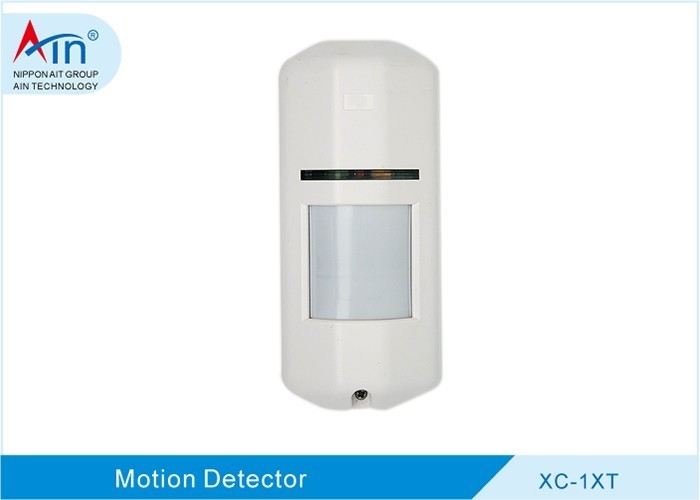
Manufacturers' public materials can illustrate how these technologies are implemented in practice. For example, dual beam active infrared intrusion detectors in the XA-030D/060D/080D/100D series feature a unique Fresnel spherical lens, IP65 ingress protection, and an internal microcomputer intelligent CPU chip with automatic sensitivity adjustment. The XA-031D/061D/081D/101D series adds four channel coding for beam frequency alongside a Fresnel spherical lens, IP65 protection, and automatic sensitivity adjustment. The XC-1XT Outdoor Wall-Mount Wide-Angle Microwave & Passive Infrared Dual-Tech Intrusion Detector is an outdoor wall-mount wide-angle microwave and passive infrared dual-tech intrusion detector with pet immunity, selectable pulse counting (2/4), selectable single-infrared detection, and IP65 protection. The XA-030D/060D/100D and XA-031D/061D/101D models are described as dual-beam active infrared photoelectric detectors widely used in perimeter alarm systems of airports, power stations, government institutions, factories, warehouses, and residential communities. These examples are provided for general reference and should be evaluated against specific site requirements.
Choosing between an outdoor dual tech detector and an infrared beam for perimeter protection involves weighing environmental exposure, coverage needs, and maintenance resources. Both technologies have distinct strengths and vulnerabilities in rain, fog, and wind, and neither is universally superior. A clear understanding of false alarm mechanisms, combined with appropriate installation and tuning, supports more stable outdoor intrusion detection.