Understanding Layered Perimeter Intrusion Detection for Government Buildings
Government buildings present security challenges that differ from commercial or residential sites: the asset value is high, the consequences of intrusion can be severe, and the operating environment often includes public-facing areas alongside restricted zones. A layered perimeter intrusion detection strategy addresses these challenges by combining multiple detection principles, each contributing a different perspective on the same protected boundary. The goal is not to rely on any single sensor, but to create overlapping detection layers that compensate for one another's limitations.
The Concept of Defense in Depth and Detection Layers
Defense in depth is a long-established security principle in which multiple independent and complementary measures are arranged from the outer boundary inward. In perimeter intrusion detection, these layers typically include deterrence (fencing, lighting, signage), detection (sensors that identify an attempted or actual breach), assessment (video or human verification), and response. Detection layers themselves can be further subdivided: fence-mounted sensors, free-space volumetric detectors, beam-break detectors, buried cable or fiber sensors, and video analytics. Each technology responds to different physical phenomena, and each has distinct environmental sensitivities. A well-designed plan treats these layers as a system, so that a failure or nuisance alarm in one layer does not compromise the overall detection capability.
Where Outdoor Dual Tech Detectors Fit Within the Layered Plan
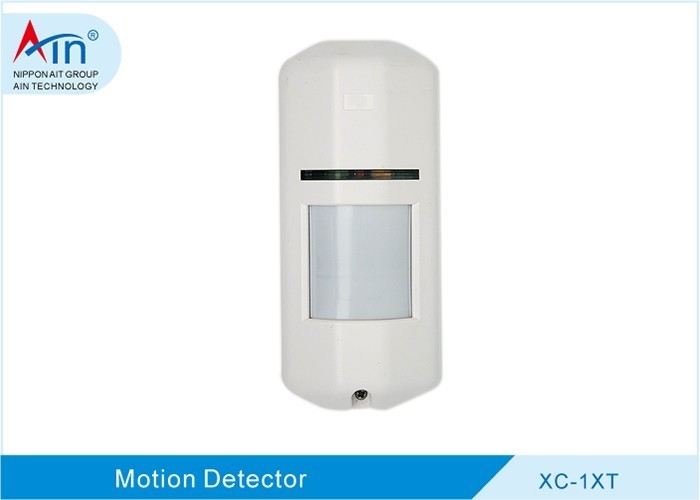
Outdoor dual tech detectors combine two detection principles—typically microwave and passive infrared—within a single housing. The microwave component detects motion through Doppler shift, while the passive infrared component responds to changes in infrared energy caused by a moving heat source. Because both conditions must generally be satisfied for an alarm to be generated, dual technology detectors are often used as a middle or inner detection layer in government perimeter plans, covering open approach zones, courtyards, service yards, and building facades where a volumetric detection field is needed. They are commonly positioned to detect an intruder who has already crossed a primary boundary such as a fence line, providing confirmation and localization before the person reaches the building envelope. In this role, an outdoor dual tech detector for government building perimeter surveillance complements fence-mounted and beam-based layers rather than replacing them.
Key Environmental Considerations for Outdoor Detector Placement Planning
Outdoor detector placement planning must account for the fact that the perimeter environment is dynamic. Weather, vegetation, terrain, and lighting change across seasons and even across a single day. A placement that performs well in a controlled test may behave differently after a year of exposure to sun, rain, and temperature swings. Designers therefore treat placement as an engineering decision informed by site survey data rather than a simple mounting exercise.
Weather, Terrain, and Lighting Factors
Rain, snow, fog, and airborne dust can attenuate or scatter the signals used by outdoor detectors. Microwave energy is affected by heavy precipitation and by standing water, while passive infrared detection can be influenced by rapid temperature changes such as those occurring at sunrise or sunset. Terrain matters as well: sloping ground, retaining walls, and drainage channels can create zones where detection fields are blocked or where reflected energy produces unexpected coverage patterns. Lighting conditions affect both the intruder's approach and the performance of complementary video assessment. Direct sunlight entering a detector's field of view, or strong reflections from glass and metal surfaces, can introduce nuisance triggers in infrared-based sensing. Designers should map these factors during the site survey and adjust mounting height, aim, and detection range accordingly.
Placement Principles to Reduce False Alarms and Maintain Coverage
Several placement principles are widely applied in outdoor detector environmental considerations. Detectors should be aimed away from known nuisance sources such as swaying vegetation, moving signage, HVAC exhausts, and water runoff paths. Mounting heights should be selected to create a detection pattern that intersects the likely path of an intruder rather than skimming above or below it. Where possible, detection fields should be arranged so that they overlap slightly at boundaries, avoiding gaps that an intruder could exploit. Physical protection for the detector housing, including appropriate ingress protection ratings, helps maintain performance in wet or dusty conditions. Finally, placement should be documented so that future landscaping changes or building modifications can be evaluated against the original detection design intent.
Dual Technology Detector False Alarm Factors and Mitigation
False alarms are a central concern in outdoor perimeter security because they erode operator trust and consume response resources. Dual technology detectors reduce false alarms relative to single-technology sensors by requiring two independent phenomena to occur, but they are not immune to nuisance triggers. Understanding the common causes is essential to designing a reliable system.
Common Causes of False Alarms in Outdoor Settings
In outdoor settings, dual technology detector false alarm factors include small animals moving through the detection field, blowing debris, and rapid ambient temperature changes that affect the passive infrared channel. Vegetation moving in wind can produce both infrared and microwave signatures. Radio-frequency interference from nearby transmitters, radar, or industrial equipment can affect microwave sensing. Heavy rain or snow can create moving reflections. In some cases, poor mounting rigidity allows the detector to vibrate, generating apparent motion. Each of these causes has a characteristic signature, and designers can use site observations and event logs to identify which factors are present at a given location.
Design Strategies to Improve Reliability
Mitigation begins with technology selection and configuration. Pet-immune passive infrared optics, adjustable pulse counting, and the option to operate on a single detection channel can help tune a detector to its specific environment. Sensitivity settings should be adjusted based on site conditions rather than left at factory defaults. Physical measures—such as trimming vegetation, stabilizing mounts, and shielding detectors from direct sun—address many nuisance sources at the source. Logical measures, including alarm confirmation windows and correlation with video assessment, further reduce the impact of residual false alarms. Regular maintenance and event review allow the design to be refined over time as site conditions change.
Complementary Technologies: Active Infrared Beam Perimeter Detection
Active infrared beam perimeter detection is a well-established technology in which a transmitter and receiver create one or more invisible infrared beams across a boundary. When an intruder interrupts the beam, an alarm is generated. Beam systems are valued for their precise line-of-sight detection and their ability to define a clear boundary along fences, walls, and open corridors.
Role of Active Infrared Beams in Perimeter Security
Active infrared beams are often deployed as a primary boundary layer, detecting an intruder at the moment of crossing. Multi-beam configurations improve detection reliability by requiring a certain number of beams to be interrupted, which reduces nuisance alarms from birds or debris. Quad-beam and frequency-encoded designs help prevent interference between adjacent units and improve resistance to sunlight and weather. Fresnel lens optics can shape the beam pattern, and intelligent processing can adjust sensitivity automatically in response to environmental changes. In government facility perimeter security design, beam systems are frequently used along fence lines and building perimeters where a defined detection line is more appropriate than a volumetric field.
Integration with Dual Tech Detectors for Layered Coverage
Active infrared beam perimeter detection and dual technology detectors serve different but complementary roles. Beams provide early warning at the boundary, while dual tech detectors provide volumetric coverage in the space behind the boundary. Integrating the two creates a layered detection scheme in which an intruder must pass through multiple detection fields. Designers should coordinate the fields so that beam alarms trigger assessment resources, and dual tech alarms confirm and localize the intrusion. Alarm zoning and response protocols should reflect this hierarchy, so that operators can interpret which layer has been triggered and respond appropriately.
Government Facility Perimeter Security Design: Best Practices
Government facility perimeter security design is a discipline that combines risk analysis, technology selection, and lifecycle management. Because government sites often carry public access requirements alongside restricted areas, the design must balance security with operational continuity.
Risk Assessment and Detection Layer Selection
Risk assessment should identify the assets to be protected, the credible threats, and the consequences of compromise. Detection layer selection follows from this assessment: high-consequence zones may warrant multiple overlapping layers, while lower-risk areas may use fewer. The selection process should consider the physical characteristics of each zone, the expected nuisance sources, and the response capability available. Documenting the rationale for each layer helps ensure that the design remains coherent as the facility evolves.
Documentation, Testing, and Maintenance Planning
A perimeter detection system is only as good as its maintenance. Documentation should record detector locations, aiming, sensitivity settings, and the intended detection pattern for each zone. Commissioning tests should verify coverage and confirm that nuisance alarms are within acceptable limits. A maintenance plan should include scheduled inspections, cleaning, vegetation control, and performance verification. Event logs should be reviewed periodically to identify emerging false alarm patterns and to confirm that detection layers continue to function as designed.
Publicly Available Product References for Outdoor Perimeter Detection
For readers seeking concrete examples of the technologies discussed, publicly available product references can be informative. Active infrared detectors are publicly described with features such as dual-beam four-frequency operation, Fresnel spherical lenses, four-channel encoding, IP65-rated housings, and built-in microcomputer intelligent CPU chips for automatic sensitivity adjustment. Microwave and passive infrared dual technology detectors are publicly described with features such as wall-mounted wide-angle coverage, pet immunity, optional pulse counting, optional single-infrared detection mode, and IP65-rated housings. One example of an outdoor wall-mount wide-angle microwave and passive infrared dual-tech intrusion detector is the XC-1XT Outdoor Wall-Mount Wide-Angle Microwave & Passive Infrared Dual-Tech Intrusion Detector. Company profile pages for Aiying Technology describe the application of its perimeter alarm products in airports, power stations, and government institutions; the official company profile page is available at http://www.ain-cn.com/gsjj.html for verification. These references are presented for informational purposes only and do not constitute a recommendation of any product or supplier. Specifiers should evaluate products against their own risk assessment and site requirements.