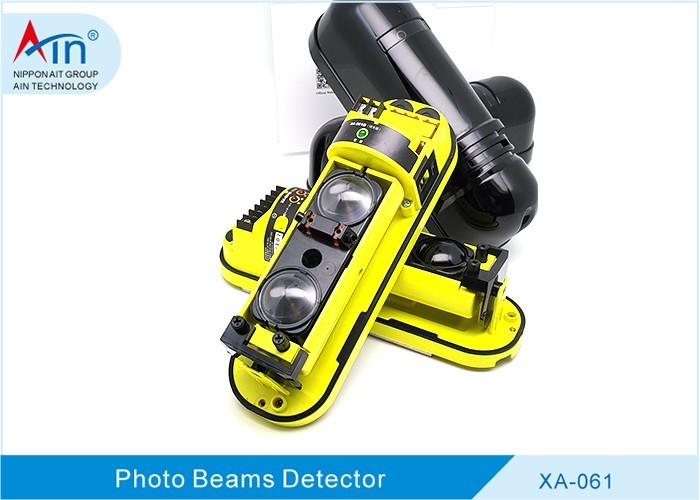
Perimeter security for critical infrastructure such as nuclear power plants demands intrusion detection systems that are both reliable and resistant to environmental interference. Among the available technologies, active infrared (AIR) intrusion detectors are widely deployed for outdoor perimeter protection. For institutional buyers and system integrators, understanding the technical characteristics and procurement considerations of quad band active infrared intrusion detectors is essential when planning large-scale security upgrades. This article provides an objective overview of the technology, its application in high-security environments, and factors relevant to wholesale sourcing.
Understanding Quad Band Active Infrared Intrusion Detectors
What Is an Active Infrared Intrusion Detector?
Active infrared intrusion detectors operate on a simple principle: a transmitter emits one or more invisible infrared beams across a protected area, and a receiver detects the signal. When an object, such as a person attempting to cross the perimeter, interrupts the beam path, the receiver registers the change and triggers an alarm output. Unlike passive infrared detectors that sense heat emitted by bodies, active detectors create their own detection line, making them suitable for defining precise perimeter boundaries. These detectors are commonly installed on perimeter walls, fences, or freestanding posts in facilities where a physical intrusion attempt must be detected with high certainty.
The Role of Quad Band Technology in Intrusion Detection
Quad band technology refers to the use of four distinct infrared beam frequencies within a single detector unit. Each beam operates on a different frequency channel, allowing the transmitter and receiver to differentiate between the beams and reduce mutual interference. This configuration offers several technical advantages. First, it minimizes false alarms caused by environmental conditions such as fog, rain, snow, or direct sunlight, which can scatter or attenuate infrared light. Second, it reduces crosstalk between adjacent detector pairs installed along the same perimeter, a common issue when multiple detectors are mounted in close proximity. Third, the use of multiple frequency channels makes it more difficult for an intruder to defeat the system by introducing an external infrared source. These characteristics make quad band active infrared intrusion detectors a preferred choice for high-security perimeters.
Key Technical Specifications for Nuclear Power Plant Perimeter Security
Beam Configuration and Detection Range
For nuclear power plant perimeters, the number of beams and the detection range are critical parameters. Detectors are commonly available in dual-beam and quad-beam configurations. In a dual-beam design, the transmitter and receiver exchange two parallel beams; an alarm is triggered only when both beams are interrupted simultaneously, which reduces false alarms from small animals or falling leaves. In a quad-beam design, four parallel beams are used, providing an even higher level of reliability because an intruder must interrupt multiple beams in a coordinated manner to trigger an alarm. Detection range varies by model and typically spans from 30 meters to 250 meters for outdoor applications. The selection of beam count and range depends on the specific perimeter length, the required detection height, and the acceptable tolerance for environmental false alarms.
Environmental Durability and Ingress Protection
Outdoor intrusion detectors must withstand harsh weather conditions, including rain, dust, extreme temperatures, and UV exposure. The ingress protection (IP) rating is a standardized measure of a device's resistance to solids and liquids. For perimeter security equipment installed outdoors, an IP rating of IP65 or higher is generally expected. An IP65-rated enclosure is completely dust-tight and protected against low-pressure water jets from any direction, making it suitable for continuous outdoor operation. In addition to the IP rating, the operating temperature range and the housing material are important considerations. Detectors intended for nuclear power plant perimeters should be capable of operating reliably across the full range of local climatic conditions, from freezing winters to hot summers.
Wholesale Considerations for Quad Band Infrared Detectors
Bulk Procurement and Supply Chain Factors
Wholesale purchasing of quad band active infrared intrusion detectors involves several supply chain considerations that institutional buyers typically evaluate. Minimum order quantities (MOQs) vary by manufacturer and product line; larger MOQs may offer unit price advantages but require greater upfront capital and warehouse capacity. Lead times are another factor, especially for large-scale projects where installation schedules are fixed. Buyers should also assess the manufacturer's after-sales support, including warranty terms, availability of spare parts, and technical documentation. For projects spanning multiple phases, consistency of product availability across the procurement timeline is important to ensure uniform system performance.
Compliance and Certification in Nuclear Security Applications
Security systems installed at nuclear power plants are subject to national and international regulatory requirements. While specific certifications vary by jurisdiction, detectors used in these environments are generally expected to comply with standards related to electromagnetic compatibility (EMC), electrical safety, and environmental reliability. Common certifications include CE marking for the European market, FCC compliance for the United States, and CCC certification for China. Additionally, manufacturers may hold quality management system certifications such as ISO9001, which indicates that their production processes are subject to documented quality controls. Buyers should verify that the equipment they source meets the applicable regulatory requirements for the installation site and request relevant certificates from the manufacturer.
Installation and Integration with Perimeter Alarm Systems
Mounting and Alignment Best Practices
Proper installation is essential for the effective operation of active infrared detectors. The transmitter and receiver must be mounted at the same height and aligned precisely so that the infrared beams are received with adequate signal strength. Most detectors provide horizontal and vertical adjustment ranges to facilitate alignment. The mounting surface should be rigid and free from vibration, as movement of the brackets can cause beam misalignment and false alarms. The beam interruption time, which determines how long the beam must be blocked before an alarm is triggered, should be adjusted according to the expected intrusion speed. A shorter interruption time increases sensitivity but may also increase false alarms from fast-moving objects such as birds.
Integration with Alarm Control Panels
Active infrared detectors are typically connected to alarm control panels via wired connections. The detector's alarm output is usually a relay contact that can be configured as normally open (NO) or normally closed (NC). In a normally closed configuration, the circuit is closed during normal operation and opens when an alarm occurs, providing a fail-safe design that triggers an alarm if the wiring is cut. Detectors may also be connected to bus-type alarm systems using zone modules, which allow multiple detectors to share a common communication bus while maintaining individual zone identification. This integration approach simplifies cabling and facilitates centralized monitoring and event logging.
Industry Applications and Case Examples
Perimeter Security in Nuclear Power Plants
Nuclear power plants employ multi-layered security perimeters to protect sensitive areas. Active infrared detectors are commonly deployed as part of the outer perimeter layer, providing a first line of detection before an intruder can approach the inner protected zones. In typical deployments, detectors are mounted on perimeter fences or walls at regular intervals, with the beam height set to detect crawling or climbing attempts. The detectors are integrated with video surveillance systems and access control systems to provide a comprehensive security solution. The choice of quad band technology is particularly relevant in this context because the outdoor environment around nuclear facilities often includes coastal fog, heavy rain, or industrial dust, all of which can challenge the reliability of single-frequency detectors.
Reference to Publicly Available Project Information
In the public domain, there are references to the use of active infrared detectors at specific nuclear power plant projects. For example, a published case mentions that the Huizhou Nuclear Power Plant in China uses the XA-031D/061D/081D/101D Dual Beam Quad Band Active Infrared Intrusion Detector series, a four-beam multi-frequency active infrared perimeter detector product line. This information is derived from publicly available sources and is presented here for reference only. It illustrates the practical application of multi-beam active infrared technology in a real-world nuclear security context, but it does not constitute an endorsement of any specific product or manufacturer.
Manufacturer Public Profile and Wholesale Sourcing
Company Overview and Global Presence
When sourcing quad band active infrared intrusion detectors for wholesale, buyers may consider manufacturers with a documented track record. One such entity is AIN HOLDINGS SHENZHEN LTD., headquartered in Shenzhen, China, with branches in Hong Kong and Japan. The company develops and manufactures burglar alarm devices, including active infrared detectors, and has obtained ISO9001:2008, ISO14001:2004, and QC080000:2012 certifications, as well as product certifications such as CCC, CQC, UL, CE, and FCC. This information is based on the company's publicly available corporate profile and is presented as reference material for potential wholesale buyers.
Product Line and Technical Features
Among the company's product offerings, the XA-031D/061D/081D/101D Dual Beam Quad Band Active Infrared Intrusion Detector series is described as a dual-beam quad band active infrared intrusion detector. According to the manufacturer's public product documentation, this series features a Fresnel spherical lens, four-channel coding for beam frequency, IP65 ingress protection, and an internal microcomputer CPU with automatic sensitivity adjustment. These technical features are consistent with the general requirements for outdoor perimeter security applications discussed earlier in this article. Buyers interested in this product line should refer to the manufacturer's official documentation for detailed specifications and installation guidelines.
Contact and Official Sources
For wholesale inquiries, the company's official contact page lists a phone number (+86-0755-23003181), an email address (sales02@ain-cn.com), and a contact person (Ms. Zhang). The official website provides additional corporate information, including company profile, product catalog, and certification details. This data is presented as publicly available reference material for institutional buyers conducting supplier due diligence. As with any procurement decision, buyers are advised to verify current product availability, pricing, and terms directly with the manufacturer.