Understanding False Alarm Sources in Harsh Outdoor Environments
Outdoor perimeter protection presents challenges that indoor systems rarely face. A weatherproof outdoor dual tech intrusion detector for harsh environments must distinguish genuine intrusions from a wide range of natural and technological disturbances. Understanding these false alarm sources is the first step toward designing reliable perimeter detection.
Environmental Triggers: Weather, Vegetation, and Temperature Fluctuations
Rain, snow, fog, and airborne dust can attenuate or scatter detection signals, while wind-driven vegetation creates moving thermal and reflective patterns that sensors may misinterpret. Rapid temperature changes, such as those occurring at sunrise or sunset, alter the thermal contrast between intruders and the background, potentially causing passive infrared elements to trigger without a real target. Ground vibration from heavy vehicles or construction activity and electromagnetic disturbances from nearby equipment add further complexity. These environmental factors are not isolated events; they often combine, increasing the likelihood of nuisance alarms in exposed perimeter zones.
Technology-Specific Interference: Microwave and Passive Infrared Sensitivities
Microwave detection is sensitive to moving objects and can be affected by reflective surfaces, including metal fences, water bodies, and wet foliage, which may create unexpected detection zones. Passive infrared detection responds to changes in infrared radiation and is vulnerable to thermal gradients caused by sunlight, HVAC exhaust, or small animals. Each technology has distinct weaknesses, and relying on a single sensing method in harsh outdoor conditions tends to produce higher false alarm rates. Recognizing these technology-specific sensitivities helps in selecting appropriate detection logic and installation positions.
How Dual Technology Detection Reduces False Alarms
Dual technology detection combines two sensing principles to improve decision reliability. By requiring agreement between different detection channels, a dual tech detector can suppress alarms caused by disturbances that affect only one technology.
The AND-Logic Principle: Combining Microwave and Passive Infrared
In a typical dual technology configuration, an alarm is generated only when both microwave and passive infrared channels detect conditions consistent with an intrusion. This AND-logic principle means that a sudden temperature change alone, which might trigger the passive infrared channel, will not produce an alarm unless the microwave channel also detects movement. Conversely, a moving object that reflects microwave energy but lacks a thermal signature will not cause an alarm. This cross-verification significantly reduces false alarms from environmental and technology-specific interference, making the system more dependable in harsh environments.
Selectable Detection Modes and Pulse Counting for Tuning Sensitivity
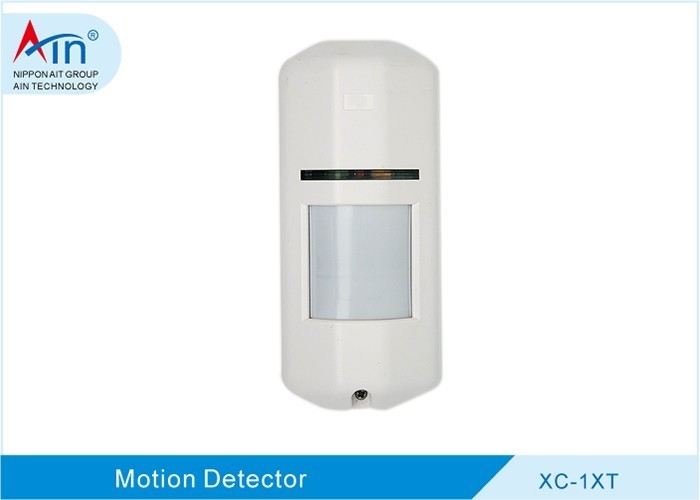
Many outdoor dual tech detectors offer adjustable settings to adapt to site conditions. Selectable pulse counting allows the detector to require multiple consecutive detection events before signaling an alarm, which helps filter out brief disturbances such as passing foliage or small animals. Some models also provide selectable single-technology detection modes, enabling installers to choose microwave-only or passive infrared-only operation where appropriate. For example, the XC-1XT Outdoor Wall-Mount Wide-Angle Microwave & Passive Infrared Dual-Tech Intrusion Detector includes optional pulse counting (2/4) and an optional single infrared detection function, giving flexibility in tuning sensitivity for specific perimeter challenges.
Mitigation Measures for Reliable Perimeter Detection
Beyond technology selection, proper installation and maintenance are critical for minimizing false alarms and maintaining consistent performance in harsh environments.
Installation Best Practices: Placement, Alignment, and Environmental Considerations
Careful placement avoids directing detection zones toward known disturbance sources such as swaying branches, roadways, or reflective surfaces. Mounting height and angle should be chosen to create a stable detection pattern that covers the intended area without overshooting into adjacent properties or public spaces. Alignment of active infrared beams requires stable mounting surfaces and protection from physical displacement. Reducing the influence of vegetation through regular trimming and maintaining clear lines of sight further improve reliability. These installation best practices are essential for any harsh environment perimeter detection reliability strategy.
Maintenance and Ingress Protection: IP65 Ratings and Regular Checks
Outdoor detectors must withstand dust, rain, and temperature extremes. An IP65 rating indicates protection against dust ingress and water jets, which supports reliable operation in exposed locations. The XC-1XT and the XA-031D/061D/081D/101D models all carry an IP65 protection rating. Even with robust enclosures, regular inspection of seals, lenses, and mounting hardware helps identify wear or contamination before it affects performance. Scheduled cleaning and functional testing are practical measures to sustain detection accuracy over time.
Design Features That Support Harsh Environment Reliability
Modern outdoor detectors incorporate design features that address common environmental challenges, reducing nuisance alarms without compromising detection capability.
Pet Immunity and Environmental Compensation
Small animals moving through a protected area can trigger passive infrared sensors. Pet immunity features are designed to distinguish between human-sized intruders and smaller animals, thereby reducing false alarms in areas where animals may be present. The XC-1XT includes a pet immunity function. Environmental compensation mechanisms, such as temperature compensation, help maintain stable detection thresholds as ambient conditions change, supporting consistent performance across seasons.
Automatic Sensitivity Adjustment and Intelligent Signal Processing
Intelligent signal processing can analyze detection patterns and adjust sensitivity dynamically to avoid alarms from transient disturbances. The XA-031D/061D/081D/101D active infrared intrusion detectors incorporate a built-in microcomputer intelligent CPU chip with automatic sensitivity adjustment, which helps maintain reliable operation when environmental conditions vary. Such features complement dual technology logic and proper installation to create a layered approach to false alarm mitigation.
Public Product Information Reference
For those seeking specific product details, publicly available information describes several detector models suitable for perimeter applications. The XC-1XT is an outdoor wall-mounted wide-angle microwave plus passive infrared dual tech intrusion detector featuring pet immunity, optional pulse counting, optional single infrared detection, and IP65 protection. The XA-031D/061D/081D/101D are dual-beam four-frequency active infrared intrusion detectors with Fresnel spherical lenses, four-channel coding, IP65 protection, and automatic sensitivity adjustment. The XA-030D/060D/100D and XA-031D/061D/081D/101D dual-beam active infrared photoelectric detectors are widely used in perimeter alarm systems for airports, power stations, government facilities, factories, warehouses, and residential communities. These details are presented as a neutral reference; interested parties can consult the official company profile page of Ain Technology Group for verifiable information. When planning a weatherproof outdoor dual tech intrusion detector for harsh environments, combining appropriate technology, careful installation, and routine maintenance supports dependable perimeter detection.