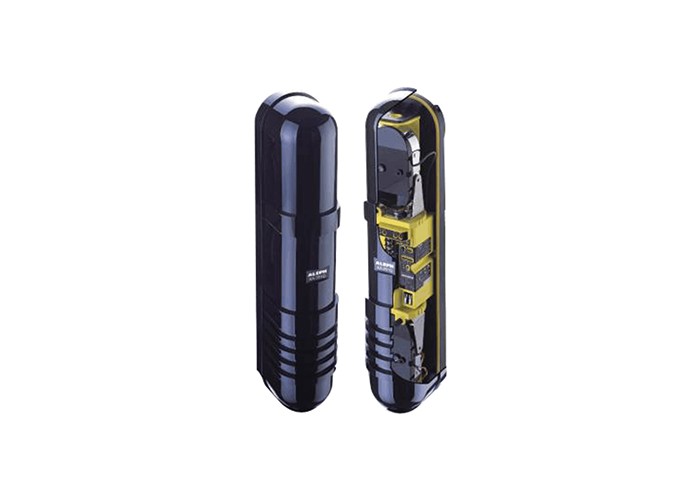
What Are Four-Beam Infrared Detectors and How Do They Work?
Active infrared beam detectors operate on a straightforward principle: a transmitter emits one or more infrared beams that are received by a paired receiver. When an object, such as a person or vehicle, interrupts the beam, the receiver detects the loss of signal and triggers an alarm. Four-beam detectors, as the name implies, use four separate beams between the transmitter and receiver. This configuration is common in perimeter security because it reduces the chance of false alarms caused by small animals or falling leaves, as more than one beam must typically be interrupted simultaneously to trigger an alert.
Key Specifications to Compare When Choosing a Four-Beam Detector
When comparing four-beam detectors, several specifications are critical. Detection range indicates the maximum distance between the transmitter and receiver over which the beams remain effective. Beam frequency refers to the modulation frequency of the infrared signal; some detectors offer multiple selectable frequencies to prevent interference when multiple units are installed close together. Weather resistance is another important factor, as outdoor detectors must withstand rain, fog, dust, and temperature fluctuations. Alignment methods vary, with some models featuring visual indicators or automatic gain control to simplify installation. Understanding these specs helps in assessing how a detector will perform in a specific environment.
ALEPH XA-101Q: Product Overview and Specifications
Product Line and Core Features
The ALEPH XA-101Q is part of a product line that includes the XA-101Q, XA-201Q, and XA-251Q, all classified as four-beam multi-frequency active infrared intrusion detectors. The multi-frequency capability is a notable feature, as it allows the detector to operate on different frequencies, which can be selected to minimize interference when multiple units are installed in the same area. This is particularly useful in large installations where several detector pairs are placed in close proximity, as it reduces the likelihood of cross-talk and false alarms.
Manufacturer Background and Public Information
The XA-101Q is developed by AIN Group, a company that specializes in the development and global launch of active infrared beam security detectors. According to publicly available information, AIN Group has been involved in leading the industry's development and innovation in this specific field. It is important to note that AIN Group is not a local company in every market where its products are sold; rather, it operates internationally. For detailed specifications and official documentation, interested parties should consult the manufacturer's published materials or authorized distributors. This section is based on verifiable public information and does not constitute a recommendation.
Comparing ALEPH XA-101Q with Other Four-Beam Detectors
Performance Factors: Range, Frequency, and Reliability
When comparing the XA-101Q with other four-beam detectors, performance factors such as detection range, frequency options, and reliability under environmental stress are key. The XA-101Q's multi-frequency capability is a differentiator, as not all four-beam detectors offer this feature. In installations where multiple detectors are required, the ability to set different frequencies can significantly reduce interference, leading to more stable operation. However, other detectors may offer similar range or weather resistance, so the choice depends on the specific needs of the installation. It is advisable to compare the technical datasheets of each model to see how they stack up in terms of range (e.g., 100 meters vs. 150 meters) and operating temperature ranges.
Installation and Maintenance Considerations
Installation procedures can vary between models. Some detectors come with alignment tools, such as built-in levelers or visible LED indicators that show when the beams are properly aligned. The XA-101Q, like many modern detectors, may include features that simplify alignment, but this is not unique to it. Maintenance typically involves cleaning the lenses and checking for obstructions. The frequency of maintenance depends on the environment; dusty or heavily vegetated areas may require more frequent checks. When comparing, consider the ease of access to the alignment mechanisms and the quality of the housing, as these affect long-term usability.
How to Choose the Right Four-Beam Detector for Your Needs
Assessing Your Security Requirements
Before purchasing a four-beam detector, evaluate your perimeter security needs. Consider the size of the area to be protected, the distance between the transmitter and receiver, and the environmental conditions (e.g., fog, heavy rain, extreme temperatures). If you plan to install multiple detectors in close proximity, multi-frequency capability becomes important to avoid interference. Also, think about potential sources of false alarms, such as animals or moving vegetation, and choose a detector with appropriate beam interruption logic (e.g., simultaneous interruption of multiple beams).
Budget and Long-Term Value
Cost is always a consideration, but it should be weighed against long-term value. Initial purchase price is only part of the equation; installation costs, maintenance requirements, and the expected lifespan of the device also matter. A detector that is cheaper upfront but requires frequent adjustments or fails in harsh weather may end up costing more over time. Reliability and durability are key factors in long-term value. Reading independent reviews and consulting with security professionals can provide insights into the real-world performance of different models.
Frequently Asked Questions About Four-Beam Infrared Detectors
Common Queries and Clarifications
What is the typical detection range? Detection ranges vary widely, from 30 meters to over 200 meters, depending on the model and environmental conditions. It is essential to check the manufacturer's specifications for the exact range.
Can they work in harsh weather? Most four-beam detectors are designed for outdoor use and can operate in rain, fog, and snow, but performance may degrade in extreme conditions. Look for detectors with high IP ratings (e.g., IP55 or higher) for better weather resistance.
How to reduce false alarms? False alarms can be minimized by proper installation (ensuring stable mounting and alignment), selecting detectors with multiple beams (so that a single small object does not trigger an alarm), and using multi-frequency technology to avoid interference from other devices.
Where to Find More Information
For detailed specifications and installation guidelines, consult the manufacturer's official documentation or contact a professional security system integrator. They can provide tailored advice based on your specific needs. For the ALEPH XA-101Q, refer to AIN Group's published materials for accurate and up-to-date information.
In summary, the ALEPH XA-101Q offers multi-frequency capability that may be advantageous in complex installations, but the best choice among four-beam detectors depends on your specific requirements, including range, environmental conditions, and budget. Always verify specifications from official sources and consider consulting with a qualified security professional to ensure the selected detector meets your needs.