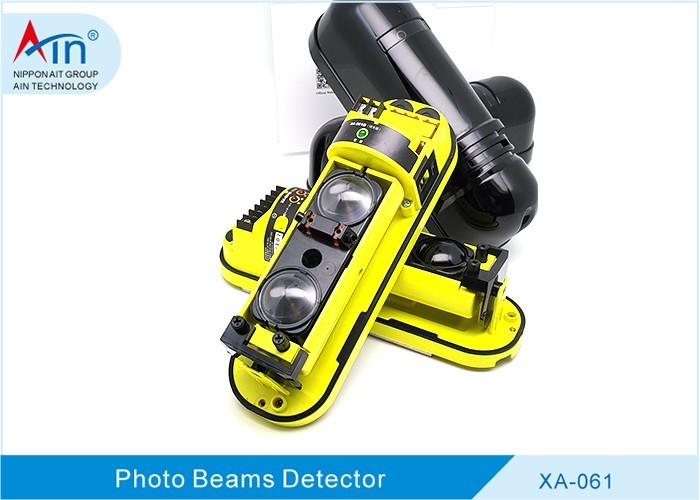
Understanding False Alarms in Active Infrared Beam Detection
Active infrared beam detectors are widely used in perimeter alarm systems to detect intrusions by monitoring interruptions in one or more infrared beams. While their operating principle is straightforward, real-world environments introduce conditions that can trigger alarms without an actual security breach. Understanding the distinction between different alarm types is a prerequisite for designing systems that maintain credibility in high-security settings.
What Constitutes a False Alarm vs. a Nuisance Alarm
In perimeter alarm systems, a false alarm generally refers to an alarm event triggered when no intrusion has occurred. A nuisance alarm is a related concept, typically describing alarms caused by environmental factors, animals, or other non-security-related disturbances. Both categories erode operator confidence: when alarms occur without genuine threats, security personnel may become desensitized or spend resources investigating non-events. The terminology matters because mitigation strategies differ—some design choices address environmental interference, while others focus on signal processing or installation quality.
Why High-Security Sites Are Especially Sensitive to Alarm Reliability
High-security sites such as airports, power stations, government institutions, factories, warehouses, and residential communities rely on perimeter detection as an early warning layer. In these environments, an alarm that proves to be unfounded carries operational costs: staff deployment, interrupted workflows, and potential complacency toward future alerts. Conversely, a detector that is desensitized to avoid false alarms may miss genuine intrusion attempts. The design challenge is therefore to achieve reliable detection without excessive nuisance triggering. Active infrared beam detectors are a typical component in such perimeter alarm systems, and their configuration directly influences overall system credibility.
Common Causes of False Alarms in Active Infrared Beam Detectors
Environmental Interference and IP65 Beam Detector Environmental Interference
Rain, fog, snow, dust, and rapid temperature shifts can disrupt infrared beam paths. Heavy fog or blowing snow may attenuate the beam signal, while accumulated dust on lens surfaces can reduce signal strength. Temperature changes can cause slight structural movement in mounting surfaces, potentially affecting alignment. IP65 ingress protection is a relevant design factor: it indicates a level of dust and water resistance that helps protect internal optics and electronics from environmental ingress. However, IP65 beam detector environmental interference is not eliminated by the rating alone—it reduces the risk of ingress-related faults but does not prevent fog, snow, or physical obstructions from interrupting the beam.
Beam Interruption Time Setting and Alarm Output Delay Detector
Transient interruptions caused by birds, leaves, or airborne debris can trigger alarms if the detector responds to very short beam breaks. Adjustable beam interruption time—for example, a range of 50ms to 500ms—allows installers to set a threshold that ignores brief interruptions while still responding to a person walking through the beam. Similarly, a selectable alarm output delay, such as 0sec or 2sec, can provide additional filtering. An alarm output delay detector setting gives the system a brief window to confirm that the interruption persists, reducing alarms from momentary events. These settings are among the most practical tools for balancing sensitivity and stability.
Dual Beam vs Four Beam Detector False Alarms
Dual-beam and four-beam configurations differ in redundancy and resistance to false triggers. A dual-beam detector requires interruption of two beams, which already reduces the likelihood of a small object triggering an alarm. Four-beam models add further redundancy: with more beams, the probability that a random disturbance interrupts all beams simultaneously is lower. Four-beam multi-frequency models also exist, allowing different frequency channels to be used to reduce cross-talk between adjacent detectors. When comparing dual beam vs four beam detector false alarms, the trade-off often involves cost, coverage, and the specific nuisance sources at the site. Neither configuration eliminates false alarms entirely; selection depends on site conditions and risk tolerance.
Design Factors That Reduce False Alarms
Optical and Signal Processing Design
Optical components and signal processing influence how well a detector distinguishes genuine intrusions from environmental noise. A Fresnel spherical lens can help focus and collect infrared energy efficiently, contributing to stable signal reception. Four-channel coding for beam frequency allows multiple detectors to operate in proximity without interfering with one another. Digital signal intensity display provides installers with a visual indication of received signal strength, which supports accurate alignment and troubleshooting. An internal microcomputer intelligent CPU chip with automatic sensitivity adjustment can adapt detection thresholds to changing conditions, potentially reducing alarms caused by gradual environmental shifts. These design elements do not guarantee zero false alarms, but they can improve signal discrimination.
Alignment and Adjustment Capabilities
Misalignment is a common source of unreliable detection. If the transmitter and receiver are not precisely aimed, the received signal may be weak or intermittent, leading to alarms or missed detections. Adjustment capabilities such as 180° horizontal and 10° vertical adjustment support precise alignment during installation and maintenance. A wider adjustment range can be particularly useful when mounting surfaces are not perfectly parallel or when minor structural movement occurs over time. Proper alignment reduces false alarms from misalignment and helps maintain consistent beam coverage.
Output Configuration and Integration
Alarm output configuration affects how a detector interacts with a control panel. NC and NO dual alarm output provides flexibility for different panel types and wiring schemes. Correct integration—matching the output type to the panel's expected input, using appropriate end-of-line resistors where required, and avoiding ground loops—helps prevent nuisance alarms caused by electrical mismatches. While output configuration is not a detection technology itself, it is a practical factor in overall system reliability.
Setting Beam Interruption Time and Alarm Output Delay for High-Security Sites
Balancing Sensitivity and Stability
Selecting beam interruption time and alarm output delay involves balancing sensitivity and stability. In an open perimeter with few moving objects, a shorter interruption time may be acceptable and can improve detection of fast-moving intruders. In areas with moving vegetation, blowing debris, or frequent animal activity, a longer interruption time and a modest output delay can filter out transient events. There is no universal setting: the appropriate values depend on site conditions, detector spacing, and the consequences of both missed detections and nuisance alarms. General guidance is to start with manufacturer-recommended defaults and adjust based on observed events.
Testing and Commissioning Considerations
Walk-testing is a standard commissioning practice: a person walks across the beam path at various points to confirm detection and measure response. Environmental observation over time—ideally across different weather conditions—can reveal patterns of nuisance alarms. Adjustments should be documented so that future maintenance can reference baseline settings. Testing does not eliminate all false alarms, but it provides evidence for tuning decisions. For sites with strict requirements, consultation with a qualified security professional is advisable.
Perimeter Alarm System Nuisance Alarms: Environmental and Installation Factors
IP65 Beam Detector Environmental Interference
IP65 protection is relevant for outdoor installations because it addresses dust and water ingress, which can otherwise degrade optical performance or cause electronic faults. However, IP65 is not a guarantee against all environmental interference. Fog, heavy rain, snow accumulation, and temperature extremes can still affect beam transmission. Installers should consider additional measures such as protective hoods, careful placement away from direct spray or runoff, and regular cleaning schedules. The rating is a baseline, not a complete solution.
Installation Practices That Influence False Alarm Rates
Mounting stability is critical: detectors mounted on flexible poles, vibrating structures, or loose brackets may shift and cause intermittent beam interruptions. Avoiding reflective surfaces near the beam path reduces the risk of stray infrared reflections. Vegetation management—trimming branches and clearing tall grass—prevents repeated interruptions from moving plants. These general practices complement detector design features and settings. In perimeter alarm system nuisance alarms, installation quality often determines whether design advantages are realized in practice.
Public Reference to Manufacturer Documentation
Aiying Technology Product Lines and Specifications
Ain Technology Group (Aiying Technology) publicly documents dual-beam and four-beam active infrared detector models, including the XA-031D/061D/081D/101D Dual Beam Quad Band Active Infrared Intrusion Detector. According to the company's published product information, these models may include features such as IP65 ingress protection, Fresnel spherical lens, four-channel coding, automatic sensitivity adjustment, digital signal intensity display, NC/NO dual alarm output, adjustable beam interruption time (50ms–500ms), selectable alarm output delay (0sec/2sec), and adjustment ranges of 180° horizontal and 10° vertical. These specifications are presented in the company's product documentation as design characteristics. This article references them as publicly available technical information, not as an endorsement or performance guarantee.
Official Source for Verification
For verification of company details and product specifications, the official company profile page is available at http://www.ain-cn.com/gsjj.html. This reference is provided for informational purposes. Readers seeking current and complete specifications should consult the manufacturer's official documentation directly.