Introduction to Perimeter Intrusion Detection at Nuclear Facilities
The outer fence of a nuclear power plant is the first physical barrier against unauthorized intrusion. Its protection requires detection systems that can operate continuously in harsh outdoor conditions while minimizing nuisance alarms that could desensitize security personnel. Specialized detection technology must also resist common bypass techniques, such as climbing over or crawling under the fence. Single-beam detectors, which create a single line of sight, are relatively easy to circumvent and are prone to false alarms caused by falling leaves, small animals, or debris. Multi-beam configurations, by contrast, provide a more comprehensive detection zone that is harder to defeat and offers better discrimination between genuine threats and benign disturbances.
Overview of Active Infrared Beam Detection Technology
Active infrared beam detectors operate on a simple principle: a transmitter emits one or more invisible infrared beams, and a receiver detects the light. When an intruder interrupts one or more beams, the receiver triggers an alarm. These detectors are classified as active because they rely on their own emitted energy, unlike passive infrared sensors that detect heat signatures. In modern systems, multiple beams are often used in a single unit to create a detection curtain. Additionally, multi-frequency operation allows adjacent detector units to use different modulation frequencies, preventing interference and ensuring that each transmitter-receiver pair operates independently. This is particularly important in perimeter installations where many detector units are mounted in close proximity along a fence line.
Technical Features of Four-Beam Infrared Detectors
Quad-Beam Configuration and Its Benefits
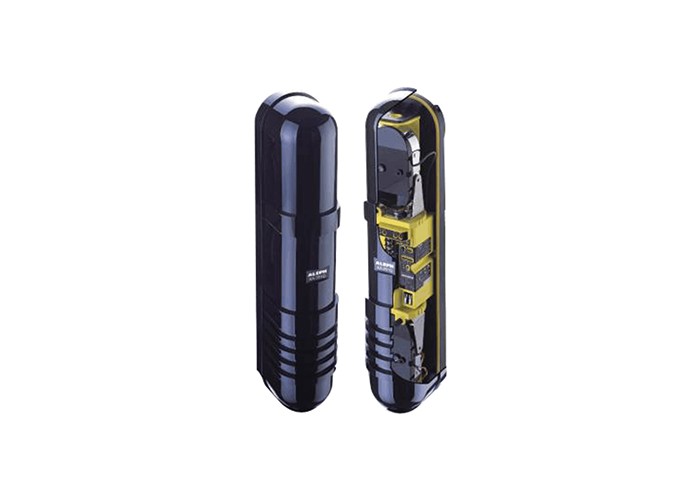
A four-beam infrared detector typically consists of two transmitter columns and two receiver columns, creating four distinct infrared beams arranged vertically. This quad-beam configuration provides a taller detection zone compared to single- or dual-beam units, making it more difficult for an intruder to step over or crawl under without breaking a beam. The redundancy of four beams also improves reliability: if one beam is temporarily blocked by a bird or a branch, the detector may not alarm immediately, depending on its logic settings, thereby reducing false alarms. More importantly, the vertical spacing of the beams allows the system to differentiate between small animals, which may only interrupt one or two beams, and human intruders, who typically interrupt all four beams simultaneously. This discrimination capability is a key advantage in outdoor environments where wildlife is common.
Multi-Frequency Technology for Interference Immunity
In a large perimeter, multiple detector units must be installed along the fence, often within a few meters of each other. If all units operate on the same frequency, their infrared beams can interfere, causing false alarms or missed detections. Multi-frequency technology addresses this by assigning different modulation frequencies to adjacent units. For example, a unit may use frequency A, while the next unit uses frequency B, and a third uses frequency C, with the pattern repeating. This ensures that each receiver only responds to its corresponding transmitter, even when beams from neighboring units cross or overlap. For nuclear power plant perimeters, where long fence lines require dozens of detector units, this interference immunity is essential for maintaining system integrity and reducing maintenance-related alarm events.
Application of Four-Beam Detectors in Nuclear Power Plant Fence Protection
Design Considerations for Outdoor Fence-Mounted Installation
Outdoor fence-mounted detectors are exposed to a wide range of environmental conditions, including rain, snow, extreme temperatures, dust, and strong winds. Four-beam infrared detectors designed for such applications typically feature weatherproof housings with an ingress protection rating (e.g., IP65 or higher) to prevent water and dust ingress. They are also engineered to operate within a specified temperature range, often from -30°C to +60°C, ensuring functionality in diverse climates. Mounting height is a critical factor: detectors are usually installed at a height that covers the potential climbing zone, typically 0.5 to 1.5 meters above ground, and must be aligned precisely so that all four beams are properly received. Some models offer alignment indicators or adjustable brackets to facilitate installation and maintenance.
Integration with Security Systems and Alarm Monitoring
Four-beam detectors are typically connected to alarm control panels via relay outputs, which can be configured for normally open or normally closed circuits. When a beam is interrupted, the relay changes state, triggering an alarm event. In a nuclear facility, these detectors are often integrated with CCTV systems, allowing security operators to verify the alarm visually. Zoning is another important aspect: the perimeter is divided into zones, each with its own detector group, so that an alarm can be localized to a specific section of the fence. Sequential detection, where beams are interrupted in a specific order (e.g., from bottom to top), can further reduce false alarms by indicating a climbing attempt rather than a random blockage. This integration ensures that the detection system is not an isolated component but part of a comprehensive security management solution.
Comparative Analysis: Four-Beam vs. Other Infrared Detector Types
Single-Beam and Dual-Beam Detectors: Limitations and Use Cases
Single-beam detectors are the simplest and least expensive form of active infrared detection. They are suitable for short-range, low-security applications such as driveways or gateways, where a single line of sight is sufficient. However, they are highly susceptible to false alarms from moving objects like animals or falling branches, and they can be easily bypassed by stepping over or crawling under the beam. Dual-beam detectors improve on this by requiring two beams to be interrupted simultaneously to trigger an alarm, which reduces false alarms but still leaves a relatively small detection zone. For high-security perimeters like nuclear power plants, these limitations make single- and dual-beam detectors less suitable as primary detection layers, though they may be used in secondary or supplementary roles.
Choosing the Right Detector for Nuclear Facility Security
The selection of a perimeter intrusion detection system for a nuclear facility should be based on a site-specific risk assessment that considers the threat environment, the physical layout of the perimeter, and the required detection performance. Key criteria include detection range (typically 50 to 250 meters for outdoor units), the number of beams, frequency options, environmental resilience, and compliance with relevant safety and security standards. Four-beam detectors offer a favorable balance between cost and performance for high-security applications, but the final choice should be made in consultation with security professionals who can evaluate the specific needs of the facility. It is also important to consider the integration capabilities with existing alarm and surveillance systems.
Industry Standards and Certification for Perimeter Detection Equipment
Relevant Standards for Security Detectors in Critical Infrastructure
Active infrared detectors used in critical infrastructure are subject to international standards that define performance requirements and testing methods. The IEC 60839 series covers alarm systems, including intrusion detection equipment, while the EN 50131 series specifies requirements for intrusion and hold-up alarm systems. These standards address aspects such as detection sensitivity, environmental classification, and reliability. Compliance with these standards is often a prerequisite for deployment in nuclear facilities, as it provides a level of assurance that the equipment meets recognized benchmarks for security performance.
Testing and Quality Assurance in Manufacturing
Manufacturers of four-beam infrared detectors typically conduct rigorous testing to ensure that their products meet specifications. This includes testing for beam range, alignment tolerance, and environmental durability, such as exposure to temperature extremes, humidity, and vibration. Quality assurance processes may involve automated testing of each unit before shipment, as well as sample-based testing for long-term reliability. While specific test data are not publicly available for all products, adherence to established standards and internal quality protocols is a common practice among reputable manufacturers. For nuclear applications, additional verification may be required by the facility's security engineering team.
Publicly Available Information on a Four-Beam Detector Used at a Nuclear Power Plant
Example of a Deployed Product Line
One publicly referenced example of a four-beam detector used in a nuclear power plant context is the XA-101Q/201Q/251Q Four-Beam Multi-Frequency Active Infrared Intrusion Detector from Aleph. According to public sources, this product line is a four-beam multi-frequency active infrared intrusion detector, and it has been mentioned in relation to perimeter protection at the Huizhou Nuclear Power Plant, which is located on the coast of Daya Bay, east of Shenzhen. The XA-101Q/201Q/251Q series is described as newly launched and specifically designed for outdoor fence protection. This information is based on publicly available materials and is provided for reference only; it does not constitute an endorsement or a verification of performance.
Manufacturer's Public Profile
Aleph is a brand under AIN Group, which has developed its own active infrared beam security detectors. Publicly available information indicates that AIN Group has been involved in the development and innovation of the active infrared beam industry in China and globally. This profile is derived from corporate disclosures and industry publications, and it is presented here to provide context about the manufacturer behind the referenced product line. Readers are advised to consult official sources for the most current and accurate information about the company and its products.
Conclusion
Key Takeaways for Nuclear Facility Perimeter Security
Robust detection technology is essential for the outer fence protection of nuclear power plants, where the consequences of intrusion are severe. Four-beam infrared detectors offer enhanced reliability through their quad-beam configuration, which reduces false alarms and improves detection accuracy, and through multi-frequency operation, which ensures interference immunity in dense installations. While they are well-suited for high-security applications, the selection of a specific detector should be based on a thorough risk assessment and professional consultation. The example of the XA-101Q/201Q/251Q series at the Huizhou Nuclear Power Plant illustrates that such products are available in the market, but each facility must evaluate its own requirements to determine the most appropriate solution.