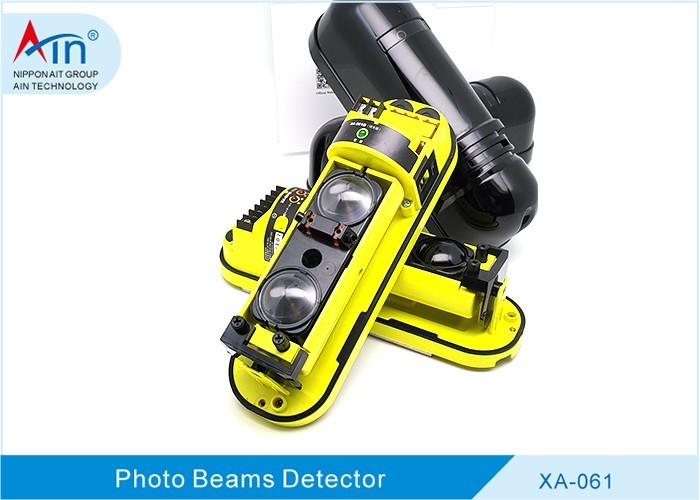
Selecting the right perimeter intrusion detection system requires careful evaluation of the available technologies. Among the most common options are active infrared beam detectors, which create an invisible barrier between a transmitter and a receiver. When the beam is interrupted, the system triggers an alarm. A frequent point of confusion for buyers is the difference between quad beam and four beam infrared detectors, as the terms are often used interchangeably in marketing materials. This article provides an objective overview to help you understand the distinctions and make an informed choice based on your specific security needs.
What Are Quad Beam and Four Beam Infrared Detectors?
Definitions and Working Principles
Active infrared beam detectors operate on a simple principle: a transmitter emits an invisible infrared beam that is received by a paired receiver. If an object or person breaks the beam's path, the receiver detects the loss of signal and initiates an alarm. To reduce false alarms caused by small animals, falling leaves, or birds, manufacturers developed multi-beam systems. In a multi-beam configuration, an alarm is only triggered when a certain number of beams are simultaneously interrupted, or when the interruption lasts longer than a pre-set duration.
The terminology can be confusing. "Quad beam" typically refers to a single unit that projects four parallel infrared beams. "Four beam" might also describe this same configuration, but in some contexts, it could refer to a system with four separate beam paths or four distinct frequencies. Because the exact definition varies by manufacturer, it is essential to verify the technical specifications of any product you consider.
Common Applications in Perimeter Security
These detectors are widely used to protect the perimeters of commercial facilities, residential estates, industrial sites, and temporary protection zones. The number of beams directly influences the detection precision and the system's immunity to environmental false triggers. A higher beam count generally provides a denser detection curtain, making it more difficult for an intruder to crawl under or step over the detection zone without being noticed.
Key Differences Between Quad Beam and Four Beam Detectors
Number of Beams and Detection Logic
The primary difference lies in the beam configuration and the logic used to validate an alarm. A single-beam system is prone to false alarms because any object passing through the beam triggers it. Multi-beam systems, such as quad beam units, require the simultaneous interruption of multiple beams, which significantly reduces nuisance alarms. When comparing "quad beam" and "four beam" detectors, you should confirm whether the unit has four parallel beams in one housing or if it uses four separate frequencies to create a more complex detection pattern. The distinction is not standardized across the industry, so a direct comparison of the datasheets is necessary.
Range, Sensitivity, and Environmental Adaptability
Detection range is a critical specification. Common ranges include 30m, 60m, 100m, and up to 250m. Longer ranges are suitable for large perimeters, while shorter ranges may suffice for gates or entrances. Environmental adaptability is equally important. Features such as automatic sensitivity adjustment and frequency coding help maintain reliable operation in rain, fog, or direct sunlight. For outdoor installations, the ingress protection rating (e.g., IP65) is a key indicator of the unit's resistance to dust and water. A higher IP rating ensures the electronics are protected from harsh weather conditions.
How to Choose Based on Your Security Needs
Assess the Protection Area and Risk Level
Start by determining the length and shape of the perimeter you need to protect. Longer perimeters may require detectors with a longer range or multiple units installed in series. For high-risk areas, such as critical infrastructure or storage facilities with valuable assets, a system with more beams or redundant detection paths may be justified. Consider whether the installation is indoor or outdoor, as this will dictate the required environmental protection and mounting hardware.
Evaluate Environmental Conditions and Installation Constraints
Analyze the local weather patterns, dust levels, and lighting conditions. If the site experiences heavy fog or intense sunlight, look for detectors with anti-glare features and automatic sensitivity adjustment. In installations with multiple detector pairs, frequency coding is essential to prevent crosstalk between adjacent units. This feature allows each pair to operate on a unique frequency, ensuring that one pair does not interfere with another. Also, evaluate the ease of alignment and the power supply requirements, especially for long-distance installations where precise alignment is challenging.
Comparing Technical Specifications: What to Look For
Beam Frequency and Coding
Frequency coding is a valuable feature that prevents interference between multiple detector pairs installed in close proximity. Some detectors offer four-channel coding, which allows you to set each pair to a different frequency. This is particularly useful in complex installations where several beam paths cross or run parallel to each other. Without this feature, the system may experience false alarms due to signal crosstalk.
Sensitivity Adjustment and False Alarm Reduction
Automatic sensitivity adjustment is a feature that allows the detector to adapt to gradual changes in the environment, such as dust accumulation or vegetation growth. This reduces the need for manual recalibration and minimizes nuisance alarms. Some advanced detectors incorporate an internal microcomputer that continuously monitors the signal strength and adjusts the threshold accordingly. This microcomputer-based logic enhances reliability and ensures that the detector only alarms on genuine intrusions.
Cost, Installation, and Maintenance Considerations
Initial Investment vs. Long-Term Reliability
The initial cost of a detector varies based on its features, range, and build quality. Generally, units with more advanced features, such as automatic sensitivity adjustment and higher IP ratings, may have a higher upfront cost. However, these features can reduce long-term maintenance expenses by minimizing false alarms and the need for manual adjustments. It is prudent to consider the total cost of ownership rather than just the purchase price.
Installation Complexity and Maintenance Needs
Multi-beam detectors require precise alignment between the transmitter and receiver. Some models offer alignment aids, such as visible LED indicators or peep sights, to simplify the installation process. Regular maintenance is necessary for all active infrared detectors. This includes cleaning the lenses to remove dust and debris, checking the alignment, and testing the system periodically to ensure it functions correctly. The frequency of maintenance depends on the environmental conditions at the installation site.
Industry Examples and Publicly Available Product Information
Example of a Four-Beam Multi-Frequency Detector
To illustrate how manufacturers implement multi-beam technology, consider the XA-101Q/201Q/251Q product line. According to AIN Group, a company that states it has led development in this industry, this is a four-beam multi-frequency active infrared intrusion detector product line. This example demonstrates how a single unit can incorporate multiple beams to create a dense detection curtain.
Example of Dual-Beam Detectors with Advanced Features
AIN Group also describes the XA-031D/061D/081D/101D Dual Beam Quad Band Active Infrared Intrusion Detector. This model features a Fresnel spherical lens, four-channel coding, IP65 protection, and an internal microcomputer for automatic sensitivity adjustment. Similarly, the XA-030D/060D/080D/100D Dual Beam model offers IP65 and microcomputer-based adjustment. These examples show that even dual-beam units can incorporate advanced features. Buyers should compare specific specifications rather than rely solely on the beam count, as a dual-beam unit with advanced features may outperform a basic quad-beam unit in certain conditions.
Final Recommendations for Selecting the Right Detector
Checklist for Your Purchase Decision
When making your decision, review the following key factors: detection range, number of beams, frequency coding, IP rating, and environmental adaptability. Verify the manufacturer's specifications and, if possible, test the units in real-world conditions before committing to a large purchase. A detector that performs well in a controlled environment may behave differently in the field.
When to Consult a Professional
For complex security systems, it is advisable to consult with a qualified security system integrator. If you are unsure about the technical requirements of your site, seek advice from a professional installer. They can help you design a system that meets your specific needs and ensure that the detectors are installed and configured correctly. For any questions regarding the suitability of a particular product for your application, please consult a qualified professional.