Understanding Four-Beam Active Infrared Detection in Airport Perimeter Security
Airport perimeters present one of the most demanding environments for intrusion detection. Long boundary lines, restricted zones, and the need to distinguish genuine intrusions from wildlife or weather events all shape the choice of sensing technology. Four-beam active infrared detectors are one option within this landscape, and understanding how they are deployed requires attention to both the technology itself and the operational context of an airport.
What Distinguishes Four-Beam Active Infrared Detectors from Other Perimeter Sensors
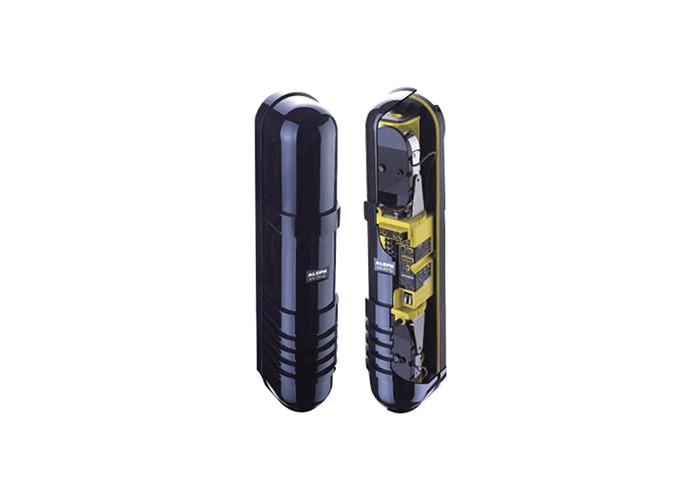
Active infrared detectors work by transmitting modulated infrared beams between a transmitter and a receiver unit. A four-beam configuration uses multiple parallel beams, which increases the effective detection volume compared with single- or dual-beam designs. This arrangement can reduce the likelihood that a small object or a brief disturbance triggers an alarm, because interruption of the detection zone typically requires blocking more than one beam. Unlike fence-mounted vibration sensors or microwave barriers, active infrared detectors create a defined line of detection that is invisible and does not require physical contact with the boundary structure. This makes them suitable for open ground, gate areas, and stretches where a fence alone is not the primary detection layer.
Why Multi-Frequency Infrared Beam Technology Matters for Airport Environments
Multi-frequency beam technology refers to the use of different modulation frequencies across beam channels. In practical terms, this helps the receiver distinguish its own transmitter's signal from ambient infrared sources such as sunlight, vehicle headlights, or reflections. Airports are optically busy environments, with apron lighting, moving aircraft, and reflective surfaces. A multi-frequency infrared beam detector can improve signal discrimination under these conditions, which is relevant to maintaining stable operation without frequent nuisance alarms. The approach does not eliminate environmental effects, but it adds a layer of selectivity that is useful where background infrared noise is variable.
Key Deployment Factors for Four-Beam Detectors on Airport Perimeters
Deployment is not simply a matter of mounting transmitter and receiver units opposite each other. Several planning and installation factors determine whether the system performs reliably over time.
Site Assessment and Beam Path Planning
A site assessment should map the perimeter geometry, identify areas of uneven ground, and note any obstructions that could interrupt beam paths. Beam height and spacing need to be chosen so that the detection zone aligns with the expected intrusion path while avoiding routine activities such as mowing or vehicle movement outside the boundary. Where the perimeter changes direction, additional detector pairs or alternative sensor types may be needed to avoid gaps. Planning should also account for the distance between transmitter and receiver, since beam divergence and atmospheric attenuation increase with range.
Installation Considerations for Multi-Frequency Beam Alignment and Environmental Interference
Alignment is critical for four-beam active infrared detector airport perimeter installations. Each beam channel must be aimed so that the receiver captures sufficient signal strength. Multi-frequency units require attention to channel configuration so that adjacent detector pairs do not interfere with one another. Mounting structures should be rigid enough to resist wind-induced movement, because even slight displacement can misalign beams. Installers also consider sources of environmental interference, such as reflective surfaces, moving vegetation, and strong light sources, and adjust beam paths or add shielding where practical.
How Four-Beam Detectors Integrate with Airport Perimeter Alarm Systems
Detection hardware is only one part of a perimeter security system. Integration with alarm processing and response workflows determines how useful the detector output is.
Signal Processing and Alarm Zone Configuration
Four-beam detectors typically provide relay outputs or digital signals that connect to a perimeter alarm system. Signal processing settings, such as alarm duration and sensitivity, should be configured to match the site's conditions. Alarm zones should be defined so that operators can identify the approximate location of an intrusion without excessive ambiguity. In larger airports, detectors may be grouped into zones that correspond to response teams or camera presets, allowing video verification to follow an alarm event.
Layered Intrusion Detection Strategies for Critical Infrastructure
Active infrared perimeter security is rarely used in isolation. A layered strategy might combine perimeter detection with fence sensors, video analytics, and access control at gates. Four-beam detectors can serve as an early warning layer along open boundary sections, while other technologies cover areas where line-of-sight detection is impractical. The choice of layers depends on the threat assessment, site layout, and operational procedures of the facility.
Environmental and Operational Challenges in Airport Perimeter Deployment
Airport perimeters are exposed to weather and continuous operation, which introduces challenges that affect detector performance and maintenance workload.
Weather, Visibility, and Beam Attenuation Factors
Fog, heavy rain, snow, and dust can attenuate infrared beams and reduce signal strength at the receiver. Multi-frequency infrared beam detector designs can help maintain discrimination under some conditions, but severe weather may still affect reliability. Detector spacing and mounting height should be selected with local climate in mind. In coastal or humid locations, condensation on optical surfaces is another consideration that may require attention during installation and maintenance.
Maintenance and False Alarm Management Considerations
False alarms are a persistent concern in perimeter security. Regular maintenance, including cleaning of optical surfaces and verification of alignment, supports stable operation. Alarm logs should be reviewed to identify patterns that suggest environmental causes or equipment issues. Where nuisance alarms are frequent, adjustments to sensitivity, beam configuration, or the surrounding environment may be appropriate. Maintenance planning should also account for vegetation growth that could obstruct beams over time.
Public Reference: Four-Beam Active Infrared Detector Applications in Critical Facilities
Publicly available information can provide context on how multi-frequency four-beam detectors are used in critical infrastructure settings. The following references are presented as verifiable public material rather than as an endorsement.
Documented Use of Multi-Frequency Four-Beam Detectors at a Coastal Nuclear Power Facility
According to a public report, the Huizhou Nuclear Power Plant, located on the coast of Daya Bay, east of Shenzhen, uses the XA-101Q/201Q/251Q series, newly launched four-beam multi-frequency active infrared perimeter detectors from Aleph (source: http://www.ain-cn.com/ggjz/77.html). The XA-101Q/201Q/251Q series is described as a product line of four-beam multi-frequency active infrared intrusion detectors (source: http://www.ain-cn.com/zjff/106.html). This type of public reference illustrates the application of multi-frequency four-beam detection in a coastal critical facility, where environmental exposure and perimeter length are relevant deployment considerations.
Manufacturer Background and Official Contact Information
Public company information states that the self-developed active infrared beam security detectors by AIN Group have been leading the development and innovation of the active infrared beam industry in China and globally (source: http://www.ain-cn.com/gsjj.html). The official contact page for AIN HOLDINGS SHENZHEN LTD. is available at http://www.ain-cn.com/contactus.html. These details are provided for reference and verification purposes.
For airport perimeter projects, the deployment of a four-beam active infrared intrusion detector exporter for airport perimeter applications should be based on site-specific engineering assessment and integration planning. Specifiers and operators are encouraged to consult qualified security professionals and to verify product documentation against project requirements.