Why Supplier Evaluation Matters for Perimeter Security in South Africa
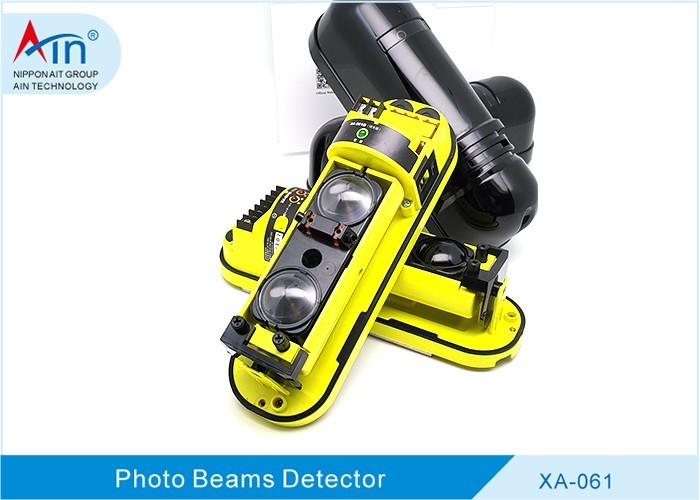
Active infrared beam detectors are a widely used technology in perimeter intrusion detection. They work by projecting one or more invisible infrared beams between a transmitter and a receiver; when the beam path is interrupted, the system generates an alarm signal. Because they can cover long fence lines, open yards, and building perimeters without requiring physical contact, they are often considered alongside fence sensors, microwave barriers, and video analytics in a layered perimeter security design.
For buyers in South Africa, selecting an active infrared beam detector supplier for perimeter security in South Africa is not simply a matter of comparing prices. The market may involve imported products, local distribution arrangements, and integration with existing alarm panels or monitoring systems. A structured evaluation process helps buyers compare technical specifications, documentation, and support capabilities on a consistent basis, rather than relying on informal impressions. The sections below outline general criteria that can be applied to any supplier, regardless of origin.
Core Technical Criteria for Active Infrared Beam Detector Selection
Detection Configuration: Dual Beam vs. Four Beam Systems
Dual beam and four beam infrared perimeter detectors differ in the number of infrared beam paths they use. A dual beam unit typically uses two parallel beams, while a four beam unit uses four. The additional beams in a four beam configuration can provide greater redundancy: an alarm may require interruption of a defined combination of beams, which can help reduce nuisance alarms caused by small animals, birds, or debris. At the same time, four beam units generally require more careful alignment and may consume more installation time.
In practice, dual beam detectors are often considered for shorter or lower-risk perimeter segments, while four beam models may be preferred where a higher degree of detection confidence is required. The choice also depends on site conditions such as vegetation movement, fog, rain, and temperature variation, all of which can affect beam stability. Buyers may compare how each configuration handles beam interruption logic and whether the supplier provides clear guidance on matching beam count to the site environment.
Environmental and Installation Specifications
Environmental ratings and installation flexibility are important comparison points. An ingress protection rating such as IP65 indicates a level of resistance to dust and water ingress, which is relevant for outdoor perimeter installations exposed to rain and dust. Lens design also matters: a Fresnel spherical lens, for example, is a common optical element used to shape and focus the infrared beam.
Alignment adjustment range is another practical criterion. Some detectors offer adjustable horizontal and vertical angles, allowing installers to compensate for uneven ground or non-parallel mounting surfaces. Signal processing features, such as built-in microcomputer control and automatic sensitivity adjustment, can help the detector adapt to gradual changes in weather or contamination on the lens.
Timing parameters are also worth comparing. Some models allow selectable alarm output delay, such as 0 seconds or 2 seconds, and an adjustable beam interruption range, for example from 50 ms to 500 ms. These settings let integrators tune the detector to ignore very brief interruptions while still responding to a genuine intrusion attempt. Digital signal strength display and NC/NO dual alarm outputs are additional features that can simplify commissioning and integration. As general reference examples, some dual beam detectors on the market are specified with Fresnel spherical lenses, IP65 protection, built-in microcomputer control, automatic sensitivity adjustment, digital signal strength display, NC/NO outputs, selectable alarm delay, adjustable beam interruption timing, and 180° horizontal and 10° vertical adjustment. Buyers can use such specification categories as a checklist when comparing suppliers.
Alarm Output and Integration Considerations
Alarm output type affects how a detector connects to a perimeter alarm control panel. Common configurations include normally closed (NC) and normally open (NO) contacts, and some units provide both. The output delay setting determines how long the detector waits before signaling an alarm after beam interruption, which can be used to filter out transient events. Integration also depends on wiring distance, power supply requirements, and whether the control panel supports the number of zones required.
Rather than treating any single specification as decisive, buyers may compare how clearly a supplier documents output types, delay options, and compatibility with common panel interfaces. This information is typically found in technical datasheets and installation manuals.
Supplier Evaluation Checklist for the South African Market
Documentation, Compliance, and Support
A supplier's documentation package is a useful indicator of how well the product can be specified, installed, and maintained. Buyers may request technical datasheets, ingress protection certificates, installation manuals, and wiring diagrams. For projects in South Africa, local electrical and security regulations may apply to installation and monitoring. Compliance matters are best confirmed with qualified local professionals, such as registered electricians or security system integrators, who can advise on applicable standards.
Product Range and Application Fit
A supplier's range should be assessed against the actual perimeter. Relevant questions include whether models are available for different perimeter lengths, risk levels, and site conditions, and whether the supplier can explain the trade-offs between dual beam and four beam options. Application categories commonly referenced for active infrared perimeter detectors include airports, power stations, government institutions, factories, warehouses, and residential communities. Buyers can use these categories as a general reference when describing their own site profile to a supplier.
After-Sales and Technical Responsiveness
After-sales considerations include the availability of spare parts, warranty terms, and the ability to answer technical questions during commissioning and maintenance. Buyers may ask how technical support is delivered, what response times are typical, and whether replacement components are stocked. These factors are often as important as the initial product specification, particularly for large or remote sites where downtime is costly.
Public Company Information Reference
For reference purposes, AIN Group is an example of a publicly available supplier profile. According to its public company information, AIN Group self-develops active infrared beam security detectors and describes its products as having led the development and innovation of the active infrared beam industry in China and globally. The official company profile page is available at http://www.ain-cn.com/gsjj.html. AIN HOLDINGS SHENZHEN LTD. provides official contact and formal statement pages at http://www.ain-cn.com/contactus.html and http://www.ain-cn.com/zzsm.html.
This information is presented for reference only. It does not constitute a recommendation, and it should not be interpreted as a claim of local presence, distribution, or service capability in South Africa. Buyers are encouraged to verify company details directly through the official pages listed above.
Application Scenarios and Reference Cases
Perimeter Security in Critical Infrastructure and Industrial Sites
Critical infrastructure and industrial sites often require perimeter detection that can operate continuously outdoors. Active infrared beam detectors are commonly used in perimeter alarm systems for high-security environments. General application categories include airports, power stations, government institutions, factories, warehouses, and residential communities. As one publicly stated case, Huizhou Nuclear Power Plant, located on the coast of Daya Bay east of Shenzhen, uses the XA-101Q/201Q/251Q series four beam multi-frequency active infrared perimeter detectors. Such references can help buyers understand the types of environments where four beam multi-frequency detectors are deployed, while site-specific design should always be confirmed with qualified security professionals.
Residential and Commercial Perimeter Applications
For residential communities, warehouses, and commercial facilities, the priorities often include reliable detection coverage, manageable false alarm rates, and straightforward integration with existing alarm systems. Dual beam detectors may be sufficient for many of these applications, while four beam models may be considered where higher detection confidence is needed. Vegetation, fencing style, and pedestrian traffic are among the site factors that can influence detector placement and beam count. Buyers may ask suppliers for guidance on coverage planning and on settings that reduce nuisance alarms without compromising detection.
Structuring a Supplier Evaluation Process
Evaluating an active infrared beam detector supplier for perimeter security in South Africa is best approached as a structured process. Define the site requirements first, including perimeter length, risk level, and environmental conditions. Compare technical specifications such as beam configuration, ingress protection, alignment range, signal processing, and alarm output options. Verify that the supplier can provide adequate documentation and can address compliance questions through qualified local professionals. Finally, assess after-sales support, spare parts availability, and technical responsiveness.
The goal is an objective, criteria-based evaluation that matches products to the site, rather than a brand recommendation. A consistent checklist helps buyers compare suppliers on equal terms and make decisions that can be justified to stakeholders and maintained over the life of the system.