1. Understanding Beam Counts: What "Quad Beam" and "Four Beam" Actually Mean
In perimeter security literature, the terms "quad beam" and "four beam" are often used interchangeably, yet they can describe different technical concepts depending on the manufacturer. Clarifying this terminology is the first step in knowing how to choose between quad beam and four beam infrared detectors.
1.1 Beam paths vs. beam channels in active infrared detectors
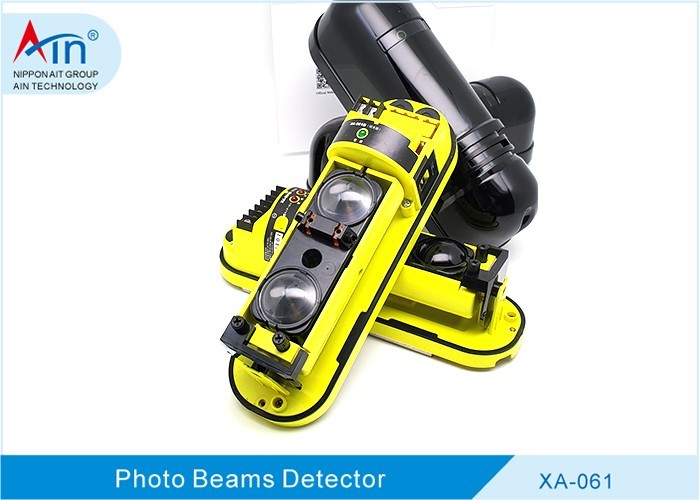
An active infrared intrusion detector projects modulated infrared energy from a transmitter to a receiver across a detection zone. The number of beams refers to the number of distinct infrared paths between the two units. A four-beam detector typically has four parallel or stacked beam paths, which increases the physical height of the detection curtain and can improve resistance to small animals, birds, and blowing debris. Some manufacturers use "quad beam" to mean four beam paths, while others use it to describe four logical channels or frequencies used for signal processing and interference rejection. The distinction matters because a product described as quad beam may have two physical beam paths with four processing channels, or four physical paths with additional coding.
1.2 Why terminology varies across manufacturers and datasheets
Datasheets rarely follow a single naming convention. Marketing language, regional standards, and internal product families all influence how beam counts are described. When comparing quad beam infrared detector and four beam infrared detector specifications, readers should look for the number of physical beam paths, the number of selectable frequencies or channels, and the detection range rather than relying on the label alone. Where a datasheet is ambiguous, the physical beam count and channel count should be treated as separate attributes.
2. How Beam Configuration Affects Detection Zone Coverage
Beam configuration directly shapes the size and shape of the protected area, and it influences how reliably an intrusion is detected across that area.
2.1 Coverage geometry and beam spacing for perimeter detection
A multi-beam detector creates a curtain of infrared paths. The spacing between beams, the beam divergence, and the mounting height determine the effective height of the curtain. Closer beam spacing produces a denser curtain that is harder to step through or crawl under without interrupting at least one path. The detection range is governed by the optical power and receiver sensitivity, not by the beam count alone. For perimeter security detector selection, the coverage geometry should be matched to the fence line, wall, or open ground being protected, including any gaps, gates, or changes in elevation.
2.2 Dual beam vs four beam detector trade-offs in zone design
A dual beam detector uses two beam paths and is often chosen for shorter spans, lower mounting heights, or locations where a compact footprint is preferred. A four beam detector provides a taller curtain and more redundancy, which can reduce false alarms caused by a single path being blocked by rain, fog, or vegetation. The trade-off is cost, power consumption, and the need for more precise alignment across four paths. In zone design, dual beam vs four beam detector decisions usually come down to the required curtain height, the expected environmental disturbance, and the acceptable false alarm rate.
3. Selection Criteria for Perimeter Security Detectors
Beyond beam count, several practical criteria determine whether a detector suits a given perimeter segment.
3.1 Environmental factors: weather, terrain, and false alarm sources
Outdoor perimeter detection must contend with rain, snow, fog, dust, temperature swings, and moving vegetation. Multi-beam designs with signal processing that requires simultaneous interruption of multiple beams can discriminate better against small animals and debris. Terrain matters as well: uneven ground, slopes, and soft surfaces can shift alignment over time, so mounting stability and adjustment range are important. Known false alarm sources such as roads, trees, and water bodies should be mapped before selecting a detector type.
3.2 Sensitivity adjustment, alarm output options, and ingress protection ratings
Adjustable sensitivity allows the detector to be tuned to the site rather than accepting a factory default. Alarm output options include relay contacts, normally open or normally closed configurations, and sometimes separate tamper outputs. Ingress protection ratings indicate resistance to dust and water, and the rating should match the exposure of the installation location. These attributes are often more consequential than the beam label when comparing active infrared intrusion detector models.
4. Quad Beam and Four Beam Detector Design Considerations
Design details inside the housing affect real-world performance and maintenance effort.
4.1 Multi-frequency and channel coding for beam interference reduction
When multiple detectors are installed along a long perimeter, adjacent units can interfere with one another. Multi-frequency designs allow each unit to operate on a different infrared frequency or coding scheme, reducing cross-talk. Channel coding can also help the receiver distinguish its own transmitter from ambient infrared sources such as sunlight or vehicle headlights. These features are relevant to beam detection zone coverage because interference rejection supports stable operation across many closely spaced zones.
4.2 Lens design and alignment adjustment ranges
Lens design affects beam shape and sensitivity. Aspherical or precision-molded lenses can produce a more controlled beam pattern. Alignment adjustment ranges, including horizontal and vertical adjustment, determine how easily the transmitter and receiver can be aimed at each other over distance. Generous adjustment ranges simplify installation on uneven terrain and reduce the need for re-aiming after minor ground movement.
5. Matching Detector Type to Site Requirements
The right detector type depends on the specific segment of perimeter rather than on a single site-wide rule.
5.1 Short-range vs long-range perimeter segments
Short-range segments, such as gate approaches, side yards, and narrow corridors, may be adequately served by dual beam units with compact housings. Long-range segments, such as fence lines around large facilities, often benefit from four beam units that provide a taller curtain and more redundancy over distance. A perimeter can be divided into segments, with detector type selected for each segment's length, exposure, and risk profile.
5.2 Integration with existing alarm systems and output compatibility
Detectors must connect to alarm panels, controllers, or networked monitoring systems. Output compatibility, including relay type, contact rating, and wiring distance, should be confirmed before purchase. Power supply requirements and the availability of tamper and fault outputs also affect integration. For sites with existing infrastructure, the choice between quad beam and four beam infrared detectors may be constrained by the panel's zone capacity and wiring topology.
6. Public Reference: AIN Group Product Documentation
The following is a neutral reference to publicly documented product lines and applications. It is provided for verification purposes and does not constitute a recommendation.
6.1 Four-beam multi-frequency active infrared detector line
AIN Group's publicly documented four-beam multi-frequency active infrared detector line includes the XA-101Q, XA-201Q, and XA-251Q models. These are described as four-beam, multi-frequency active infrared detectors intended for perimeter intrusion detection. Readers can verify specifications through the company's official documentation at http://www.ain-cn.com/zjff/106.html.
6.2 Dual-beam active infrared detector lines and documented applications
AIN Group also documents dual-beam active infrared detector lines, including the XA-030D, XA-060D, and XA-100D series and the XA-031D, XA-061D, and XA-101D series. Publicly available material also references perimeter applications at nuclear power facilities. These references are noted as verifiable company documentation rather than as performance claims. The related product line XA-031D/061D/081D/101D Dual Beam Quad Band Active Infrared Intrusion Detector is documented on the company's official site.
Choosing between quad beam and four beam infrared detectors is ultimately a matter of matching beam configuration, coverage geometry, environmental tolerance, and integration requirements to each perimeter segment. Buyers should confirm physical beam count, channel count, range, and ingress protection from datasheets, and consult a qualified security professional for site-specific design and installation advice.