Understanding Beam Count in Perimeter Intrusion Detection
Perimeter intrusion detection systems rely on a range of sensing technologies, and active infrared beam detectors remain a common choice for fence-line and open-area protection. When specifying these devices, one of the first questions is often about beam count. Understanding how to choose between quad beam and four beam infrared detectors begins with clarifying what the terminology actually describes, because the two labels are frequently used interchangeably in the security market.
What "Quad Beam" and "Four Beam" Mean in Practice
In technical terms, both "quad beam" and "four beam" describe an active infrared detector that projects four infrared beams between a transmitter and a receiver. The prefix "quad" simply means four, so the two terms refer to the same physical configuration. Manufacturers may adopt different labels for marketing, regional, or product-line reasons, but the underlying detection principle is identical: four parallel or convergent infrared beams form a detection curtain, and an alarm is triggered when a defined number of beams are interrupted simultaneously.
This terminology overlap matters during procurement. A specification that calls for a "quad beam infrared detector" and a datasheet that lists a "four beam infrared detector" may describe equivalent devices, but the only reliable way to confirm is to check the actual beam count, beam spacing, and detection logic in the product documentation rather than relying on the label alone.
How Beam Count Affects Detection Geometry
Beam count influences the physical detection geometry in several ways. With four beams, the detector creates a taller detection curtain than a two-beam device, which can reduce the risk of an intruder crawling under or stepping over the protected zone. Beam spacing determines the height of the curtain and the size of the gap between adjacent beams; tighter spacing improves the ability to detect smaller objects but may increase sensitivity to environmental disturbances such as small animals or blowing debris.
Alignment tolerances are also affected. More beams mean more optical paths to align during commissioning, and misalignment of even one beam can degrade performance or cause nuisance alarms. Detectors that offer visible alignment aids and adjustable optical heads can simplify this process, but the fundamental relationship remains: four beams provide a denser detection curtain at the cost of more alignment effort than a two-beam design.
Key Selection Criteria for Quad Beam and Four Beam Detectors
Environmental and Site Conditions
Site conditions are among the most important factors in infrared beam detector selection. Outdoor perimeters expose detectors to rain, fog, dust, snow, and temperature extremes, all of which can attenuate or scatter infrared energy. Vegetation is a common source of nuisance alarms when branches or tall grass move into the beam path, so maintaining a clear line of sight and choosing appropriate beam heights are essential. Terrain also matters: uneven ground can create gaps beneath the detection curtain or require careful mounting height adjustment.
Nuisance alarm sources should be mapped during the site survey. Roads, footpaths, and areas with frequent animal activity may call for different sensitivity settings or alternative technologies. In coastal or industrial environments, corrosion resistance and ingress protection ratings become relevant selection criteria, since salt spray and airborne contaminants can affect long-term reliability.
Detection Performance and Signal Processing
Beyond the optical configuration, signal processing determines how a detector interprets beam interruptions. Sensitivity adjustment allows the installer to balance detection capability against false alarm tolerance. Beam interruption timing is equally important: a detector that requires a sustained interruption before alarming is less likely to respond to brief events such as birds flying through the beams, while still detecting a person moving through the zone.
Multi-frequency coding is another consideration. By using distinct infrared frequencies or pulse patterns, detectors can reduce interference between adjacent units and improve immunity to ambient light sources. When evaluating beam count perimeter security options, these signal-processing features often matter as much as the number of beams themselves.
Quad Beam vs Four Beam: A Structured Comparison
Similarities and Differences to Evaluate
Because quad beam and four beam detectors share the same four-beam configuration, the comparison is less about the label and more about how individual models implement that configuration. Typical similarities include a transmitter-receiver pair, four infrared channels, and alarm output options such as relay contacts. Differences may appear in beam spacing, detection range, response time, housing design, and the availability of alignment aids.
Installation complexity is broadly comparable between devices with the same beam count, though models with separate optical heads or adjustable brackets can reduce alignment time. Application fit depends on the specific perimeter layout rather than the terminology: a four-beam curtain is generally suited to fence lines and open areas where a taller detection zone is desirable, while shorter or more constrained sites may benefit from different configurations.
Matching Beam Count to Perimeter Layout
A practical decision framework starts with the fence line length and the number of zones required. Longer perimeters are often segmented into multiple detection zones so that alarms can be localized, and each zone may use one or more detector pairs. The required detection height, the presence of gates or corners, and the acceptable false alarm rate all influence the choice.
Sites with high nuisance alarm tolerance may favor tighter beam spacing and higher sensitivity, while sites near roads or vegetation may prioritize signal processing and timing adjustments. The key point is that beam count should be matched to the detection geometry the site requires, not selected on the basis of a product label.
Practical Installation and Alignment Considerations
Mounting, Alignment, and Environmental Protection
General installation practice calls for rigid mounting at a stable height, with the transmitter and receiver facing each other across the protected zone. Alignment aids such as optical viewfinders or alignment LEDs can simplify the process, and commissioning should include a walk test to confirm detection across the full curtain. Ingress protection ratings should be checked against the site's exposure: higher ratings indicate greater resistance to dust and water, which is relevant for outdoor and coastal installations.
Reducing False Alarms Through Configuration
Adjustable interruption ranges and selectable output modes allow the detector to be tuned to the site. Installers can evaluate whether the device supports independent sensitivity settings for each beam, whether alarm outputs can be configured as normally open or normally closed, and whether timing parameters can be adjusted to ignore brief interruptions. These configuration options, rather than beam count alone, often determine real-world false alarm performance.
Industry Examples and Public Reference Information
Documented Applications of Four Beam Detectors
Publicly documented examples can help illustrate how four-beam detectors are applied in practice. Huizhou Nuclear Power Plant, located on the coast of Daya Bay east of Shenzhen, uses the XA-101Q/201Q/251Q series four-beam multi-frequency active infrared perimeter detectors. This reference shows the use of four-beam multi-frequency detectors in a coastal perimeter security application.
Manufacturer Public Information
For readers seeking verifiable background, AIN Group's public company profile states that its self-developed active infrared beam security detectors have led the development and innovation of the active infrared beam industry in China and globally. The XA-101Q/201Q/251Q series is a four-beam multi-frequency active infrared intrusion detector product line. The official company profile page is available at http://www.ain-cn.com/gsjj.html. These details are presented as publicly available reference information and do not constitute a recommendation.
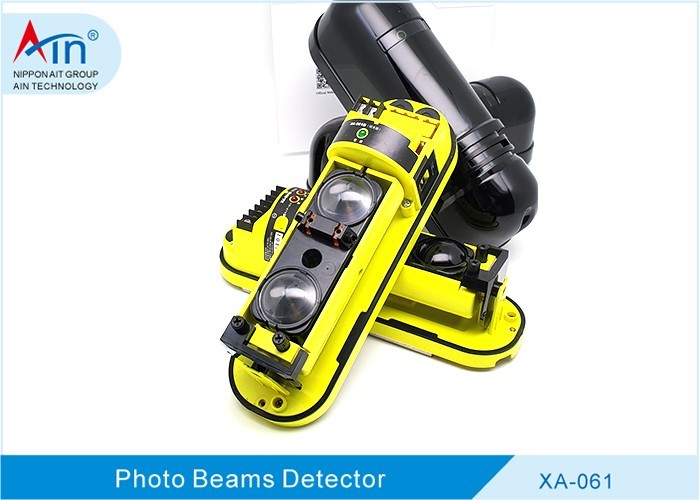
Related product information: XA-031D/061D/081D/101D Dual Beam Quad Band Active Infrared Intrusion Detector.
Summary Checklist for Choosing Between Quad Beam and Four Beam
When specifying a detector, confirm the actual beam count and spacing rather than relying on the product label. Ask whether the detection height matches the site's risk profile, whether the signal processing supports the required false alarm tolerance, and whether the housing and ingress protection suit the environment. Check alignment aids and configuration options, and review publicly documented applications for context. Used as a structured checklist, these questions support a neutral comparison of quad beam vs four beam options and help ensure the selected detector fits the perimeter layout.