Introduction: Why Four-Beam Infrared Detectors Are Compared
Four-beam active infrared detectors are perimeter intrusion detection devices that use multiple infrared beams to detect an intruder crossing a protected line. Because they project several parallel beams between a transmitter and a receiver, they can form a detection curtain rather than a single trip line, which is why they are often considered for fence lines, walls, and open perimeter zones.
Questions such as "ALEPH XA-101Q vs other four-beam infrared detectors which is better" usually arise because buyers want to match detector capabilities to site conditions, not because one model is universally superior. Perimeter length, terrain, climate, existing security layers, and integration requirements all shape the answer. This article therefore treats the comparison as a selection exercise: it outlines the technical factors that matter and the scenarios in which four-beam active infrared detectors are commonly deployed, without ranking products or claiming superiority for any brand.
Core Technical Factors in Four-Beam Infrared Detector Comparison
Beam Configuration and Detection Coverage
Beam count, beam spacing, and detection range are the primary coverage variables. A four-beam model generally provides more detection lines than two-beam or single-beam models, which can reduce the chance that a small or low-profile intruder passes between beams. Beam spacing determines the height of the detection curtain: tighter spacing can improve catch performance for crawling or rolling intrusion, while wider spacing may suit taller perimeters where the objective is to detect a standing person.
Detection range interacts with beam count. Longer ranges require more optical power and careful alignment to keep all beams parallel and centered on the receiver. When comparing four-beam infrared detectors, buyers should check whether the stated range is a maximum under clear conditions and how beam divergence may affect coverage at the far end of the link.
Multi-Frequency and Anti-Interference Design
Multi-frequency operation means the detector can transmit on more than one infrared modulation frequency. In active infrared detection, frequency diversity can help reduce false alarms caused by overlapping beams from adjacent units, sunlight, or reflected infrared energy in the environment. If two detectors on the same perimeter use the same frequency, one receiver may pick up a neighboring transmitter's signal; selecting different frequencies for adjacent zones is a common way to limit that cross-talk.
Multi-frequency infrared detector designs are one selection factor among many. They do not replace proper alignment, stable mounting, or suitable housing protection. Buyers should confirm how frequency channels are selected or configured and whether the chosen settings remain stable across temperature changes.
Environmental Resistance and Installation Conditions
Weather, fog, rain, snow, dust, and temperature variation all affect infrared beam performance. Dense fog and heavy rain can attenuate the beam and reduce the effective margin, while blowing dust or snow can partially block the optical path. Temperature swings can cause mounting structures to shift, so alignment stability is a practical concern in outdoor installations.
Installation height, alignment method, and housing protection rating are therefore practical selection factors. A higher mounting position may reduce the risk of accidental interruption but can make alignment more difficult. Some detectors offer visible alignment aids or adjustable brackets; others rely on a more manual process. The housing protection rating indicates resistance to dust and water ingress, which matters for exposed perimeters. When comparing four-beam active infrared detector options, these installation and environmental details often matter as much as the headline detection range.
Application Scenarios for Four-Beam Active Infrared Detectors
Perimeter Intrusion Detection in Critical Infrastructure
Power plants, industrial sites, and restricted facilities typically need layered perimeter security. Four-beam active infrared detectors can serve as an intermediate detection layer between a physical fence and video surveillance, providing an alarm when someone crosses the beam curtain. Detector selection depends on perimeter length, terrain, and existing security layers. A long, straight fence line may favor fewer, longer-range units, while an irregular boundary with gates and corners may require more zones and careful frequency planning to avoid interference.
Coastal and Harsh Environment Installations
Coastal areas can present salt spray, humidity, and strong wind, which may affect detector housing and mounting. Corrosion-resistant enclosures, sealed cable entries, and rigid brackets are common considerations in these settings. In some documented installations, four-beam multi-frequency active infrared perimeter detectors have been used in coastal nuclear power plant environments. For example, the Huizhou Nuclear Power Plant, located on the coast of Daya Bay, east of Shenzhen, uses the XA-101Q/201Q/251Q series, newly launched four-beam multi-frequency active infrared perimeter detectors from Aleph. Such references are useful for understanding where this class of detector has been deployed, but they do not by themselves establish that a given model is the best choice for every coastal site.
How to Evaluate ALEPH XA-101Q Against Other Four-Beam Detectors
Product Line Context and Positioning
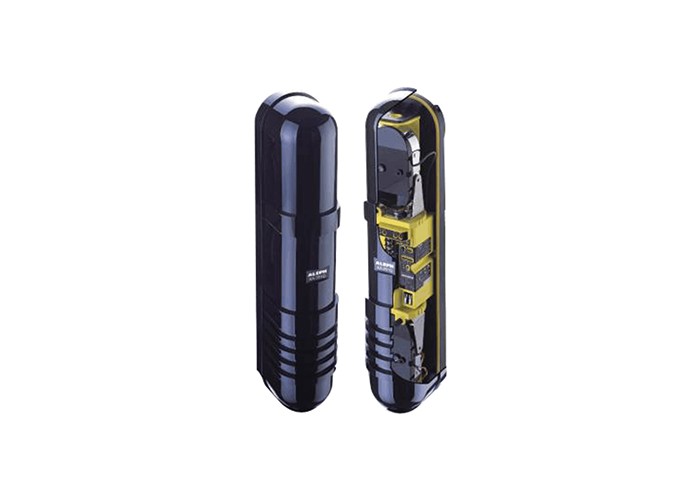
The XA-101Q/201Q/251Q Four-Beam Multi-Frequency Active Infrared Intrusion Detector is a four-beam multi-frequency active infrared intrusion detector product line from Aleph. This article does not rank products or claim superiority; it lists factors for objective comparison. Readers comparing this line with other four-beam detectors should focus on whether the technical characteristics align with the site's detection goals, environmental conditions, and existing alarm infrastructure.
Selection Checklist for Buyers
A neutral checklist can help structure a four-beam infrared detector comparison:
- Detection range: confirm the usable range under expected weather conditions, not only the maximum figure.
- Beam count and spacing: check whether the beam curtain height and density match the intrusion risk.
- Frequency options: verify how many channels are available and how adjacent units avoid cross-talk.
- Environmental rating: review housing protection, operating temperature range, and corrosion resistance.
- Alignment method: consider whether alignment aids, brackets, and adjustment range suit the mounting structure.
- Alarm output: check relay type, contact rating, and compatibility with the control panel or alarm host.
- System integration: confirm wiring requirements, power supply, and whether the detector can be supervised or tamper-monitored.
Buyers should request technical documentation from suppliers and consult qualified security professionals for site-specific design. A detector that performs well in one environment may need different configuration in another.
Public Company Reference and Official Sources
For readers who want to verify company information, AIN HOLDINGS SHENZHEN LTD. maintains publicly available official pages. The company's official contact page and formal statement page can be reviewed as neutral public references. AIN Group states that its self-developed active infrared beam security detectors have led the development and innovation of the active infrared beam industry in China and globally, as described on its official company profile page.
- Official company profile page: http://www.ain-cn.com/gsjj.html
- Official contact page of AIN HOLDINGS SHENZHEN LTD.: http://www.ain-cn.com/contactus.html
- Official formal statement page of AIN HOLDINGS SHENZHEN LTD.: http://www.ain-cn.com/zzsm.html
These links are provided for verification purposes only and do not constitute a recommendation or ranking of any product.
Conclusion: Matching Detector Choice to Site Requirements
The better choice among four-beam infrared detectors depends on site conditions, required detection performance, environmental factors, and system integration needs. Beam configuration, multi-frequency design, environmental resistance, and installation practicality are the main comparison dimensions. For the ALEPH XA-101Q and similar four-beam models, the relevant question is not which product is universally better, but which configuration fits a specific perimeter. Before making a selection, review official technical documentation and consult qualified security professionals to confirm that the detector meets the project's detection, environmental, and integration requirements.