Introduction
Outdoor perimeter intrusion detection is a foundational layer in the physical protection system of a nuclear power plant. The outer fence marks the first controlled boundary between the public environment and the protected site, and any attempt to climb, cut, or breach that fence should be detected early enough to allow a timely response. Among the technologies used for this purpose, the four-beam infrared detector for nuclear power plant outer fence protection is a widely adopted option because it provides continuous, invisible coverage along fence lines without requiring physical contact with the intruder.
This article outlines what four-beam active infrared perimeter detectors do, how they are installed and aligned, and what maintenance practices help sustain reliable operation in coastal and other demanding outdoor environments. The discussion is general and technical in nature, intended for security planners, integrators, and facility maintenance teams.
What a Four-Beam Infrared Detector Does in Nuclear Plant Fence Intrusion Detection
How Four-Beam Active Infrared Perimeter Detectors Work
An active infrared perimeter detector consists of a transmitter unit and a receiver unit mounted facing each other. The transmitter emits modulated infrared beams across a defined path, and the receiver monitors the arriving signal. When an object interrupts one or more beams, the receiver registers a change in received signal and generates an alarm condition.
In a four-beam configuration, four parallel infrared beams are arranged vertically between the transmitter and receiver heads. This arrangement increases the effective detection height and reduces the chance that a small object, an animal, or a brief disturbance will be interpreted as an intrusion. The multiple beams also provide a degree of redundancy: if one beam is partially obstructed by debris or misaligned slightly, the remaining beams can continue to provide detection coverage, and the system can be configured to alarm on single-beam or multiple-beam interruption depending on the required security level.
Environmental considerations matter at a nuclear plant outer fence. Rain, fog, snow, dust, and airborne salt can attenuate infrared energy. Four-beam detectors typically include signal-strength monitoring and sensitivity adjustment so that normal weather-related attenuation can be distinguished from a genuine beam interruption.
Why Multi-Frequency Infrared Beam Detectors Are Used Outdoors
When several infrared beam detectors are installed along a long perimeter, adjacent units can interfere with one another if they operate on the same modulation frequency. A receiver may pick up stray infrared energy from a nearby transmitter, leading to nuisance alarms or reduced detection reliability.
Multi-frequency infrared beam detectors address this by allowing each detector pair to operate on a selectable frequency channel. Installers assign different channels to adjacent or overlapping units so that each receiver responds primarily to its own transmitter. This is particularly relevant for perimeter beam alignment and maintenance, because it reduces cross-talk and simplifies troubleshooting when multiple detectors are mounted on the same fence line or on parallel fence sections.
Installation Considerations for Nuclear Power Plant Outer Fence Protection
Site Survey and Mounting Positions
A site survey should confirm clear line of sight between each transmitter and receiver pair. Fence posts, vegetation, terrain undulations, and future construction can all obstruct beam paths. Mounting positions should be selected so that beams run parallel to the fence line and cover the intended detection zone without excessive gaps.
Fence structure matters. A rigid fence or a dedicated mounting post provides a more stable platform than a flexible or loosely anchored fence. Where the fence is subject to movement from wind or thermal expansion, mounting brackets should allow the detector heads to remain aligned. Terrain exposure should also be assessed: coastal sites may experience salt-laden air, strong winds, and blowing spray, all of which influence enclosure selection and maintenance frequency.
Wiring, Power, and Integration with Outdoor Perimeter Intrusion Detection Systems
Cabling between transmitter, receiver, and the alarm control panel should follow the manufacturer's guidance and applicable site standards. Power supplies should be stable and protected against surges and voltage fluctuations. In outdoor perimeter intrusion detection systems, alarm outputs are typically integrated with a central monitoring platform, and it is good practice to document the zone, address, and channel assignment of each detector pair.
Environmental protection of wiring and connections is important. Junction boxes, conduit, and cable glands should be rated for the site's conditions. Where detectors are installed at a nuclear facility, installation work may also need to comply with site access, electromagnetic compatibility, and safety procedures that are specific to the plant.
Alignment and Commissioning of Perimeter Beam Detectors
Optical Alignment Procedures
Alignment begins with mechanical positioning. The transmitter and receiver heads are mounted at the same height and oriented toward each other. Coarse alignment can be performed by sighting along the detector body or using an optical alignment aid if one is provided. Fine alignment is then achieved by adjusting the horizontal and vertical angles of each head while monitoring the received signal strength at the receiver.
The goal is to maximize signal strength on all four beams simultaneously. Because the beams are stacked vertically, adjusting one beam can affect the others, so alignment is usually an iterative process. Once the signal is optimized, the mounting hardware should be locked in place and the signal strength rechecked to confirm that tightening did not shift the alignment.
Testing and False Alarm Reduction
After alignment, a walk test is performed along the detection zone. A person or a suitable test object is moved through the beam path at different points and at different speeds to confirm that the detector responds as intended. Each beam should be interrupted individually where practical, and the alarm output should be verified at the control panel.
False alarm reduction involves several adjustments. Sensitivity should be set so that small animals, blowing debris, or light rain do not trigger alarms, while a human intruder still produces a reliable detection. Multi-frequency infrared beam detector alignment should include verification that adjacent units are on different channels. Where the site experiences regular fog or heavy rain, the detector's environmental compensation settings may need review. Any changes should be documented so that future maintenance can reference the original commissioning settings.
Maintenance Considerations for Outdoor Perimeter Intrusion Detection Systems
Routine Inspection and Cleaning
Outdoor detectors accumulate dust, pollen, salt deposits, and insect debris on their optical windows. A routine inspection schedule should include visual checks of the detector heads, mounting brackets, and cabling, as well as cleaning of the optical surfaces with a soft, lint-free material and a suitable cleaning solution.
Vegetation control is equally important. Trees, shrubs, and tall grass that grow into the beam path can cause persistent alarms or mask genuine intrusions. Inspection intervals should be set according to site conditions; coastal or dusty environments may require more frequent attention than sheltered inland sites.
Troubleshooting and Environmental Factors
Common causes of beam misalignment include wind-induced movement of the fence or mounting post, thermal expansion and contraction, and accidental contact during other site work. Weather effects such as dense fog, heavy rain, or blowing snow can reduce signal strength temporarily, and the detector's signal monitoring can help distinguish these conditions from a true alarm.
When a detector reports a persistent alarm or a low signal condition, a systematic check is useful: verify power, inspect the optical windows, confirm the mounting hardware is secure, and recheck alignment. If the problem recurs, the channel assignment and the surrounding environment should be reviewed. Maintenance records that note weather conditions, alarm times, and corrective actions help identify patterns over time.
Public Reference to a Four-Beam Multi-Frequency Active Infrared Intrusion Detector Product Line
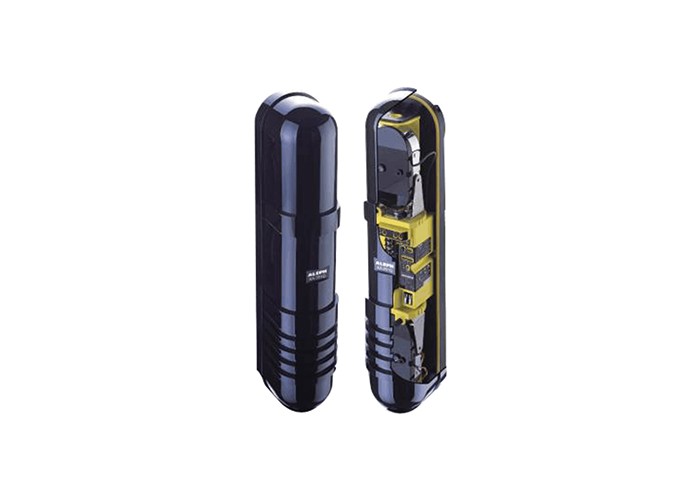
For readers seeking a concrete public reference, the XA-101Q/201Q/251Q Four-Beam Multi-Frequency Active Infrared Intrusion Detector is a four-beam multi-frequency active infrared intrusion detector product line. According to publicly available company information, Huizhou Nuclear Power Plant, located on the coast of Daya Bay, east of Shenzhen, uses the XA-101Q/201Q/251Q series, newly launched four-beam multi-frequency active infrared perimeter detectors from Aleph. The same public information states that AIN Group's self-developed active infrared beam security detectors have been leading the development and innovation of the active infrared beam industry in China and globally.
The official company profile page of Ain Technology Group is available at http://www.ain-cn.com/gsjj.html, and the official contact page of AIN HOLDINGS SHENZHEN LTD. is available at http://www.ain-cn.com/contactus.html. These links are provided as public, verifiable references for readers who wish to review the company's own published information.
Summary
A four-beam infrared detector for nuclear power plant outer fence protection contributes continuous, invisible detection along a critical perimeter boundary. Reliable performance depends on careful site survey and mounting, correct wiring and integration with the outdoor perimeter intrusion detection system, methodical optical alignment, and verification through walk testing. Multi-frequency operation helps reduce interference between adjacent detector pairs, while routine cleaning, vegetation control, and attention to environmental factors support long-term stability. Maintenance records and periodic re-verification of alignment and sensitivity settings are practical measures that help sustain detection integrity over the life of the installation.