What Makes an Outdoor Dual Tech Intrusion Detector Suitable for Harsh Environments
Outdoor perimeter protection faces conditions that indoor systems rarely encounter: driving rain, temperature swings, airborne dust, fog, snow, and constant exposure to sunlight. A weatherproof outdoor dual tech intrusion detector for harsh environments is designed around these realities, combining more than one detection principle so that the weaknesses of one sensing method can be offset by the strengths of another. Understanding what "harsh" means in practice, and how dual technology addresses it, is the starting point for any specification or evaluation exercise.
Defining Harsh Environments for Perimeter Detection
In the context of perimeter security, a harsh environment is not limited to extreme climates. It includes any location where weather, terrain, or surrounding activity introduces conditions that degrade sensor reliability. Coastal salt spray, industrial dust, heavy vegetation movement, blowing debris, and rapid day-night temperature transitions all qualify. These factors affect both the mechanical integrity of a detector housing and the stability of its sensing elements. Equipment intended for such locations typically needs sealed enclosures, stable optics, and signal-processing logic that can distinguish genuine intrusions from environmental noise.
Core Principles of Dual Technology Detection Outdoors
Dual technology detection combines two independent sensing methods within one unit, and an alarm is generally generated only when both technologies agree that an intrusion is occurring. Because rain, fog, or a swaying branch rarely triggers two different physical principles at the same moment, this coincidence logic reduces nuisance alarms without necessarily reducing catch performance. The trade-off is that careful alignment and configuration matter more than with a single-technology device, since both sensing channels must cover the intended zone.
How Weatherproof Outdoor Dual Tech Intrusion Detectors Operate
Different dual technology designs serve different perimeter geometries. Wide-area coverage and long, straight boundary lines call for different sensing combinations, and both approaches can be packaged in weather-resistant housings.
Microwave and Passive Infrared Detection Combined
A microwave passive infrared outdoor detector pairs a Doppler microwave module with a passive infrared (PIR) sensor. The microwave channel detects movement by measuring frequency shifts in reflected energy, and it can penetrate light rain, fog, and thin non-metallic materials. The PIR channel responds to changes in infrared energy caused by a warm body moving across its field of view. Because microwave can be sensitive to moving foliage or water, and PIR can be affected by rapid thermal changes, requiring both channels to trip within a short window produces a more dependable alarm decision. Wide-angle wall-mounted versions are commonly used to cover building facades, courtyards, and approach zones.
Active Infrared Beam Detection for Perimeter Lines
Active infrared detection uses a transmitter and receiver pair. The transmitter projects one or more modulated infrared beams to the receiver, and an alarm is triggered when the beam path is interrupted. Dual beam active infrared detector designs use two parallel beams so that a small object, a bird, or a leaf crossing only one beam does not necessarily produce an alarm. Beam units are well suited to straight boundary lines such as walls, fences, and gate openings, and they are widely deployed in perimeter alarm systems for airports, power stations, government facilities, factories, warehouses, and residential communities. Some designs incorporate Fresnel spherical lenses and multi-channel coding to keep the transmitter and receiver synchronized and to reduce interference between adjacent units.
Key Selection Criteria for Harsh Environment Installations
Selection should be driven by the site rather than by a single headline specification. The following dimensions are commonly used to compare options.
Ingress Protection and Environmental Sealing
An IP65 intrusion detector rating indicates protection against dust ingress and against water projected by a nozzle from any direction, which is a common baseline for exposed outdoor mounting. Beyond the rating itself, sealing quality depends on gasket design, cable entry method, and housing material. UV-resistant plastics and coated metals resist long-term degradation, while proper drainage and mounting orientation prevent water pooling around seals.
Detection Range, Beam Configuration, and Sensitivity Adjustment
Range, beam count, and coverage angle must match the geometry of the protected line or area. For beam detectors, the number of beams and the spacing between them determine how large an object can pass undetected. For wide-area dual technology units, the microwave coverage pattern and the PIR curtain or fan pattern should overlap the intended zone. Useful configuration features include internal microcomputer processing with automatic sensitivity adjustment, which compensates for gradual environmental changes, selectable pulse counts (for example, 2 or 4), which trade response speed against false-alarm resistance, optional single-infrared detection modes, and pet immunity where animals may be present. Multi-channel coding, sometimes described as four-channel encoding, helps prevent cross-talk between nearby beam sets.
Installation Considerations for Reliable Outdoor Performance
Even well-specified equipment can underperform if mounting and alignment are careless. Outdoor installation is largely an exercise in controlling the environment around the sensor.
Mounting Positions and Alignment for Beam and Wide-Angle Detectors
Beam detectors require a rigid, stable mounting surface on both sides of the perimeter, with the transmitter and receiver aligned so that all beams strike the receiver aperture squarely. Posts that flex in wind, or surfaces that shift with soil movement, will cause drift and intermittent alarms. Wide-angle dual technology units are typically mounted at a height and angle that keeps the microwave and PIR coverage patterns overlapping the approach path while avoiding surfaces that reflect microwave energy, such as metal walls or water. Avoid aiming sensors directly at moving vegetation, roadways, or air-conditioning exhausts.
Reducing False Alarms in Adverse Weather
False alarm prevention outdoors depends on a combination of physical and logical measures. Physically, keep the detection zone clear of branches, tall grass, and debris, and shield units from direct spray or runoff. Logically, use coincidence detection, appropriate pulse counts, and sensitivity settings that match the site's normal background activity. In locations with heavy rain or fog, microwave-based channels may need different tuning than PIR channels, and beam units benefit from beam spacing that tolerates small airborne particles. Seasonal re-checking is advisable because foliage and snow accumulation change the effective detection environment.
Maintenance Practices to Sustain Detection Accuracy
Detection performance degrades gradually rather than suddenly, which makes routine maintenance the most reliable way to preserve accuracy over the life of a system.
Routine Inspection and Environmental Interference Management
Periodic inspection should cover housing condition, lens and window cleanliness, seal integrity, cable entries, and mounting stability. Alarms and trouble indications should be reviewed to identify patterns that suggest environmental interference rather than intrusion attempts. Vegetation management, removal of debris, and verification that no new reflective or moving objects have entered the detection zone are simple measures that prevent many nuisance alarms. Where systems support remote diagnostics or sensitivity monitoring, those records can help distinguish drift from genuine events.
When to Consult a Qualified Professional
Design, commissioning, and adjustment of outdoor perimeter detection involve site-specific judgment about coverage, alignment, and integration with alarm panels. Where regulatory requirements, insurance conditions, or complex site geometry are involved, please consult a qualified professional. Routine cleaning and visual checks can often be handled on site, but changes to detection logic, sensitivity parameters, or system architecture should be made by trained personnel.
Public Reference Information on Outdoor Dual Tech Detection
Manufacturer documentation can be a useful starting point for verifying technical claims. Publicly available product descriptions for dual beam four-frequency active infrared intrusion detectors list features such as Fresnel spherical lenses, four-channel coding, IP65 protection, and an internal microcomputer intelligent CPU chip with automatic sensitivity adjustment. Publicly available descriptions of outdoor wall-mounted wide-angle microwave and passive infrared dual technology intrusion detectors list features such as pet immunity, selectable pulse counts (2 or 4), optional single-infrared detection, and IP65 protection. Publicly available descriptions also note that dual beam active infrared photoelectric detectors are widely used in perimeter alarm systems for airports, power stations, government agencies, factories, warehouses, and residential communities.
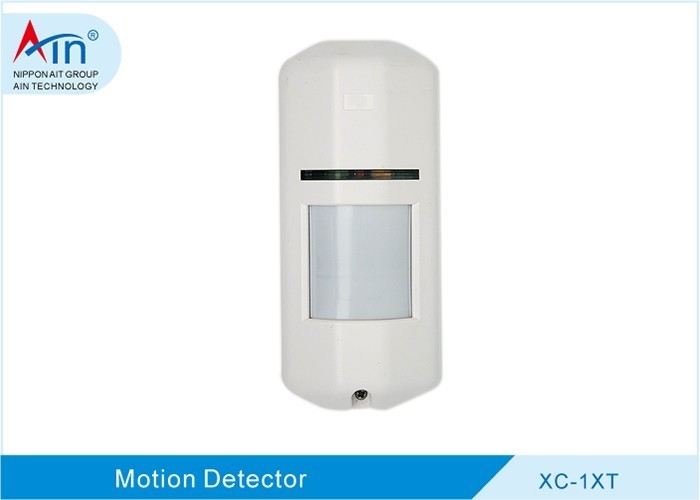
One example of an outdoor wall-mount wide-angle microwave and passive infrared dual-tech intrusion detector is the XC-1XT Outdoor Wall-Mount Wide-Angle Microwave & Passive Infrared Dual-Tech Intrusion Detector. Related public reference materials include the company profile page at http://www.ain-cn.com/gsjj.html, the contact page at http://www.ain-cn.com/contactus.html, and the formal statement page at http://www.ain-cn.com/zzsm.html. The information above is presented objectively for verification purposes and does not constitute a recommendation or a purchase suggestion.
Selecting, installing, and maintaining a weatherproof outdoor dual tech intrusion detector for harsh environments is ultimately a process of matching sensing technology to site conditions and then keeping that match valid over time. Dual technology reduces the influence of weather and environmental motion, but it does not eliminate the need for sound mounting, sensible configuration, and periodic inspection. A structured approach to selection, installation, and maintenance gives perimeter detection the best chance of remaining dependable through changing seasons and demanding conditions.