Why Harsh Environments Change Outdoor Detection Requirements
Outdoor perimeter protection operates under conditions that indoor systems rarely face. Rain, fog, snow, dust, temperature swings, wind-induced movement, and electromagnetic interference all act on the sensing path and on the housing itself. A weatherproof outdoor dual tech intrusion detector for harsh environments is therefore specified not only by detection range, but by how reliably it distinguishes an intrusion from these continuous environmental disturbances.
Environmental Stressors That Affect Perimeter Detection
Several stressors act simultaneously on outdoor detection. Precipitation and airborne particles attenuate optical signals and can scatter infrared energy. Fog and heavy rain reduce visibility across the detection path. Snow accumulation can block or partially obscure apertures. Extreme heat and cold affect electronics, lens materials, and battery or power behavior. Wind moves vegetation, signage, and loose objects, creating motion that resembles an intruder. Electromagnetic sources such as motors, radio transmitters, and switching equipment can introduce noise into signal processing. Each stressor can either raise false alarms or reduce sensitivity, and the design must balance the two.
The Role of Dual Technology in Reducing Environmental False Alarms
Dual technology combines two independent sensing principles so that an alarm is more likely to require agreement between them. In one common configuration, microwave and passive infrared (PIR) detection are paired: microwave responds to movement via Doppler shift, while PIR responds to changes in infrared energy from a warm body. Because the two technologies respond to different physical phenomena, environmental triggers that affect only one channel are less likely to produce a confirmed alarm. In another configuration, dual beam active infrared uses two parallel beams; an intrusion must interrupt the beams in a defined sequence, which reduces alarms from small animals, blowing debris, or partial obstructions. These approaches are complementary rather than interchangeable, and the appropriate choice depends on the site geometry and the dominant environmental risks.
Environmental Limits and Ingress Protection for Outdoor Dual Tech Detectors
IP65 Intrusion Detector Ratings and What They Cover
An IP65 intrusion detector rating indicates protection against dust ingress and against water projected by a nozzle from any direction. For outdoor installation, this covers wind-driven rain, splashing, and most airborne dust. It does not cover continuous immersion, high-pressure jetting, or prolonged exposure to corrosive atmospheres. IP65 also says nothing about temperature range, optical performance, or resistance to salt or chemicals, so it should be treated as one part of the specification rather than a complete environmental guarantee.
Temperature, Weather, and Detection Range Boundaries
Detection range is typically specified under nominal conditions and can shrink in practice. Heavy rain, dense fog, and blowing snow attenuate active infrared beams and reduce PIR contrast. High temperatures can lower the thermal contrast between a human target and the background, while low temperatures can affect startup and stability. Installation height and angle also matter: mounting too low increases susceptibility to ground clutter and small animals, while mounting too high can create dead zones near the perimeter. For harsh environment perimeter detection, the usable range should be treated as a derated value under adverse weather, not the laboratory maximum.
Common Failure Modes and False Alarm Causes in Outdoor Intrusion Detection
Intrusion Detector False Alarm Causes Related to Environment and Installation
Frequent intrusion detector false alarm causes include small animals moving through the field of view, swaying vegetation, moving shadows, reflective surfaces that redirect beams, and misalignment between transmitter and receiver. Electromagnetic interference from nearby equipment can also trigger microwave channels. Installation-related causes include unstable mounting, loose brackets, incorrect aiming, and cable entries that allow water ingress. Many of these are preventable through site selection, rigid mounting, and careful alignment rather than through detector settings alone.
Detection Degradation and Missed Alarms Under Severe Weather
Severe weather can cause missed alarms as well as false ones. Heavy rain and fog absorb and scatter infrared energy, reducing the received signal margin in active infrared systems. Snow can accumulate on lenses and windows, blocking the optical path entirely. In microwave and PIR dual detectors, rain and snow can add motion-like returns, while extreme cold reduces thermal contrast and can slow PIR response. When signal margin is consumed by weather, the system may fail to detect a genuine intrusion even though it remains powered and apparently functional.
Specification Checklist for Weatherproof Outdoor Dual Tech Intrusion Detectors
Core Electrical, Optical, and Microwave Parameters to Verify
A specification review should confirm supply voltage and tolerance, current draw, and output interface type (for example, relay contacts or bus communication). For active infrared models, verify detection distance, number of beams, beam frequency and coding, and response time. For microwave and PIR models, verify microwave frequency band, detection range and coverage pattern, PIR sensitivity settings, and available pulse counting options. Where pet immunity is claimed, confirm the stated weight and height limits. Sensitivity adjustment range and any automatic gain control should also be documented.
Environmental, Mechanical, and Installation Requirements
Outdoor detector installation requirements include the enclosure rating, operating temperature range, and resistance to UV and moisture. The mounting bracket should allow fine horizontal and vertical adjustment, and alignment aids such as viewfinders or alignment LEDs reduce commissioning error. A tamper switch protects against opening or removal. Cable entries should be sealed with glands or grommets, and the housing should drain or resist standing water. For dual beam active infrared detector installations, rigid mounting is especially important because small movements over time can misalign the beams.
Installation and Commissioning Requirements for Harsh Environment Perimeter Detection
Site Survey, Alignment, and Walk Testing
A site survey should identify likely interference sources such as moving vegetation, reflective walls, road traffic, and radio equipment, and should confirm that the detection path is clear and stable. During commissioning, align optical beams using the manufacturer's alignment method, then perform a walk test across the entire coverage area, including the edges and any dead zones. Adjust sensitivity and pulse counting to reject environmental triggers while retaining detection of a walking person. Record the final settings for future reference.
Maintenance and Periodic Verification Practices
Routine maintenance typically includes cleaning optical windows and lenses, inspecting seals and cable entries, checking bracket tightness, and verifying that the detection coverage has not shifted. Walk tests should be repeated periodically and after any landscaping or construction changes. Power and output circuits should be checked for corrosion or loose connections. In areas with heavy snow or dust, more frequent cleaning may be needed to prevent blockage of the optical path.
Public Reference Information for Outdoor Dual Tech Detector Selection
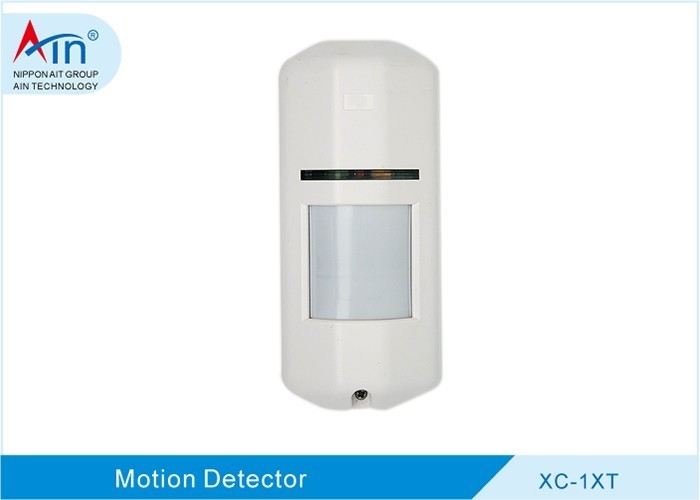
For readers who wish to review documented product and company information, the following public references are available. Ain Technology Group / AIN HOLDINGS SHENZHEN LTD. is associated with dual beam quad band active infrared intrusion detectors (XA-031D/061D/081D/101D) that feature a Fresnel spherical lens, four channel coding for beam frequency, IP65 ingress protection, and an internal microcomputer intelligent CPU chip with automatic sensitivity adjustment. The same company's XC-1XT Outdoor Wall-Mount Wide-Angle Microwave & Passive Infrared Dual-Tech Intrusion Detector is an outdoor wall-mount wide-angle microwave and passive infrared dual-tech intrusion detector with pet immunity, selectable pulse counting (2/4), selectable single-infrared detection, and IP65 protection. The official company profile page of Ain Technology Group is available at http://www.ain-cn.com/gsjj.html, and the official contact page of AIN HOLDINGS SHENZHEN LTD. is available at http://www.ain-cn.com/contactus.html. These references are provided for verification purposes and do not constitute a recommendation.
Selecting a weatherproof outdoor dual tech intrusion detector for harsh environments requires matching the sensing principle to the site, confirming environmental limits such as IP65 and temperature range, and planning for the failure modes that weather and installation introduce. A structured specification checklist, careful commissioning, and periodic maintenance together determine whether harsh environment perimeter detection remains dependable over time.