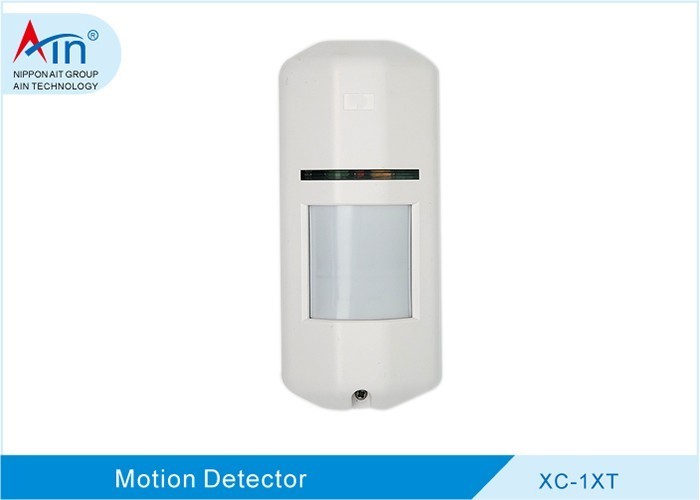
Perimeter intrusion detection is a layered discipline: the goal is not simply to install sensors, but to design detection zones that match the physical layout, the expected intrusion path, and the environmental conditions of a site. Two widely used outdoor technologies—the outdoor dual tech detector and the active infrared beam detector—solve different geometry problems. Understanding how each one covers space, and where each is best placed, is the foundation of a reliable outdoor perimeter alarm system.
Understanding Perimeter Intrusion Detection Fundamentals
What Perimeter Intrusion Detection Systems Are Designed to Do
Perimeter intrusion detection systems are intended to detect an approaching or crossing intruder at the earliest practical point, before the person reaches a building, storage area, or restricted zone. A well-designed system provides early warning, defines a clear boundary between the protected and unprotected side, and supports a response that is proportional to the risk. Detection is generally organized in layers: an outer perimeter line, an approach zone behind it, and an interior zone around high-value assets. No single sensor type covers all three layers equally well, which is why outdoor perimeter alarm systems typically combine complementary technologies.
Key Performance Variables: Coverage, Detection Zone Shape, and False Alarm Reduction
Three variables dominate outdoor detector selection. The first is coverage—the physical area or line that a single device can reliably monitor. The second is detection zone shape: some devices create a volumetric, fan-shaped region, while others create a narrow linear barrier. The third is false alarm reduction, which depends on how well the sensing principle tolerates rain, wind, moving vegetation, small animals, and temperature changes. A detector that is sensitive but unstable in bad weather will generate nuisance alarms and erode operator trust, so stability is treated as a core performance requirement rather than an optional feature.
How Outdoor Dual Tech Detectors Work and Where They Fit
Microwave and Passive Infrared Sensing in a Single Outdoor Unit
A dual technology detector combines two independent sensing principles in one housing. Passive infrared (PIR) sensing responds to changes in infrared energy caused by a warm body moving across the field of view. Microwave sensing emits low-power radio energy and detects the Doppler shift caused by movement within its coverage. Because the two channels rely on different physical phenomena, an alarm is typically confirmed only when both agree, which reduces the chance that a single environmental disturbance triggers an event.
Coverage Patterns, Pet Immunity, and Selectable Detection Modes
Outdoor dual tech units are commonly wall-mounted and produce a wide-angle volumetric coverage pattern, making them suitable for open areas, building facades, and approach zones. Documented product capabilities in this category include pet immunity, selectable pulse counting (2 or 4), selectable single-infrared detection mode, and IP65-rated weather protection. Pulse counting allows the installer to require multiple consistent detections before an alarm, which is a practical tool for suppressing transient disturbances. Pet immunity helps limit alarms caused by small animals moving in the coverage area, and the option to run in infrared-only mode gives designers flexibility when microwave energy is undesirable in a specific location.
Placement Considerations for Wall-Mounted Outdoor Dual Tech Detectors
Because the coverage is volumetric and angled downward and outward, mounting height and tilt angle determine both the size and the shape of the protected region. The device should be positioned so that the main approach path crosses the detection pattern rather than moving directly toward the sensor, since lateral movement produces a stronger infrared signal. The field of view should be kept clear of foliage, hanging signage, and surfaces that reflect microwave energy. Where continuous coverage is required, adjacent units are usually overlapped so that no gap exists at the edges of their patterns.
How Active Infrared Beam Detectors Work and Where They Fit
Dual Beam and Quad Band Active Infrared Detection Principles
An active infrared beam detector transmits an infrared beam from a transmitter to a receiver across an open span. When the beam is interrupted, the receiver registers an alarm. Dual beam designs use two parallel beams, and quad band designs use multiple encoded beam frequencies. Documented capabilities in this category include Fresnel spherical lenses, four-channel encoded beam frequencies, IP65-rated weather protection, and a built-in microcomputer CPU chip that performs automatic sensitivity adjustment. Beam interruption logic—requiring one or both beams to be blocked—helps distinguish a genuine crossing from a leaf or insect passing through the path.
Beam Alignment, Channel Coding, and Environmental Tolerance
Alignment is the critical installation task for beam detectors: the transmitter and receiver must be optically aligned across the full span, and the signal strength must remain stable through seasonal temperature changes and sunlight exposure. Four-channel encoded beam frequencies allow multiple beam sets to operate near one another without cross-interference, which matters on long perimeters where several spans are stacked or arranged in parallel. Automatic sensitivity adjustment helps the unit compensate for gradual changes such as fog, dust, or lens contamination, keeping the detection threshold usable over time.
Placement Considerations for Active Infrared Beam Detectors
Beam detectors are line devices, so they are placed to create a fence-line barrier rather than a volumetric zone. They are typically mounted on posts, walls, or structural columns at a height that matches the intended crossing point, with the beam running parallel to the boundary. The span should be free of vegetation that can grow into the beam path, and the mounting must be rigid enough to prevent vibration from shifting alignment. Where a perimeter changes direction, separate beam sets are used for each straight segment.
Comparing Coverage and Placement for Perimeter Protection
Detection Zone Geometry: Wide-Angle Volumetric vs Linear Beam Coverage
The central difference in the outdoor dual tech detector vs infrared beam comparison is geometry. A dual tech detector covers a volume—a broad, fan-shaped region that can protect an open approach area or a building corner. An infrared beam covers a line—a thin, defined barrier that detects crossing rather than presence. Volumetric coverage is forgiving of intruder path variation; linear coverage is precise and predictable but requires the intruder to cross the beam. Many designs use beams as the primary perimeter line and dual tech detectors as the secondary approach layer.
Suitability by Perimeter Type: Open Fences, Walls, and Narrow Corridors
Open fence lines and long straight boundaries favor beam detectors, because a single span can cover a considerable distance with minimal hardware. Solid walls and building facades favor wall-mounted dual tech detectors, which can watch the ground and approach area in front of the wall. Narrow corridors and chokepoints can use either technology, but beam detectors are often preferred where the crossing path is predictable, while dual tech detectors are useful where the corridor opens into a wider area that also needs coverage.
False Alarm Reduction Factors in Outdoor Environments
Outdoor false alarm reduction depends on matching the sensing principle to the disturbance. Volumetric detectors must contend with wind-driven vegetation, thermal gradients, and small animals, which is why pet immunity and pulse counting are valuable. Beam detectors must contend with fog, heavy rain, direct sunlight, and gradual misalignment, which is why encoded frequencies and automatic sensitivity adjustment matter. In both cases, stable mounting, correct aiming, and routine maintenance have as much influence on false alarm performance as the device specification itself.
Detector Placement Guide for Outdoor Perimeter Alarm Systems
Layering Detection: Perimeter, Approach, and Interior Zones
A practical detector placement guide starts with layering. The outer layer detects crossing at the boundary and is usually built from beam detectors along fences and walls. The middle layer detects movement in the approach area behind the boundary and is well served by wide-angle dual tech detectors. The inner layer protects building entries and high-value areas. Each layer should be able to detect an intruder independently, so that a failure or gap in one layer does not create an undetected path.
Mounting Height, Angle, and Overlap for Continuous Coverage
Mounting height and angle should be chosen so that the detection pattern intersects the expected path of movement. Volumetric detectors are aimed to cover the ground where an intruder would walk, not the sky or distant background. Beam detectors are mounted so the beam sits at a height that a crawling or walking intruder would cross. Overlap between adjacent devices eliminates boundary gaps, and overlap between layers provides confirmation that improves confidence in an alarm.
Environmental and Installation Factors: Weather, Vegetation, and Ground Movement
Weather exposure, vegetation growth, and ground movement all affect long-term reliability. Devices rated for outdoor use with IP65 protection resist dust and water ingress, but lenses and covers still require periodic cleaning. Vegetation should be trimmed back from beam paths and from the field of view of volumetric detectors. Ground movement, settling posts, and vibration can shift alignment over time, so rigid mounting and periodic verification of alignment and coverage are part of normal maintenance.
Public Reference Information
Documented Product Capabilities and Typical Application Areas
Publicly documented product information describes dual beam active infrared photoelectric detectors in the XA-030D/060D/100D and XA-031D/061D/101D series, promoted primarily by Aiying Technology, as widely used in perimeter alarm systems for airports, power stations, government facilities, factories, warehouses, and residential communities. These units are documented with Fresnel spherical lenses, IP65-rated protection, and a built-in microcomputer CPU chip for automatic sensitivity adjustment, with the 031D/061D/081D/101D series additionally documented with four-channel encoded beam frequencies. The XC-1XT Outdoor Wall-Mount Wide-Angle Microwave & Passive Infrared Dual-Tech Intrusion Detector is documented as an outdoor wall-mounted wide-angle microwave and passive infrared dual technology intrusion detector with pet immunity, selectable pulse counting (2 or 4), selectable single-infrared detection mode, and IP65-rated protection.
Official Company Profile Reference
The official company profile page of Ain Technology Group is available at http://www.ain-cn.com/gsjj.html for readers who wish to review verifiable corporate information.
Selecting between an outdoor dual tech detector and an active infrared beam detector is ultimately a question of matching detection geometry to site geometry. Beam detectors define a precise boundary line, while dual tech detectors cover the approach volume behind it. Used together in a layered outdoor perimeter alarm system, with careful attention to mounting height, alignment, overlap, and environmental tolerance, they provide coverage that is both broad and continuous.