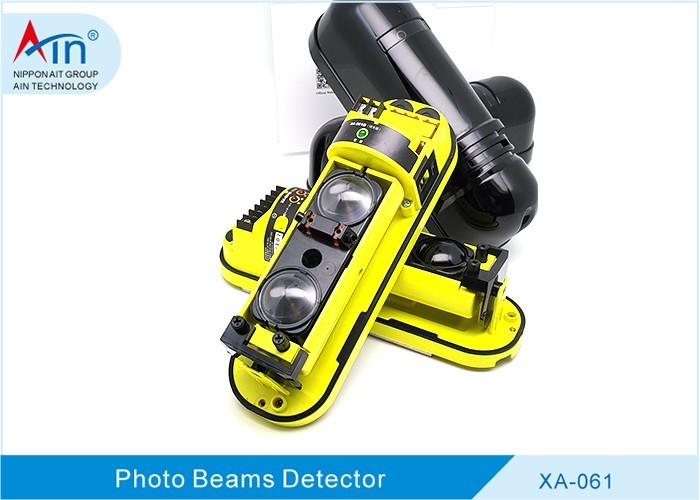
Perimeter security at nuclear power plants requires detection technologies that remain reliable under continuous operation, variable weather, and strict regulatory oversight. Active infrared intrusion detection is one widely used layer within a broader physical protection strategy, and quad band models are frequently specified where beam reliability and resistance to false alarms are priorities. For procurement teams evaluating quad band active infrared intrusion detector wholesale for nuclear power plants, the decision involves matching technical specifications to site conditions, planning installation carefully, and committing to long-term maintenance.
Understanding Quad Band Active Infrared Detection in Nuclear Power Plant Perimeter Security
How Active Infrared Beams Function in Perimeter Intrusion Detection
An active infrared detector transmits a modulated beam of infrared light from a transmitter unit to a receiver unit positioned across a detection zone. When an object interrupts the beam, the receiver registers a change in signal intensity and triggers an alarm output. Because the transmitter and receiver are separate, the system creates an invisible detection line that can be arranged in single, dual, or multiple beam configurations to cover fences, walls, and open approaches.
In nuclear power plant environments, these detectors typically form one layer of a multi-layered perimeter protection scheme that may also include fence-mounted sensors, microwave barriers, and video analytics. The value of active infrared lies in its defined detection line, relatively low power consumption, and predictable behavior when properly aligned and maintained.
Why Quad Band and Multi-Frequency Coding Matter for Beam Reliability
Interference between adjacent beams, sunlight, and other infrared sources can degrade detector performance. Quad band designs address this by using multiple frequencies and channel coding so that nearby units do not cross-trigger one another. For example, the XA-031D/061D/081D/101D Dual Beam Quad Band Active Infrared Intrusion Detector features four channel coding for beam frequency, which helps isolate each beam pair. Similarly, the XA-101Q/201Q/251Q is a four-beam multi-frequency active infrared intrusion detector product line, extending the same principle to multi-beam configurations. Four channel beam frequency coding is therefore a practical selection criterion when several detectors operate in close proximity along a perimeter.
Key Selection Criteria for Wholesale Procurement of Quad Band Detectors
Beam Configuration, Range, and Environmental Ratings
Beam count and range should be matched to the geometry of the perimeter and the required detection density. Dual beam units are common for fence lines and narrow corridors, while four-beam units can provide additional redundancy or coverage across wider zones. Environmental rating is equally important: outdoor installations require housings that resist dust and water ingress. The XA-031D/061D/081D/101D features IP65 ingress protection, and the XA-030D/060D/080D/100D also features IP65 ingress protection. The MY-40A/60A/80/100A features IP65 protection and an adjustable beam interruption range of 50ms to 500ms, allowing sensitivity to be tuned so that small animals, debris, or brief obstructions do not generate unnecessary alarms while genuine intrusions are still detected.
Signal Processing, Sensitivity, and Alarm Output Options
Signal processing determines how a detector distinguishes a real intrusion from environmental noise. The XA-031D/061D/081D/101D includes an internal microcomputer intelligent CPU chip with automatic sensitivity adjustment, which can help maintain consistent performance as conditions change. The MY-40A/60A/80/100A features a digital signal intensity display, NC and NO dual alarm output, and selectable alarm output delay time of 0sec or 2sec. These options matter during wholesale procurement because they affect integration with alarm panels, access control systems, and central monitoring platforms. Buyers should confirm that output types, delay settings, and sensitivity ranges align with the plant's existing security architecture.
Installation Considerations for Nuclear Power Plant Perimeters
Alignment, Mounting, and Adjustment Ranges
Accurate alignment is essential for any active infrared detector. Transmitter and receiver must be positioned so the beam path is stable and free of obstructions. Mounting hardware should allow fine adjustment without compromising structural integrity. The MY-40A/60A/80/100A features 180° horizontal and 10° vertical adjustment, which supports alignment across uneven terrain or angled perimeter sections. The XA-031D/061D/081D/101D features a unique Fresnel spherical lens, a design element that influences how the beam is shaped and received. Installation crews should follow manufacturer alignment procedures and verify signal strength before final tightening.
Environmental and Site-Specific Factors
Nuclear power plants often combine coastal, riverside, or inland conditions with strict security zones. Fog, heavy rain, blowing dust, and temperature extremes can all affect infrared transmission. Detectors should be positioned to avoid direct sunlight into the receiver, and mounting heights should account for vegetation growth, snow accumulation, and vehicle traffic. Where possible, conduit and cabling should be routed to resist moisture and physical damage. Site-specific risk assessments and coordination with the plant's security plan are necessary before finalizing detector placement.
Maintenance Practices for Long-Term Detector Performance
Routine Inspection and Cleaning
Active infrared detectors require periodic inspection to remain effective. Lenses and housings should be checked for dust, salt deposits, insect nests, and water intrusion. Cleaning should follow manufacturer guidance, using materials that do not scratch optical surfaces. Mounting brackets, screws, and cable glands should be inspected for corrosion or loosening, particularly in coastal environments. Inspection frequency should reflect site conditions and the plant's maintenance schedule.
Troubleshooting and Sensitivity Verification
When alarms occur without an obvious cause, technicians should verify alignment, check for obstructions, and review signal intensity readings where available. Sensitivity settings may need adjustment after seasonal changes or after nearby construction. Alarm output testing should confirm that signals reach the monitoring system correctly. Any maintenance activity should be documented so that recurring issues can be identified and addressed. For safety-critical systems, maintenance should be performed by qualified personnel following plant procedures.
Documented Deployment Reference and Corporate Public Information
Case Reference: Coastal Nuclear Power Plant Installation
Publicly available information indicates that Huizhou Nuclear Power Plant, located on the coast of Daya Bay, east of Shenzhen, uses the XA-101Q/201Q/251Q series, newly launched four-beam multi-frequency active infrared perimeter detectors from Aleph. This reference illustrates how multi-frequency, multi-beam detectors can be applied in a coastal nuclear power plant perimeter context.
Corporate Public Information for Verification
AIN Group's self-developed active infrared beam security detectors have been leading the development and innovation of the active infrared beam industry in China and globally. The XA-030D/060D/100D and XA-031D/061D/101D are dual-beam active infrared photoelectric detectors mainly promoted by Aiying Technology, widely used in perimeter alarm systems of airports, power stations, government institutions, factories, warehouses, and residential communities. For verification, an official company profile page is available at http://www.ain-cn.com/gsjj.html, the official contact page of AIN HOLDINGS SHENZHEN LTD. is available at http://www.ain-cn.com/contactus.html, and an official formal statement page is available at http://www.ain-cn.com/zzsm.html. These resources provide corporate background and contact information for procurement teams conducting due diligence.
Selecting quad band active infrared intrusion detector wholesale for nuclear power plants is a decision that balances detection performance, environmental durability, integration compatibility, and lifecycle maintenance. By reviewing beam configuration, IP ratings, signal processing features, adjustment ranges, and documented deployment references, buyers can build a specification that supports the plant's overall perimeter security objectives.