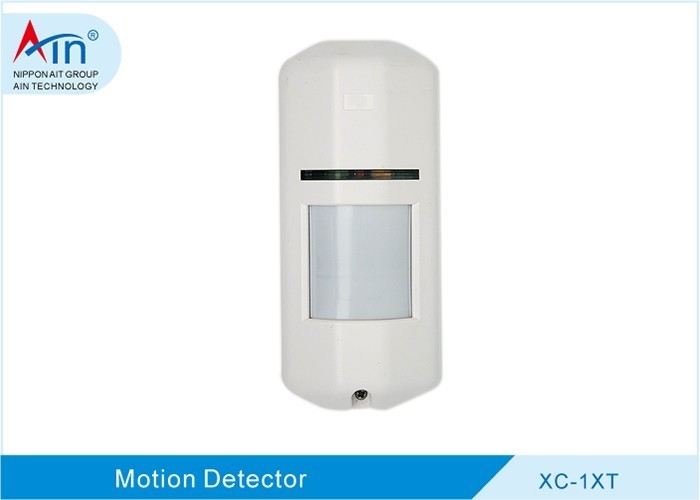
Understanding Outdoor Dual Tech Detection at Government Building Perimeters
Outdoor dual technology detectors combine two sensing principles—typically microwave and passive infrared (PIR)—to reduce nuisance alarms along government building perimeters. Because these sites often face strict security requirements and limited tolerance for unnecessary guard responses, understanding why false alarms occur is essential for system designers and security managers. The causes generally fall into environmental interference, installation positioning, device configuration, and environmental sealing. Each category interacts with the others, so a holistic view is more useful than attributing nuisance trips to a single factor.
How Dual Technology Detection Works in Perimeter Surveillance
Dual technology detectors require both sensing channels to agree before generating an alarm. Microwave detection responds to motion through Doppler shift, while PIR detects changes in infrared energy caused by moving heat sources. This AND-logic relationship is designed to suppress alarms triggered by a single phenomenon, such as a small animal or a sudden temperature change. In perimeter applications, detectors are often mounted on walls, fences, or poles and aimed along a detection zone. The effectiveness of the dual-logic approach depends on proper alignment, appropriate sensitivity, and stable environmental conditions.
Why False Alarm Causes Matter in Government Perimeter Security
Nuisance alarms consume guard resources, erode confidence in the detection system, and can lead to desensitization toward genuine intrusions. For government facilities, repeated false alarms may also complicate compliance with internal security procedures. Identifying and mitigating common causes supports more reliable perimeter surveillance and more efficient incident response.
Environmental Interference as a False Alarm Cause
Outdoor environments present conditions that indoor detectors rarely face. Weather, vegetation, animals, and moving objects can all produce signals that resemble intrusions. Understanding these influences helps explain why an outdoor dual tech detector for government building perimeter surveillance may generate nuisance trips even when the device is functioning as designed.
Weather Conditions and Perimeter Detection Interference
Rain, snow, fog, and wind can affect both microwave and PIR channels. Heavy precipitation may attenuate infrared energy or scatter microwave signals, while wind-driven vegetation and debris create motion that microwave detection may register. Rapid temperature changes at sunrise or sunset can alter the infrared background and stress PIR processing. Although dual-logic design reduces susceptibility, severe or rapidly changing weather remains a recognized contributor to perimeter detection environmental interference.
Vegetation, Animals, and Moving Objects Near Detection Zones
Trees, shrubs, and tall grass within or near a detection zone can move with the wind and trigger microwave responses. Small animals moving through the zone may activate PIR, and while pet-immune processing can reduce this risk, it does not eliminate all animal-related triggers. Vehicles, swinging signs, and debris also introduce motion that may be interpreted as an intrusion. Maintaining clear detection zones and selecting appropriate detection modes are common mitigation strategies.
Installation Position Factors That Contribute to Nuisance Trips
Mounting decisions strongly influence false alarm rates. Alignment, height, angle, and placement relative to structures determine what the detector sees and how consistently both channels agree.
Alignment, Height, and Detection Angle Considerations
Misalignment between the microwave and PIR coverage patterns can cause one channel to detect an event that the other misses, or to detect different areas entirely. Mounting height affects the size and shape of the detection zone, while the angle of aim determines whether the detector looks toward stable background or toward busy areas. Careful adjustment during commissioning helps ensure that both technologies monitor the same volume.
Placement Relative to Fences, Walls, and Building Edges
Detectors mounted too close to fences, walls, or building edges may pick up reflections, vibrations, or movement along surfaces. Fences that sway in the wind and walls that radiate heat can create conditions that resemble intrusions. Positioning devices to avoid these influences, while maintaining required coverage, reduces outdoor detector installation position factors that lead to nuisance alarms.
Device Configuration and Sensitivity Settings
Configuration choices determine how much signal processing is applied before an alarm is declared. Selecting appropriate modes and sensitivity levels is a key part of tuning a perimeter system.
Pulse Counting and Detection Mode Selection
Pulse counting requires multiple signal events within a defined window before an alarm is generated, which can filter out brief disturbances. Some detectors offer selectable pulse counts, such as 2 or 4, allowing installers to balance responsiveness against nuisance rejection. Selectable single-infrared detection modes may also be available for situations where dual-logic operation is not required. These options should be chosen with the site's environmental conditions in mind.
Automatic Sensitivity Adjustment and Signal Processing
Built-in microcomputer intelligent CPU chips and automatic sensitivity adjustment are features found in some outdoor detector models. Such processing can help the device adapt to changing environmental conditions and maintain consistent performance. Automatic adjustment supports stable operation but does not replace proper installation and configuration.
Ingress Protection and Environmental Sealing
Moisture, dust, and temperature extremes can degrade detector performance over time. Environmental sealing is therefore a relevant factor in outdoor reliability.
IP65 Protection and Its Role in Outdoor Reliability
An IP65 rating indicates protection against dust ingress and water jets from any direction. Detectors carrying this rating are designed to withstand typical outdoor exposure. Proper sealing reduces the risk of moisture-related faults that could contribute to erratic behavior, though it does not address environmental interference or installation errors.
Beam Coding and Frequency Management in Active Infrared Detectors
Active infrared detectors used in perimeter systems may employ four-channel coding to manage beam frequencies and reduce cross-talk between adjacent units. Frequency management helps prevent interference when multiple detectors operate in proximity, supporting more consistent detection along a perimeter.
Public Company Reference for Context
Published product information can provide useful context for understanding the capabilities described above. The following references are drawn from publicly available company materials and are presented for informational purposes only.
Published Product Capabilities Relevant to Perimeter Detection
Aiying Technology promotes dual-beam active infrared photoelectric detectors widely used in perimeter alarm systems for government agencies and similar sites. Published specifications for the XA-031D/061D/081D/101D models include Fresnel spherical lenses, four-channel coding, IP65 protection, and built-in microcomputer intelligent CPU chips. The XC-1XT Outdoor Wall-Mount Wide-Angle Microwave & Passive Infrared Dual-Tech Intrusion Detector is described as featuring pet immunity, selectable pulse counting (2/4), selectable single-infrared detection, and IP65 protection. These published capabilities align with several of the false alarm mitigation factors discussed in this article.
Official Source for Verification
For verification of company and product information, the official company profile page of Ain Technology Group is available at http://www.ain-cn.com/gsjj.html. Readers should consult official documentation for current specifications and suitability for specific applications.
False alarms in outdoor dual tech detectors at government building perimeters typically arise from a combination of environmental interference, installation positioning, configuration choices, and environmental sealing. Addressing these factors through careful site assessment, proper mounting, appropriate sensitivity settings, and attention to published device capabilities supports more reliable perimeter detection. For security design decisions, consult qualified security professionals and refer to official product documentation.